Showing posts with label Australia. Show all posts

Wednesday, 2 November 2016

Garden of Frenzied Cortinas (Ariel, 1973)

Ariel were active between 1973 and 1977 and icluded Mike Rudd and Bill Putt, both of Spectrum fame (please read somehting about them elsewhere in this blog), and two of the best known musicians of the Australian scene, even if Rudd was actually born in New Zealand.  Among this track's best features you'll find an excellent bass line by Putt, two beautiful guitar solos by Tim Gaze - former a member of Tamam Shud - and a stunning vocal performance by Rudd.
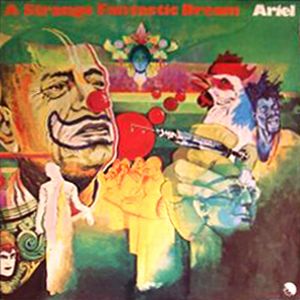
"A Strange Fantastic Dream" was Ariel's debut album.

The track also includes a well found main theme and a series of tempo changes I appreciate very much, along with that peculiar mix of traditional melody and rock arrangements marking the entire Australian prog during the Seventies. "Garden of Frenzied Cortinas" is the longest track from the album "A Strange Fantastic Dream" and also the best one, IMHO, showing the great potential of Ariel, a potential barely exploited during their career.

Wednesday, 14 September 2016

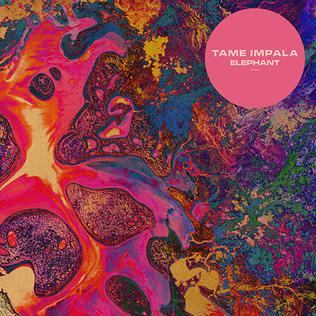
Elephant (Tame Impala, 2012)

Even if Aussi Tame Impala are considered as part of the 2010s psych wave, their open minded approach to rock and pop music includes many prog elements, ss this "Elephant", taken from the album "Lonerism" will easily prove. The electronic.driven and vintage-sounding keyboard progressions all through the second half of the song are among the proggest music from Oceania in recent years. 
 
"Elephant" was also released as a 12" single.
Well, vintage sounds do require a vintage format, what else?
 
There's a proto-prog scent here, and even an Italian prog taste building up a succulent savoury pie. I also like the way these musicians mix catchy tunes, Floydian bluesy moods and lysergic flashes from the Seventies. If progressive rock is mixing and matching musical sources, Tame Impala surely fit into this blog.

Sunday, 28 August 2016

In The Name of God (Aragon, 2004)

I do think Aragon are an underrated band. These Australian musicians (all born in different European countries) surely like traditional neo-prog atmospheres and melodic songs, but they also know how to write and perform excellent songs, like this "In The Name of God", taken from their 2004 album "The Angels Tear". The acoustic first half is a beautiful and peaceful moment, based on warm and charming chords. The keyboards rise up slowly and the song gets deeper and depper, until the guitars come in for the "rock break".

"The Angels Tear" was the sixth album by Aragon.

The final section is more diversified, but still is down tempo and melodic, with an acid twist here and there. Really, I find  here some 9 minutes of musical pleasure, crowned with the sax solo between minute 7.30 and 8.00... so good! And what about the final gilmour-esque guitar/sax interplay? Well, it tells me: "quick, play this once more!" I'll surely obey.

Monday, 8 August 2016

Coming Around (The Third Ending, 2006)

Here you are another clever band, a Tasmanian one, playing what the papers call "modern prog", whatever that means. I better like to call it prog, as our genre hates barriers and labels. The Third Ending  surely mix some old and beloved sounds and many contemporary ones, as this melodic song will prove. "Coming Around", taken from the band's self-titled debut album, sounds like a soft rock piece, but with a deeper, introspective twist.


I also like the cover art The Third Ending chose for their first CD.


The theme is well found and well performed (Nick Storr is what I call a gifted singer), and the background sounds are  rich, full-bodied but never pompous, and a fine guitar solo by Andrew Curtis also graces the song. Even if the track is catchy and rather traditional in its pattern, you'll find many smart gimmicks, and even some welcome references to the past glory of rock and prog rock. In short, a pleasant and beautifully packed song, something I'll always ask for. Go on, my Aussie friends!

Wednesday, 8 June 2016

Dancer (Rainbow Theatre, 1976)

Here you are an Australian band from the '70s packed with 14 musicians, including rock and classical instruments and playing an amazing mix of melody, jazz, musical and prog rock à la King Crimson. This is one of the two suites included in their second album, titled "Fantasy of Horses". It's somehow puzzling and also funny how Rainbow Theatre swing from opera to pop rock and from fusion to prog. 


A weird and enjoyable melting pot... that's Rainbow Theatre!


This epic is divided into five parts, each one adding its own distinctive touch to the big picture, until the last one bring us all back to the Court of the Crimson King. Keith Hoban's tenor voice is a strong point here, with a lushing orchestration and a dramatic mood, even if the concision of each movement give a lighter and lively plot to the entire song. Such a pity this band is virtually unknown outside Australia.

Tuesday, 17 May 2016

Salmon Song (Madder Lake, 1973)

Here you are a peculiar and almost instrumental song from Australian band Madder Lake, released in 1973 as the opening track of the album "Stillpoint". It is a weird mix of psychedelia, mainstream rock , blues and proper prog, including a series of changes and a very well balanced sound. All the instruments play an important role, so that I daresay this is a solid example of a band acting the way a band should do.

This album was the debut work for Madder Lake.


The only vocals come toward the end of the song, during the most bluesy and even spacey section of the the composition. As a matter of fact, the rest of the album is mostly blues-rock oriented, but this 8 minutes opening really deserves the attention of my prog friends, as it is a tricky and somehow visual track, as it actually depicts salmons climbing up a river, one of the greatest scenes provided by Nature. I'm sure this one will be a pleasant discovery for many readers of this blog as it was for me.

Monday, 7 March 2016

The Sideways Saga (Spectrum, 1971)

This early progressive suite by Australian-based (but with a NZ frontman) band Spectrum is taken from the album "Milesago" and is worth a short introduction. The track is divided into four parts, each one with its own title: The Question, The Answer, Do The Crab and Everybody's Walking Sideways. The first one is a Beatles-like sung section, while the second and third ones are keyboard-driven instrumentals also feturing interesting interplays with an acid electric guitar. The final part resumes the opening theme, but this time it sounds like a Procol Harum ballad.

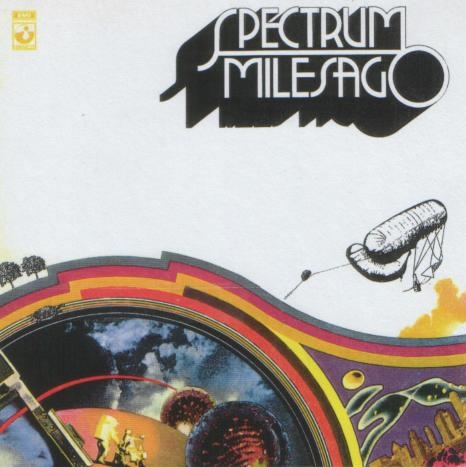
"Milesago" was released on CD by Aztec Music label in 2008.

The whole track has the smoky flavour of the proto-prog era and also the salty taste of a new musical adventure, as it surely was in the Australian rock scene of 1971. Actually, the whole album is kind of an experiment: not only it's the first double album in Aussie rock discography, but it also features a series of technical new devices (for Oceania at least), like new recording soundboards and extensive distortions. All in all, "The Sideways Saga" will prove how powerful and creative Spedtrum were at the beginning of their career.

Friday, 22 January 2016

The Garden (Unitopia, 2008)

"The Garden" is the title track of Unitopia's double CD released in 2008 and one of the epics included in it, the longest one with its more than 22 minutes of duration time. Though undivided, it can be considered as a suite, lining up different moments and moods from the pleasant intro where the music comes out from a series of nature effects to some rock, jazz and melodic passages. Such a lushing choice of tempos and atmospheres never break the unity behind the manifold structure of "The Garden" nor its slightly descriptive approach.

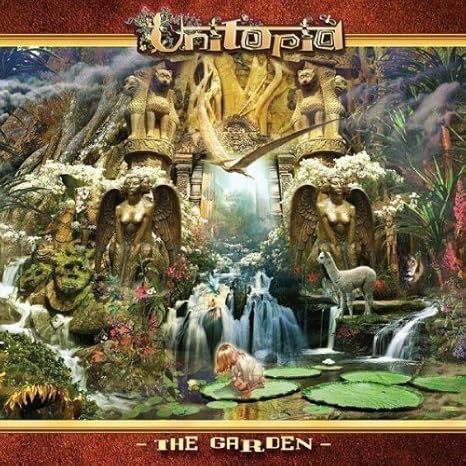
"The Garden" was the second studio album by Unitopia.

In fact, the architecture of this song can be diversified, but all its moments are under control and all its parts have the same warm and captivating sound, so that even the most abrupt changes come at the right moment, beautifully adding new scenes and new colours to a coherent big picture. I also like the way each musician adds his own contribution to improve the final effect and never trying to take over the rest of the band.

Sunday, 8 November 2015

The Mountaneer (Aleph, 1977)

There's a bunch of good bands from the Australian prog scene of the '70s that are rarely found in the sites and books concerning our genre. That could be because of their strongly melodic accents... you know how many intellectual and tricky reviewers love our genre (alas!). Well, as I like good melodies and well played pianos, I also like Aleph, a Sidney-based sixsome that really knew how to write great songs and how to give them an epic and sunny twist.

Unfortunately, the band split up soon after this sole album.

"The Mountaneer" is the 14 minute suite you'll find in the album called "Surface Tension", one of the brightest stars in Oceanian prog sky (IMHO) and the band's only studio work. Not only the different themes are excellent, but they're very well framed in a convincing pattern lining up spacey and prog moments, all as enjoyable as a progfan can desire. Guitars and keyboards come and go, while Joe Walmsey's falsetto voice is simply perfect in this big picture. Try and let me know...

Friday, 30 October 2015

A Room with A View (Anubis, 2014)

This song by Australian band Anubis comes from the album "Hitchhiking to Byzantium" and is a long and mostly dreamy epic, featuring a lot of good musical themes with very well found changes throughout. Anubis come from strict Floydian worship, but they're getting more and more original. "A Room with A View" still feature Gilmour-esque guitars, but also pleasant piano touches, catchy country verses and flute zigzags à la Ian Anderson.
 
Being the follow-up of a very successful album, this work was
a serious challenge for our Aussie proggers...
 
The final picture is rather diversified but never incoherent, with a bonus Brit-pop smell now and then, a melodic trend I definitely like. Each theme is well exploited and cleverly linked to the following by by wide open instrumental passages and especially guitar solos. A sunny side of prog, a catchy and also smart way to write and perform our favourite genre today. IMHO, that's to say.

Friday, 17 July 2015

Four Moments (Sebastian Hardie, 1975)

I think this suite is not only one of the highlights from the same titled album by Australian band Sebastian Hardie, but it's one of the best moments of mid-70s progressive rock. The track is divided into four parts ("Glories Shall Be Released", "Dawn of Our Sun", "Journey Through Our Dreams" and "Everything is Real") and has about 20 minutes of total running time. As usual, the four movements are mainly melodic and present a flushing arrangement, both rich in keyboard effects and guitar solos. The vocal harmonies are also excellent and the tempo changes are cleverly lined up to create a pleasant and variated listening experience.


The back cover of the original LP.
 
Most of the music and lyrics were written by guitarist Mario Millo, the actual leader of Sebastian Hardie, but keyboardist Toivo Pilt's contribution is essential, IMHO, to the special mood of this suite. It's surprising how mature, effective and coherent this track is when it comes from the band's debut album. Last but not least, please enjoy Mario Millo's vocal performance: it seems to me he sings his inner feelings.

Sunday, 10 May 2015

The Changeling (Aragon, 1992)

Please don't ask me why, but Aragon are one of those those bands that progfans strongly like or dislike. I think they're among the most interesting Australian bands and some of their songs are really, really good. This is the case with "The Changeling", coming from the album "The Meeting". Strongly influenced by Fish-era Marillion, this track has a higly dynamic and intense structure, based on sharp guitars and baroque keyboards, a contrast I especially appreciate.

"The Meeting" was Aragon's second studio album.

Les Dougan's vocals are excellent, as he alternates strong and delicate moods in a convincing way. The melodies are full-bodied, and sometimes catchy. I also like some original touches: a slide guitar, some unusual electronic effects, very well found bass lines and so on. In short, this is an ever changing song, featuring unpredictable passages and - most of all - there's an emotional hardcore in "The Changeling" that gives a special, inner sense to the big picture. So, like it or not, this is prog rock at its best.

Wednesday, 17 December 2014

Horsemen to Symphinity (Windchase, 1977)

You'll find one album, just the one called "Symphinity", in this Australian band from the '70s, but in fact they were kind of a reincarnation of Sebastian Hardie, likely the most celebrated prog band in their Country (and also represented in this little blog). This track shows how much those musicians were influenced by contemporary UK bands, especially Camel, I daresay.

Pyramids, UFOs, ancient warriors... what else?
 
But you'll also find many original features, especially when Mario Millo's guitar comes in. There's a long and beautiful electric guitar solo in this song I can only admire. And the final part of this performance has a bonus gem: the bass / guitar interplay. Actually this is a perfect example of creative, free, enjoyable progressive rock, coming from the years where it was really difficult to get noticed... but those guys surely did so and they still stand among the most beautiful pearls of the Southern Emisphere.

Sunday, 27 July 2014

Tesla (Unitopia, 2010)

Unitopia come from Australia and they play a good, both traditional and unpredictable progressive rock. This "Tesla", taken from the album "Artificial" is a perfect starter for Unitopia's music with its 13 minutes or so of duration time. You'll find a thousand different influences here, from Golden Era bands to neo-prog heroes, so that the mood, the rythm and the tempo constantly change. The listener is engaged in a furious trip across the progressive universe and more: electronics, fusion, melody, ethnic flashes, classical piano, traditional rock... kind of a musical roundabout!

"Artificial" was the third studio album of the band.


Still, all those elements are so pleasantly linked and so well played that they seem to come to us naturally. Unitopia follow the widespread path of bands like Flower Kings and Spock's Beard, but their speedy and lush composition way only belongs to them. There are solid melodies, well found arangements and a clever architecture in "Tesla" that Nikola Tesla himself would find... electrifying! Sure, Unitopia pick up things we all know too well, but they do so in style, I daresay, and they constantly improve. A good omen.

Sunday, 6 July 2014

Seasons of Change (Blackfeather, 1971)

If you feel like redescovering the proto-prog thick, naive and powerful taste, this song is for you. It comes from the Australian band Blackfeather, more precisely from their first album titled "At The Mountains of Madness". This track was a good hit in their native Country and also has a rather strange story: The band wrote it during the album sessions, then passed it out to a friend band called Fraternity, under the agreement Blackfeather wouldn't released it in their turn.


Blackfeather only released two studio albums in their career.
 

But Fraternity's version of the song proved to be a huge hit and our band broke their promise, quickly recorded the track for the album and even released it as a single that overran Fraternity's version. The reason of this double success probably rests on the catchy melody, but also on the vaguely folk rock arrangement Fraternity suggested and Blackfeather fully adopted. A plunge in a gone but not forgotten sound that's like a sparkling morning breeze to me.

Tuesday, 18 March 2014

Openings (Sebastian Hardie, 1975)

This "Openings" was actually the 13 minutes closing track of Sebastian Hardie's debut album "Four Moments", released in 1975. Fluid like water, the Australian band's music keeps today all the charms it had back in the '70s and in its classical and blues moments we found the spirit of that era, made of liberty and innovation. The main role in this song is played by Mario Millo's electric guitar, somewhere in the middle between David Gilmour and Eric Clapton, wel supported by the rythm section and Toivo Pilt's keyboards, kind of a gentle and spacey carpet. The latter also has its moment of glory in the second part of the song, where the guitar takes a rest and we fly on his magic carpet for a while. Then, Mr. Millo comes back and graces the song with his best solo.

I like very much the circular logo of the band.

Sebastian Hardie's music is obviously influenced by some UK masters like Pink Floyd, Camel and Mike Oldfield (they even played live "Tubular Bells"), but their music is surely original, featuring its own sinuous and dreamy brand mark. "Four Moments", the album including this instrumental track, and its follower "Windchase" made of them the most influent synphonic rock band of Australia. They're worth a wider recognition, IMHO.

Friday, 24 January 2014

The Crucifixion (Aragon, 1987)

This 15:39 minutes epic by the Australian band Aragon is a beautiful specimen from the '80s so called neo-prog scene and one of the very few from Southern emisphere. Strongly influenced by the British models of its period, the song - taken from the debut album "Don't Bring The Rain" - has nonetheless its own character, combining in the opening section syncopated drumming reminiscent of IQ with passionate vocals à la Fish and lots of good musical ideas with no specific inspiration. The central part of "The Crucifixion", featuring a rarefied atmosphere and suggestive vocals is maybe my favourite one.

This was the first of six studio albums by Aragon.

Les Dougan really cries out its soul here, and Tom Behrsing's keyboards create a magic universe I still like, with a hint of lost childhood inside. The sound quality isn't perfect (oh, not at all...), but I get the feeling nonetheless and the final sorrowful instrumental brings on the typical kick inside good prog always gives to me. Later in their career, Aragon will grow a more personal style, but I'm grateful to those musicians for this early, easy, bittersweet song.

Friday, 18 October 2013

A Tower of Silence (Anubis, 2011)

Here's a slow, majestic, melodic song from a very interesting Australian sixpiece band. It's the title track of their second album and really shines for its vocal arrangements and its beautiful instrumental sections. The prog masters are there, of course, you'll find hints of Pink Floyd or Genesis music (even Alan Parsons Project's), but the whole lot is something new and modern, a translation, not a revival.
 
Anubis' second album cover art.
 
I especially appreciate the clear, neat sound and the calm lead vocals, but they all deserve a mention, these guys. There's also a very good fusion of electric and acoustic instruments, with - for example - a charming flute work over a keyboards background. It's relaxing, but also a deep invitation to meditation.