Showing posts with label Canada. Show all posts

Monday, 30 September 2024

Wake up The Child (Red Sand, 2024)

By browsing this site's past reviews you'll find several tracks by Red Sand, an excellent neo-prog band from Québec, Canada. Their 2024 album titled "Pain't Box" is another beautiful collection of melodic, hypnotic songs. This "Wake up The Child", for example, offers everything a prog fan could dream of: a well written theme, inspiring variations, sensitive vocals (Michel Renaud recemtly joined the band and is a valuable addition)  and of course Simon Caron's dreamy guitar solos. 

Red Sand surely know how to paint musical landscapes...

Perry Angelillo's impeccable drums and Simon's keyboard atmospheric work wrap up this song with good taste and heartwarming colours. This warm, soft and hearty feeling is the trademark of a band I will ever recommend to my prog fellows.

Monday, 31 January 2022

Pavilion (Glaswegians, 2022)

Here you are a very unconventianal approach to prog, something that will intrigue, I'm sure, my open minded friends reading this blog. Glaswegians is Michael Elder's brainchild and as far as I know it's a Canadian project, so don't ask me where's its link with Glasgow... maybe Michael himself will explain this. "Pavilion" comes from the 2022 album Quaternary ( Glaswegians' fourth studio release, still to be released when I'm writing this) and is a fascinating instrumental suite, switching between twirling, compulsing electronic sounds and acoustic, melodic interludes. 

"Quaternary" includes four tracks and is the fourth album by Glaswegians.

There's an awesome number of musical instruments here and even more tempo and mood changes... so prepare yourself to a rich and unusual blend. It's almost Brian Eno meets Ant Phillips... and if you think that's an impossible match, well, listen to this and you'll change your mind. It's a profound, uncanny track, even distressing at times, but when such an experience is over you'll find yourself somewhat different, like someone coming home after a trip in a far, exotic land. Only, this land is inside yourself. Well done, Michael!

Saturday, 17 July 2021

YYZ (Rush, 1981)

 This is one of my favourite instrumental tracks ever. It comes from Rush's eighth studio album Moving Pictures. The title is just the identification code of Toronto Pearson International Airport, the one the band reached when leaving their homes and where apparently Alex Lifeson was inspired for the song's rythm by the morse code translation of YYZ (that's - . - - / - . - - / - - . .  and that's the opening sound of the track). This is a highly dynamic piece of music, incorporating both groove and melody, full of changes and pauses the stop and go way that Yes liked so much. 

This track is a real flight, IMHO...

The main theme comes in at well studied intervals and - as usual with Rush - the rythm section provides a rich palette of bridges, progressions and variations. The song's pattern is so unpredictable and sought after that you hardly believe it can be confined in a track of just over 4 minutes. Enthralling and ever changing, YYZ is a manifesto of this band's idea of progressive rock, an idea I like very much... and I daresay I'm not the only one!

Wednesday, 29 August 2018

Entering The Gallery / The Man on The Hill (Huis, 2016)

All progfans know the flourishing Québec prog-scene during the '70s, but that land still offers tasty treats to our appetites (see Mystery, for example). This is the case with Huis, a Montréal-based band founded by keyboardist Pascal Lapierre and bassist Michel Joncas in 2009. As this mini-suite (taken from the album "Neither in Heaven") will prove, Huis mix good melodies and a dynamic sound to conjure up a captivating, everchanging kind of prog, where full-bodied rock passages and acoustic melodies build up emotionally enthralling songs. 


"Neither in Heaven" is the second album by Huis.

This double sided track displays - among other good things -  the usual amount of keyboards, an energetic guitar and a brilliant vocal performance by Sylvain Descôteaux. I'm also sure my progfriends will like the peculiar way the band have to launch their rockiest moments taking advantage of piano accelerations. In conclusion, a well written, well arranged and perfectly balanced music.

Sunday, 8 January 2017

Shadow of The Lake (Mystery, 1998)

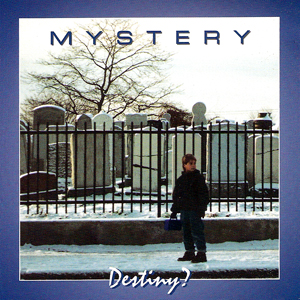
Here you are some well conceived and well performed neoprogressive rock. "Shadow of The Lake" is a 15 minutes track by Canadian band Mystery from their album "Destiny?". Like all the best examples of this sub-genre, you'll find here references to some of the classic bands from the Seventies and also a good deal of passion and emotion. In addition to this, the sung parts are very good, with a ballad-like flavour that Mystery know how to mix with the symphonic side of their music.

This is the original cover art of "Destinhy?". It also exists a 2009
10th anniversary edition with a different cover.

Some strong electric guitars and a series of beautiful changes provide more charming moments and enliven the track. Michel St-Père - the mind behind the band - plays both guitars and keyboards, and builds up a rather complex plot for this song, probably the first full-progressive one in Mystery's discography. I surely enjoyed it.

Friday, 16 September 2016

What Love [Suite] (The Collectors, 1968)

Those who love proto-prog bands and tracks will be glad to find here one of the earliest suites featuring a distinctive progressive flavour: "What Love" by Canadian band The Collectors. Coming from the North-American psych scene, these Vancouver-based musicians filled the entire B-side of their debut album with a diversified and colourful 19 minutes suite, featuring ethnic instruments, arcane vocal harmonies, classical influences, folk atmospheres, R & B echoes and pastoral themes.

The Collectors only released two albums, both in the late '60s.

The spiritual side of the Seventies surely inspires some of the moods in this song, but its best virtue is, IMHO, the stong and coherent plot in which so many different ideas are cleverly framed. I rarely listened to such a rich and solid architecture in a '60s long track. In this sense, I rarely listened to a proggest song from that era, no matter what the story and the genre label of The Collectors were. Good, good music this is!

Sunday, 24 July 2016

Red Barchetta (Rush, 1981)

"Moving Pictures" is an excellent album by Rush, IMHO, full of thick and coherent compositions, among which I introduce today "Red Barchetta", a live favourite of the Canadian powerful trio (and of their fans of course). There are many changes and different themes in this song, full of stingy sounds and irregular rythms. The short electric guitar solo is rightly famous, but I highly recommend Geddy Lee's bass lines throughout the track... well my mention is likely useless, as we all know how great Lee is.

Imagine this song, a convertible car and the wind in your hair...

Maybe the moment I better like is the final reprise of the opening chords, that's when the tempo goes down announcing the end of the song and the volume slowly fades away, leaving a persistent memory in the listener's ears and the will to restart the player. This is another song by Rush featuring an original pattern, a good melody, brilliant sounds and a series of smart variations. That's why they belong here.

Tuesday, 7 June 2016

L'extrême (Éternité, 1977)

Back to Québec, here you are an interesting track from the album "Les chants de l'éternité" ("Eternity Chants"), released by Éternité, basically a twosome formed by Claude Péloquin and Michel LeFrançois, two eclectic exponents of French Canadian prog scene all along the Seventies. This is a diverse and surprising song, also featuring a couple of beautiful female voices and drummer Gilles Schetagne of Maneige fame. Both acid and symphonic, "L'extrême" offers a charming musical rendition of Péloquin's mystical lyrics, fluctuating between folk elements and jazzy passages, Crimsonian guitars and Woodstock temptations.

The only album by Éternité should be discovered by prog fans.
 
The way the band revives proto-prog moods and hippy colours in the declining progressive era is sweet and even moving, an audio postcard from the past I simply cherish. Rock will soon leave the ethereal spheres and the existential themes, but these musicians prolonged the dream a little further. I'm so grateful to them...

Monday, 2 May 2016

Presto (Rush, 1989)

This is the title track of an album released by Rush in 1989 and playing a special role in the band's musical evolution: the strong presence of synths characterizing their '80s production gets more discreet and the typically rock instruments are once again in the foreground, even if the trio don't come back to their early heavy sound. The resulting mix is however a very interesting one, as this song will prove: fresh rythm guitars, airy and light keyboard backgrounds, strong a neat vocals. 


"Presto" is the thirteenth studio album by Rush.

But what I especially like in "Presto" (mainly the song, but also the entire album) is the ever changing and unpredictable plot: when you're sure the tempo will raise up, it actually goes down and when you're expecting a melody, here comes a rock riff. This is exactly what a prog song should be, so... enjoy "Presto" and let the music vivify your lives!

Thursday, 21 April 2016

Les Porches de Notre-Dame (Maneige, 1975)

What a beautiful suite this is! Maneige were no doubt one of the best band from Québec, and also one of the most open-minded ones, with their eclectic musical blend and their rich instrumentation. "Les Porches de Notre-Dame" ("Notre Dame Archways") are a 19 minutes long suite divided into six movements, full of acoustic instruments and mainly instrumental. The sacred-sounding "Ouverture" immediately inspires a spiritual tension and a quiet, visionary mood. The entire track displays this supernatural and nonetheless humble atmosphere, where traditional instruments bring back the Middle Ages and a wind-driven chamber music ensemble.

This suite opens "Les Porches", the second studio work by Maneige.

Grace and delicacy rule this composition, but you'll also find stingy, unquiet moments in it, especially when the piano comes in. The last and longest section also includes the only sung part of "Les Porches de Notre-Dame" and the listener is overwhelmed by Raoul Duguay's singular voice and by his trombone, not the most usual instrument in modern music. Finally, this is an unforgettable musical experience, if you believe me.

Monday, 18 January 2016

Lapin (Connivence, 1977)

As you probably know if you come and read my blog from time to time, I'm partial to French Canadian prog rock, especially if it comes from the Seventies. I like the folk elements those bands used to add to their compositions and when those elements are cleverly mixed with fully prog and even symphonic rock, I'm perfectly happy. This is the case with Connivence's self-titled debut album and especially with this beautiful instrumental track, called "Lapin" ("Rabbit" in English). It's a lively and diversified piece of prog, with an irregular rythmic plot and some well found returning melodies.

Three albums were released between 1977 and 1984
and credited to the collective name "Connivence".

But there is more: Connivence was not a proper band, it was more like a shared project set up by many artists living in the same area. So, "Lapin" strictly belongs to a band called Oasis, but in the spirit of this shared record it was graced by a wider collaboration. For its rich and enthralling pattern, this song closed the album with a joyful touch.

Saturday, 9 January 2016

Luminescence (Monarch Trail, 2014)

Ken Baird is an excellent keyboardist and composer, with an interesting and rather rich discography of his own. With Monarch Trail he decided to set up a prog rock band and I think his sond improved very much. This track, called "Luminiscence" opens the debut album of the trio, titled "Skye", and it's a proper, full-bodied and well diversified symphonic song. Keyboards rule, of course, but there's also room for Dino Verginella's bass, Chris Lamont's drums and even for an excellent guest guitarist, John Mamone.

A beautiful way to open the band's career...

All in all, this is not one of those synthetic and ambient-like tracks we all listen to when searching for something new: this song has the right amount of emotion and the good old rocky texture I like in a progressive piece of music. And if unfortunately this is not always the case with the rest of the album, I'm wise enough to retain such an exciting and welcome gift from Canada. Thank you boys: you lifted me up.

Thursday, 3 December 2015

À la poursuite du Nord (Cano, 1977)

I'm back to the French Canadian prog rock (from North Ontario this time, not from Québec) with one of the most beautiful and atmospheric songs from that Country: "À la poursuite du Nord" (that's to say "Going after the North"), taken from the album "Au Nord de notre vie" ("North of Our Life"). Cano, by the way, is the acronym of Cooperative des Artistes du Nouvel Ontario. Likely the first thing you'll notice will be Rachel Paiement's beautiful, pure voice, then the song structure and the delicate arrangements will charm you, especially if you're into melodic prog and Renaisance.
 
This excellent work was the second album by Cano.

This hymn to the Great North and the spirit of Canada is rightly credited as a suite and is also full of good vocal harmonies, delicious piano touches and pleasant changes of themes, tempos and moods. The rich texture of this song also depends from the band being an octet, including many acoustic and electric instruments. Something tells me some of you will listen more by Cano...

Sunday, 25 October 2015

Vent du Midi (Brèche, 1979)

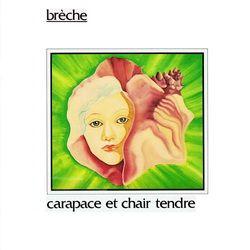
Another pearl from Québec, "la Belle Province", another one-shot band winding between symphonic and folk rock. Their sole studio work was titled "Carapace et chair tendre" (meaning "Shell And Tender Flesh"), and this "Vent du Midi" ("South Wind") is one of the longest tracks in it and likely my favourite one. A flushing choice of acoustic instruments, a good rythmic work, a pleasant series of tempo changes and a bunch of well found themes are but some of the winning points of this instrumental.

This beautiful album still awaits a CD release so far.
 
The violin and the winds alternate on a a piano and acoustic guitar carpet building up a joyous atmosphere and more intimate passages, both full of positive and sunny flavours. It's not a common feature in prog rock and related genres, so I consider this as a welcome bonus. I like each and every moment of "Vent du Midi"... hope you'll like it a little at least.

Wednesday, 9 September 2015

Emergence (Visible Wind, 1994)

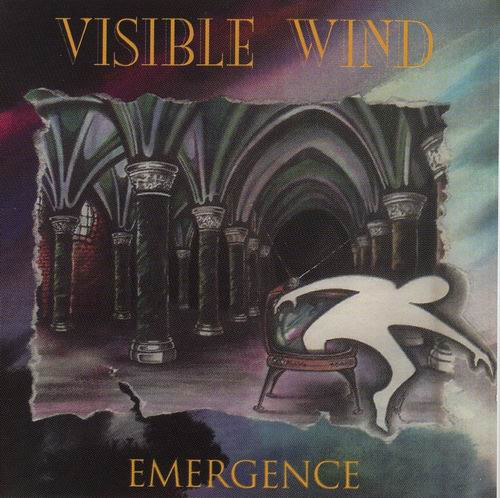
Coming from Québec Province, these Canadian artists are a long running band whose discography spans over three decades, from the late '80s to the early 21st Century. This is the title track from their 1994 studio album and shows their dynamic and ever changing kind of neo-prog rock. Not only keyboards in their music: you'll find here a well played guitar and a sensitive, eclectic rythm section.

"Emergence" was the third studio album by Visible Wind.

The sound solutions aren't necessarily new, but the track is built up following an original and unpredictable pattern, lining up diversified moods and many interesting breaks, especially when the bass guitar comes in. It's a pleasant instrumental track, full of energy and atmosphere, exploring a wide progressive spectre from the space rock to the Marillion-like melodies. More than this, these musicians are able to communicate their passion for a genre they like and they're happy to play. An excellent point, IMHO.

Wednesday, 10 June 2015

By-Tor And The Snow Dog (Rush, 1975)

This mini-suite by Rush is often quoted as a band's early progressive effort and a model for following and longer compositions. Also the main character of this epic, By-Tor, will come back in a later song, but I don't think we should label such a rich and diversified song as a sketch for succeeding masterpieces. In fact, the four movements of "By-Tor And The Snow Dog" (that's to say: I. At the Tobes of Hades; II. Across the Styx; III. Of the Battle; IV. Epilogue) are accomplished examples of heavy prog and - despite their tricky and mythologic concept - are a solid, neat and coherent set.

The lyrics as they appeared in the original LP.

Hard riffs, wide open melodies, atmospheric passages and graceful links follow one another to describe the fierce battle between two powerful and fantastic enemies. This is a kind of prog that simply didn't exist in 1975, a clever mix of toughness and refinement, simplicity and complexity. Something bound to become a classic. And yes, one of the Rush-est Rush tracks!

Monday, 25 May 2015

Le Corridor (Harmonium, 1976)

Harmonium are mostly known for their second album, "Si on avait besoin d'une cinquième saison" and you'll find many songs from that Canadian masterpiece in my blog. Nonetheless, there are some more excellent songs in the rest of their discography. The concept double album "L'Heptade", for example, includes this "Le Corridor", featuring the guest vocalist Monique Fauteux, also responsible for many back vocals and harmonies in this album. Her gentle voice perfectly fits with the delicate sound of Harmonium and gives even more sensibility to such a good composition.

"L'Heptade"was the third and final Harmonium's studio work.

The instrumental section is like evening passing clouds, so ethereal and so atmospheric that the listener simply flies away on a magic carpet. Of course, this is not for the solid rock fans, but I think this track - and the whole album at that - are as modern today as they were in 1976, and maybe more. The orchestral coda is light and unobtrusive, fading out with grace and leaving behind a nostalgy aftertaste. In short, if you could do with eight minutes of inner pleasure, this track's for you.

Wednesday, 18 March 2015

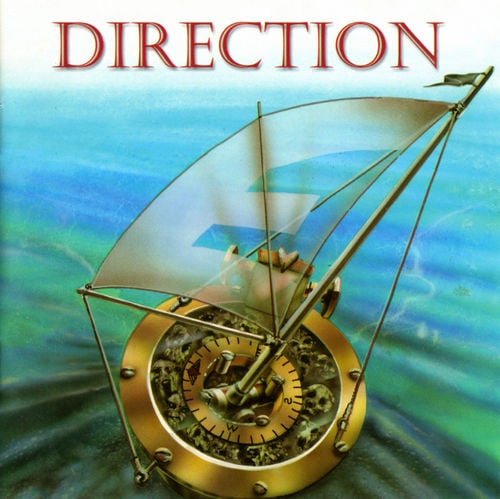
Soldat (Direction, 2008)

Direction is a Canadian act whose discography ranges between neo-prog and mainstream rock, including many Golden Era quotations and also a very good composition work. Take this "Soldat" ("Soldier", in English), coming from their album "Est" (meaning "East", of course). There's an excellent theme, growing up measure by measure and incorporating some beautiful instrumental bridges. It's like an expanded ballad, based on a rather martial drumming and a good vocal performance, until a wall of sound instrumental part comes in to enrich the big picture.

"Est" was Direction's fourth studio album.

The final section gets heavier and all the instruments reach their volume peak, introducing a discreet but effective guitar solo. The actual finale is a beautiful series of effects, including bells and vaudeville sounds. A plain neo-prog song, but I don't know why I like it, and I feel at home when listening to it. Thanks, my Canadian friends... better: merci!

Friday, 13 February 2015

The Study of Madness (Bolus, 2013)

This Canadian powerful trio made some good album during the last ten years and some excellent songs, like this "The Study of Madness". No musical revolutions here, no weird experiments, just a plain and modern song, fresh like a spring rain. The sounds are all well found and even better set in a clever architecture, kind of an enhanced ballad. Marillion and Dream Theater, Porcupine Tree and Rush go on very well in this track, including both sweet, atmospheric melodies and a bit of distorted guitars and furious drumming.

"Triangulate" is the third studio album by Bolus.

The final effect is like a refreshing wind, a journey back to the basics, something I surely need now and then. If you like such a genre, the whole  "Tiangulate" album should interest you, as the band give a series of rather short and smart tracks, never too tricky and never too simple. Measure is a great gift, after all.

Monday, 6 October 2014

I'll Never Be Like You (Once Again) (Saga, 1995)

The Canadian band Saga are among the most prolific prog artists ever, with more than 20 studio albums to date. They're also a very eclectic act, always looking for something new, and exploring such different worlds as hard progressive, neo-prog and arena rock, just to mention a few of them. This song, for example, taken from the "Generation 13" album, shows the easy-prog side of Saga. It's a ballad full of tension, based on a beautiful melody and featuring a rich orchestral arrangement.

I think this is one of the best albums is Saga's discography.

This one is never too pomp or intrusive, on the contrary it adds kind of more pathos to the song. Of course, "I'll Be Never Like You (Once Again)" is part of a concept album including 18 tracks and it should be better to listen to it in its own frame, but it's also a stand alone song, with a special, distinctive taste. If you want my opinion, try both the track and the album...