Showing posts with label Switzerland. Show all posts

Friday, 18 March 2016

In Doga Gamee (Andreas Vollenweider, 1991)

Vollenweider's "Book of Roses" album was the most elaborate work of this Swiss artist, usually considered as one of the best new age musicians ever. That's why I put in my little blog this song, titled "In Doga Gamee" and featuring many progressive elements. First of all, there are sweet and airy melodies, then a very rich choice of sounds and clever arrangements, including vocal harmonies and a great deal of instruments. 
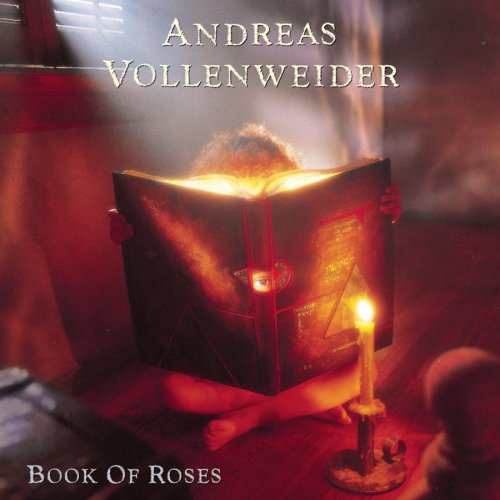
"Book of Roses" was the eighth studio album by Vollenweider.

Dozens of musicians were involved in the making of this album, building up kind of a flexible orchestra with a rich wind section and some ethnic instruments beautifully employed by Vollenweider. In this track I also appreciate the rythm solutions and, of course, Andreas' arp, the most known trademark of this eclectic artist. That's why this is definitely more than new age...

Thursday, 29 October 2015

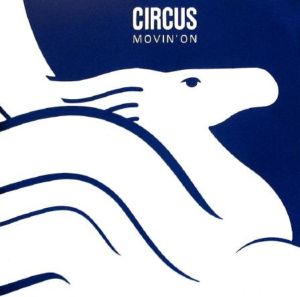
Movin' on (Circus, 1977)

There are just a few suites that I can compare with this "Movin' on" by Swiss band Circus. It's the title track of their second album and surely is one of the most intricated, uncompromising tracks from the  Continental Europe prog scene of the '70s. Not only this band didn't include a keyboardist, they even didn't had a guitarist! Still, this song proves how diversified and interesting prog can be without the two most iconic rock instruments. King Crimson somehow influenced this music, especially when the winds come in, but there are some vocal harmonies you could easily credit to Gentle Giant and a talking bass guitar that seems Yes-oriented.

Circus released three studio albums between 1976 and 1980. 

The truth is that Circus were just Circus and their "Movin' on" is a stunning display of melodic fantasy and rythmic invention. And it's simply impossible to get bored when listening to such a series of musical tricks and treats. Some atmospheric moments break the rythm and a few sung verses give a definite idea of the band's songwriting potential. In want of a better description, please listen to this. 

Friday, 6 March 2015

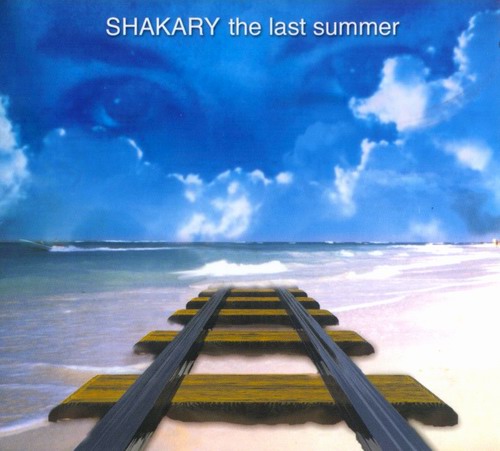
Sparkles in The Dark (Shakary, 2002)

Here you are a Swiss band from the early 2000s, and this is taken from their second album, called "The Last Summer". I know there's nothing really new here, but the combination between traditional neo-prog and a strong melodic vein is always pleasant to me. The singer, Michael Branzino, has a warm tone and a keen, sensitive approach. I also like the alternate piano / synth background and, of course, the dreamy guitar solo by Mario Krag.

"The Last Summer" came after a double CD debut album.

I also recommend the vocal harmonies and the succulent finale, including pipes (or more likely their sampled sound). It's a relaxing song, based on an excellent theme and very well arranged. That's why Paolo Scandella, aka "Scandy", the man behind Shakary, has many good reasons to be proud of his creature, if you ask me.

Thursday, 20 November 2014

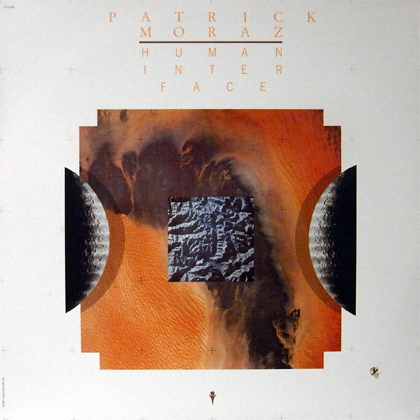
Light Elements (Patrick Moraz, 1987)

Here's a synth-prog track by Patrick Moraz, the Swiss keyboardist and one-man band, also famous for his short lived collaboration with Yes. This instrumental opens his album called "Human Interface" and is a very good specimen of symphonic keyboard driven music. It's a perfect depiction of light, like a summer dawn or a distant star approaching, one of those spacey tracks suggesting interstellar trips.

This was the seventh  studio album by Patrick Moraz.


The almost orchestral drums and the effective double lined melody are full of the sense of wonder I appreciate in good electronic music. The little but effective variations are very well found and that's why, even if there's just one melodic loop during the whole song, I'm never bored by it and I seldom re-start my CD reader and take another go to "Light Elements". Moraz really knows how to exploit flushing effects and devilish devices keeping a human soul in his music. Not so easy.

Sunday, 28 September 2014

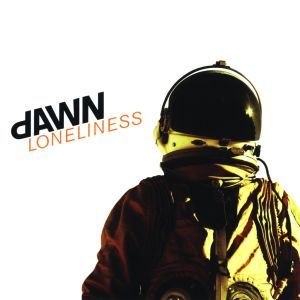
Rain on The Moon (Dawn, 2007)

This is a fascinating, classically progressive song by Dawn, a very interesting Swiss band. These musicians like vintage sounds, but they also know how to update them and seldom try some new paths. René Degoumois has a beautiful, pure voice, and also plays wery well his electric guitar. In this "Rain on The Moon", the second track from the debut album "Loneliness", for example, his dreaming solo is reminiscent of past masters, but has its own distinctive sound.

Dawn come from Montreux, on the Lake Geneva.

Another strong point is the free and clever architecture of the band's longest tracks - this one is more than 7 minutes long - where the different themes fluidly follow one another, with some pleasant surprises and well placed reprises. So, Dawn are both traditional and innovative, the way a prog band should be, IMHO. A good mix of familiar solutions and challenging breaks, that's exactly what I'm usually looking for...

Wednesday, 9 July 2014

The Riddle Princess (Dragonfly, 1982)

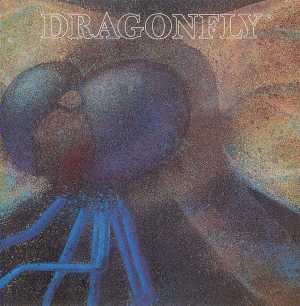
Too sad this Swiss band, born in the late '70s, just released one album. This epic will explain how good and well conceived their music was. They knew how to line up different moods and they liked to employ both acoustic and electric instruments, in the wake of such masters as Gentle Giant, Genesis and, most of all, Yes. The sound still seems good to me today, and the finest moments probably are the Moog and acoustic guitar interplays, drawing dreaming sequences and fairy atmospheres.

This album includes all the best features of classic Symphonic
Rock and that wasn't a commercial winning choice in 1982...

René Bühler, the singer, has a sensitive voice, clearly inspired by Jon Anderson, but with a personal note. This suite has a special charm, suspended between the highest aerial regions, and the pulsing rythm section, cleverly enriching the instrumental passages with intricated needleworks. When the tempo rises up, Marcel Ege's electric guitar also comes in and adds its stingy notes to the big picture. Really, a good way to spend your next 17 minutes of spare time.

Tuesday, 13 May 2014

Travel of Dream (Clepsydra, 2002)

This three parts little suite, taken from the album "Alone", is one of the best songs of Clepsydra, a Swiss band whose music is a clever and personal interpretation of the '80s and '90s so called neo-prog. Their sound is rich and dynamic, as this "Travel of Dreams" proves it very well. Keyboards, guitars and drums are probably the best features here, but the whole piece is worth a keen listening. One of this song's strongest points, IMHO, is the perfect mix of sung themes and instrumental passages.

"Alone" comes with three alternate cover arts. Besides this "fish"
version, you'll find the "octopus" and the "chicken" ones.

You'll find melody everywhere, and dreaming moods, too. This doesn't mean the track's a sweetish one: Clepsydra never goes pomp or bombastic, their music has a neat and discreet nature, and if it's relaxing, it isn't boring. A special mention goes to Aluisio Maggini's voice, both strong and sensitive, and to Marco Cerulli's guitars as his solos probably represent the most recognizable trade mark of Clepsydra. Not made for musical Revolution, but surely made for musical Meditation.

Sunday, 17 November 2013

La Danse de la perte (Galaad, 1996)

This Swiss band’s album “Vae Victis” features several excellent tracks. “La Danse de la perte” (meaning “Loss Dance”) presents many interesting aspects. The first one is its unusual architecture: a suite of about 12 minutes divided in two very different parts: part 1, titled “Maybe We Are Brothers”, is sung (mostly in French) and even if this song is dedicated to a dead friend and not to a lover, these beautiful lyrics remind me an Aube, a medieval poetry in which the lovers complain the approach of dawn (Aube, in French) bringing their parting with it. Part 2, “Wasicun”, is an instrumental fast tempo progression, based on keyboards and with some very good guitars too. A moving storm, I daresay.


The band's line-up in 1996, as shown in "Vae Victis" booklet.


The second interesting point is, of course, the music. It’s absolutely original, showing how prog rock can’t be enclosed in a strictly regulated genre, with a harsh and gloomy ballad, some evocative instrumental interludes and the stunning finale I tried to describe above. A last mention goes to Pierre-Yves Theurillat’s vocals, mighty and hoarse, but also sensitive, a rock voice fond of melody.