Showing posts with label Belgium. Show all posts

Monday, 31 August 2020

The Guide (Ken's Novel, 1999)

Here you are a Belgian band dealing with neo-prog sounds with a highly dynamic twist. "The Guide" is the title track of Ken's Novel's debut abulm and also its opener (or Chapter 1, following the literary presentation of this CD's tracks). There are good themes, simple and effective melodies in an upbeat main structure that some beautiful atmosferic passages enrich on the emotional side. Bernard Piette's keyboards provide a perfect background  and also some thrilling energy throughout the song. 

Denis Bulon is responsible for this imposing artwork.

Eric Vanderbemden's  guitar graces this song with lively and sometimes heavy riffs, while Patrick Muermans not only sings it very well, but also sets up a creative drumming interwined to Geoffrey Leontiev's drizzling bass. I do like the rich mixture of sounds and words in "The Guide" and its good balance between polished neo-prog and good old progressive rock.

Tuesday, 14 June 2016

Chapter II: Crowd on Sale (Ken's Novel, 2004)

This is a highly dynamic track by Belgian band Ken's Novel, taken from the album "Domain of Oblivion". Full of solos, devilish interplays, energetic guitars, dreamy interludes and earthy vocals, this track can be considered as a modern approach to progressive rock, both up tempo and melodic, not so far from the rockiest side of neo-prog. I also see a crossover and electronic sound in this track, based on irregular rythms and passionate themes, so that this is the less boring track I can imagine. 

"Domain of Oblivion" is the third album by Ken's Novel.

"Crowd on Sale" has an enthralling allure and such a beautiful, a manifold texture, a bright mood and a polite orchestration, along with a skillful performance by the entire band. If you like progressive rock the way it chould be, this song is for you.

Tuesday, 29 December 2015

Acrostichon (Isopoda, 1978)

This is a very good example of European symphonic rock from the late Seventies. These Belgian musicians surely liked Genesis, Camel & Co., but they had their own style and created a pair of excellent albums where the classical plots went along a free, almost Canterburian vision. This is the title track from their debut LP and it surely is an enjoyable song, featuring a long instrumental intro and a sung section full of delicacy and intensity.

 
Isopoda were a foursome plus some very good guest musicians.
 
Some of the singer's passages aren't too far from Ian Anderson's tone and there's a constant interplay involving all the instruments, with a folky touch. Most of all, the electric guitar has an original sound, somewhere between Hackett and Gilmour. If you like classic prog with a special twist, Isopoda is for you.

Friday, 2 October 2015

Mox (Prelude, 1979)

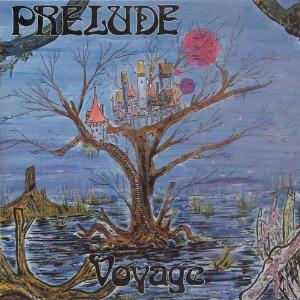
Prelude were a Belgian band that released a sole album titled "Voyage" in 1979, one of the most difficult years in the history of our beloved genre. That's likely why they didn't last so much and disbanded soon after this release. Guitarist Vincent Fis, however, founded a neo-prog band called Now some years later (and you'll find something by them in my blog). Back to Prelude and their opening track "Mox", I'm sure you'll perceive the naive but convincing mood of this song, musically situated between classic symphonic rock and the impending neo-prog wave.

A vintage album with a very pleasant old fashioned sound.

It's a rather long composition featuring a fluid, warm keyboard-driven sound and a good architecture. The sung themes and the instrumental parts follow one another with ease and good taste, mixing the French school (Ange and Atoll, especially) and the British one, namely Wakeman's solo albums, IMHO. A good guitar solo enriches the finale of "Mox" and also the rythm section is fully enjoyable. If you like old and forgotten albums, I bet you'll listen to this with pleasure.

Wednesday, 22 April 2015

Beyond The Mountains (Daniel Denis, 1991)

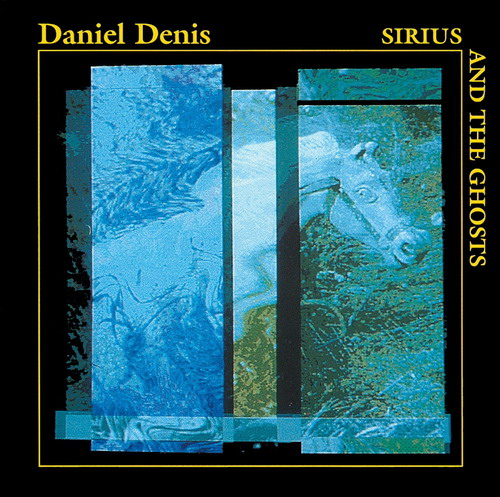
I usually don't like what someone would call experimental music or maybe RIO. But I do think Daniel Denis - yes, the member of Univers Zéro - knows how to explore new frontiers without that good deal of boredome such a task too often icludes. Take this "Beyond The Mountains", the opening track of his solo album "Sirius And The Ghosts". It's a rather long instrumental based on an obsessive short theme, a compulsive, slightly dissonant lilt going through a dozen variations. Sounds exactly like the stuff I usually try to skip. Well, not at all.

This album was the first solo work by Daniel Denis.

Not only Denis catches my attention, but he also succeeds in what seemed imposssible to me: his piece of music surely is unusual and unsettling, but also pleasant and full or real emotions. Oh my... not a pure intellectual experience, but a revealing, passionate, even touching track! Try it, my friends, and see how RIO - or whatever you call this kind of music - can be when a great and sensitive musician takes care of it...

Monday, 6 April 2015

Converging Universes (Now, 1991)

These Belgian musicians released three albums between late '80s and early '90s, and this track, coming from their second work, "Spheres", probably is their best piece of music. It's a 33 minute suite, divided into seven movements, basically a Yes-inspired track, but with an original choice of effects and many beautiful themes, cleverly lined up. The singer Vincent Fis has a warm, light voice and he also plays guitar very well. As usual with Yes-oriented bands, you'll find a good deal of vocal harmonies and bass lines, as well as keyboard fast progressions and church-like organs... and I'm pleased to say everything's well done.

This is by far my favourite album by Now.
 
I also recommend this song for the mood changes, the spacey interludes and the suggestive interplays. The sound is never too compact and each instrument has its own highlight. Now also add some piano-electric guitar duets I really like and not necessarily included in the Yes canon. So, don't expect weird experiments here, but enjoy prog as it used to be (and maybe should be).

Saturday, 16 August 2014

Find The Mistake (Machiavel, 2011)

Machiavel are one of those bands that constantly surprise their fans. Each of their albums, maybe each of their songs has something new and unexpected in it. This is certainly the case with "Find The Mistake", taken from the album "Eleven". It's so modern and musically up to date that you could figure out this comes from one of the XXIth Century post prog bands.

This 2011 album is the 11th Machiavel's studio work and it also
features 11 tracks. Its title is a matter of coherence, isn't it?

Not at all: it's just another face of the unpredictable Machiavel's sound. And there's more than a gloomy melody: just listen to the arcane intro or to the long and beautiful electric guitar solo towards the end of the song, spectacular and original, I daresay. That's how an experienced and creative band can merge the old and the new to make a good and emotional song. Well done, my old Belgian friends!

Friday, 7 February 2014

The Statue (Mindgames, 2006)

If I had to choose a single song as a modern prog rock digest, I'd probably pick up this Mindgame's epic. Taken from their second album "Actors in A Play", "The Statue" begins with a church organ intro, then goes through many different moods somewhat related to some of the greatest artists in our beloved genre, without being a derivative work. There's a fresh, even joyful feel throughout the 16 minutes of the song, a clever distribution of the musical ingredients and a highly creative mix of old and new sounds.

This was Mindgame's second album. I do recommend it.

Those Belgian guys like melodic prog, but they also know how important is to surprise the listener and they do it very, very well. This suite isn't a straight line, it's a zigzag through a puzzling land so that you'll find a great energy and something new at each and every corner. Last but not least, Mindgames play well and I especially like Bart Schram's clear and pleasant voice, Tom Truyers' manifold keyboards and Rudy Vander's beautiful electric guitar solos. Believe me or not, this is a brilliant track.

Saturday, 14 September 2013

Leave It Where It Can Stay (Machiavel, 1976)

"Leave It Where It Can Stay" was the closing track of Machiavel's self named debut album, released in 1976. I immediatly liked it when I first listened to it and I know this could be because of some sections of the song reminiscent of this or that prog band, but there is more than this. I really like the slow and solemn rythm of this track and I also appreciate its melody, a very sensitive one. If nothing's really new in this 8'30" composition, I daresay nothing's out of place.

I never liked this cover, the music inside is far better.

If the first sung part is a good one, sort of a sad ballad, the second and final one, a long instrumental ruled by a slightly acid guitar solo, is a real treat. True, some real life effects (a door opening on a windy weather) sound strange, but Jack Roskam's guitar is so dreamy and so sincerely sad and Albert Letecheur's keys are so sweet that I can't resist and restart the track. Well, Iìm probably gone nuts, but this Belgian track has won my heart.