Showing posts with label 1976. Show all posts

Tuesday, 28 September 2021

Los Delirios del Mariscal (Crucis, 1976)

Crucis are one of the most influential bands from Argentina, despite the exiguity of their discography, no more than two studio albums and some live recordings. This is the title track from their second LP, meaning "The Marshal's Deliriums", released in 1976, just some months before they disbanded. Crucis were a rather eclectic act: their symphonic style included heavy and delicate moments and this track belongs to the latter. It's a 10 minute instrumental piece (all songs but one have no lyrics in this album) where Kerpel's calm and elegant keyboards perfectly match with Marrone's guitar solos. 


Juan Gatti is responsible for this beautiful art cover.

The well found recurring main theme guides the listener through an impressive and liquid crescendo beginning with an ethereal, spacey atmosphere and leading to the majestic finaale, something reminding me of Camel's best moments. No intricacy here, no sudden changes, no showy passages: just pure emotion and instrumental skills well spent for the big picture. In short, beautiful and clever!

Sunday, 13 November 2016

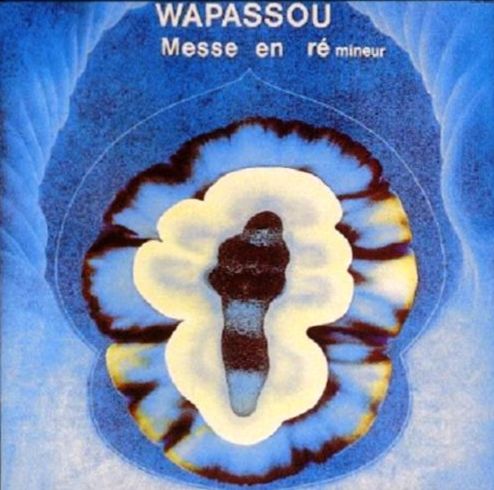
La Messe en Ré (Wapassou, 1976)

Originally split on the two sides of the LP "Messe en ré mineur", this Mass in Dm is a real treat for any prog fan. First of all, this French band (from Strasbourg, I think) featured a highly creative keyboardist, Freddy Brua, one of the best forerunners of electronic progressive music, then Jacques Lichti's folkish violin adds a very special touch to the spacey background provided by Brua. I won't forget the rest of the band, of course, especially the acoustic guitar touches by Karin Nickerl and the surprisingly effective voice of Eurydice.

...And if you think this music's tricky, what about its cover art?

Eastern suggestions, krautrock beats, liturgical organs, dissonant chords, fully prog interplays, well it's not easy at all to put a label on such a magmatic music! For sure, its hypnotic flow take me far away from the daily life around me and creates colourful waves in my mind,opening windows on a bunch of parallel worlds. That's exactly what a prog composition should do, IMHO.

Wednesday, 8 June 2016

Dancer (Rainbow Theatre, 1976)

Here you are an Australian band from the '70s packed with 14 musicians, including rock and classical instruments and playing an amazing mix of melody, jazz, musical and prog rock à la King Crimson. This is one of the two suites included in their second album, titled "Fantasy of Horses". It's somehow puzzling and also funny how Rainbow Theatre swing from opera to pop rock and from fusion to prog. 


A weird and enjoyable melting pot... that's Rainbow Theatre!


This epic is divided into five parts, each one adding its own distinctive touch to the big picture, until the last one bring us all back to the Court of the Crimson King. Keith Hoban's tenor voice is a strong point here, with a lushing orchestration and a dramatic mood, even if the concision of each movement give a lighter and lively plot to the entire song. Such a pity this band is virtually unknown outside Australia.

Saturday, 12 March 2016

Honky Tonk Train Blues (Keith Emerson, 1976)

I know "Honky Tonk Train Blues" isn't properly a prog rock track, being a boogie-woogie classic by Meade Lux Lewis from the roaring Twenties, but, you know, Mr. Emerson could turn everything into progressive music. His version of this piano standard is simply stunning, full of energy and musical colours. Released as a single in 1976, and later included in ELP's "Works - Volume 2", this devilish performance got very popular, especially in Italy where it was adopted as the theme song of a TV show.


This 7" single also included "Barrelhouse Shake-Down".


Sweat and enthusiasm: those are the keywords not only for this sparkling cover, but for the whole career of Keith, one of the most charismatic musicians ever. Back to "Honky Tonk", it proves how diversified and unpredictable can be the sources feeding a progressive rock keyboardist and how joyful and eclectic Keith Emerson's talents were. That's why changed in a way the musical world.

Saturday, 5 March 2016

Blind Man's Mirror (Second Movement, 1976)

One of the most underrated German bands ever, IMHO, Second Movement released their first album in 1976 and this is its title track. The smell of the Seventies is very strong, especially when the keyboards come in, while the acid electric guitar and the bitig vocals add the right dose of lysergic sounds to the big picture. It's a fascinating mix of krautrock, symphonic prog and psychedelia, with just a pinch of space rock. I like the melodies too, so well found and richly diversified with vocal bridges and instrumental parts.

I highly recommend all the tracks of this album.

The keyboards and the guitars alternate with grace and fantasy, while the rythm section provide a lively and fluid stream supporting the manifold musical solutions of the track. Another living proof of how lushing was the German prog scene during the mid-Seventies and another example of the hundreds of hidden prog pearls we must shouldn't forget.

Friday, 12 February 2016

Mountains (Socrates, 1976)

A stunning closing track this "Mountains" is! Socrates (previously named Socrates Drank The Comium) released their "Phos" album in 1976, but they actually recorded it in 1975 with Vangelis' helping hand (and even more than a single hand...). I think such a record can still be considered as a masterpiece. This song in particular - starting like a Fleetwood Mac track, then passing through less common phases and emotions, proves how good this band is when it comes to mix and shake different ingredients and manifold inspirations.

"Phos" was the first album credited to the band as "Socrates"

Nonetheless, their final product is as coherent and original as a prog piece of music can be. The mid-folk and mid-classically-driven acoustic guitar is one of the highlights of "Mountains", and it offers the most adventurous solo on a spacey and essential  background, but I couldn't forget the highly creative drumming, creating a weird atmosphere and sounding so good and so Seventies!

Wednesday, 28 October 2015

Este é o lugar (Terreno Baldio, 1976)

What if Gentle Giant were born in Brazil? Strange question, maybe, but we can try a good answer thanks to this Brazilian band. "Este é o lugar" ("This Is The Place") comes from their debut self named album and has the strong, unpredictable, jazzy and symphonic flavour of the Giant. Even the vocal harmonies could be compared with those of the British prog masters. But, of course, if you like such a complex, eccentric and diversified music, you can't really be considered as a derivative band.

This debut album was re-recorded in English in 1993.

Terreno Baldio, as a matter of fact, have all the fantasy and all the colourful creativity they need to be a world apart in the South-American prog scene. Their interplays are fascinating and highly dynamic, their sung themes are suspended and effective and they even know how to include in this song - and in many other ones - a good pinch of Brazialian music. That's why I can state here that listening to this track was a special and brand new experience to me. Just do it you too.

Tuesday, 8 September 2015

Your Eyes (Hoelderlin, 1976)

I adore Hoelderlin's sweet and warm kind of prog. This song, "Your Eyes", taken from the 1976 album "Clowns & Clouds" is even more than this, featuring a slightly acid arrangement and a more experimental vein. The vaguely jazzy rythmic backgroung is highly creative and all the instruments add their own distinctive touch to this unusual song, where a classic melody meets a syncopated tempo.

"Clowns & Clouds" was the third studio album by Hoelderlin.
 
Of course, there is also room for some delicate and poetic moments, the ones the band is famous for. This is a brilliant example of how a bunch of good musicians can write a fully enjoyable song without any trace of banality. And what about the final violin solo? Pure gold, believe me. Once again, I recommend this song by Hoelderlin to all my progressive friends out there.

Monday, 25 May 2015

Le Corridor (Harmonium, 1976)

Harmonium are mostly known for their second album, "Si on avait besoin d'une cinquième saison" and you'll find many songs from that Canadian masterpiece in my blog. Nonetheless, there are some more excellent songs in the rest of their discography. The concept double album "L'Heptade", for example, includes this "Le Corridor", featuring the guest vocalist Monique Fauteux, also responsible for many back vocals and harmonies in this album. Her gentle voice perfectly fits with the delicate sound of Harmonium and gives even more sensibility to such a good composition.

"L'Heptade"was the third and final Harmonium's studio work.

The instrumental section is like evening passing clouds, so ethereal and so atmospheric that the listener simply flies away on a magic carpet. Of course, this is not for the solid rock fans, but I think this track - and the whole album at that - are as modern today as they were in 1976, and maybe more. The orchestral coda is light and unobtrusive, fading out with grace and leaving behind a nostalgy aftertaste. In short, if you could do with eight minutes of inner pleasure, this track's for you.

Tuesday, 14 April 2015

Music Reincarnate (Rick Wakeman, 1976)

Here you are a true old progressive rock suite, coming from one of the men who mostly contributed to the definition of the genre. "Music Reincarnate" comes from Rick's album "No Earthly Connection" and spans over 28 minutes of duration. This track is divided into five parts (The Warning, The Maker, The Spaceman, The Realisation and The Reaper) each one featuring its own spirit, but all fitting very well into the big picture. Due to the length of the suite, its last part opened the original LP's B-side. 

The original LP included instructions to "bring the cover to life"...
 
...by placing a reflecting cylinder as shown!
 
The lyrics about God being musically deceived by humans probably aren't Wakeman's best literary achievement, but the music is excellent, including several well found melodies, tons of tempos, moods, vocal harmonies, orchestral arrangements and - of course - keyboard solos. Ashley Holt's vocals are another good reason to dig up this song: a warm, bittersweet voice going up and down your spine, especially during the second section of the epic, likely my favourite one (but I'm also partial to part 3). Well, it's about time to let you listen this pearl once again.

Thursday, 9 April 2015

De futura (Magma, 1976)

This long epic by Magma, taken from the album "Üdü Ẁüdü ", proves how unpredictable and still pleasant their music can be. Yes, Magma aren't always arcane and tricky: this song starts like a sci-fi soundtrack, with a well recognizable  riff, then goes through a jazzy bridge and here you are an ironic and also military choir. When the bells sound, a funky-rock passage comes in and weird vocals play with the bass and the drums to bring back the military and funny theme.

This was Magma's sixth studio album.


Next, an atmospheric interlude including some electronic devices, a slightly distorted accelerating bass line, sci-fi effects again on an incredibly complex rythm, finally a rather heavy rock riff and the closing cymbal-driven section. Strange to say, such a musical mess flows like a river through a variated landscape, and you reach the end of the song in no time, following the rythm section and seeing alien worlds and races with your mind's eye. And this one's played just by the hardcore trio of the band... Weird, but also very, very good. Bravo!

Sunday, 1 March 2015

A cena, per esempio... (Banco del Mutuo Soccorso, 1976)

This is the opening track from the album “Come in un’ultima cena”, also relesed in English as “At Supper, for Example” (the whole album was translated with “As in A Last Supper” for Manticore label release).  Strongly based on Francesco Di Giacomo’s sensitive vocals, kind of the lead instrument here, the rich melodic lines are like the spires of a musical serpent, drawing Majestic spirals in and out the synth and piano background.


Leonardo's "Last Supper" inside the gatefold LP.

The lyrics depict the internal struggle of Jesus Christ during the Bible episode inspirating the title for the song. Mind, there are no religious themes here, just a deeply human pain. The ancient instruments the synth imitates add a mysterious, epic charm to the track, that really moves me each time I put it on my player. Prog emotions, I daresay… 

Sunday, 8 February 2015

Look What I've Done (Think, 1976)

Think were a short lived band from Auckland, New Zealand, and their only album, called "We'll Give You A Buzz" brings back in 1976 the proto-prog sounds, providing a fresh, melodic art-rock. This song, for example, is full of nice passages, featuring a very good sung melody and a charming keyboard solo, plus a well conceived architecture. The vocal harmonies are pleasant too and very well found, while the electric guitar adds a slightly acid taste to the song.

I highly recommend the whole album to my prog friends.

Beyond the hippy flavours and Ritchie Pickett's excellent vocals, this track suggests a calm - still never too relaxed - mood, something like a liquid sound, a placid and powerful river. Maybe I should dig a little more into less known prog scenes. At the moment, I'll listen to this beautiful song once more. Will you?

Saturday, 4 October 2014

Oxygène Part 2 (Jean-Michel Jarre, 1976)

One of my favourite electronic tracks ever. And with a strong, persistent symphonic smell, what's more. The whole "Oxygène" album is a treat, with its intricate architecture and its atmospheric sounds, but this track is simply exciting. On a slow tempo, arcane background Jean-Michel Jarre insinuates some swirling, electric flashes until the bombastic main theme explodes in all its glorious wideness. It's something like a blinding sunshine in the heart of a storm, like a stroke out of the blue.

Jarre released "Oxygène" in 1976, then a sequel in 1997 
and finally a remastered edition in 2007, called "Oxygène 3D".

Then the fluid, archaic waves close again before a second burst and a swinging finale, introducing the third track. As you probably deduced, I'm fond of "Oxygène" and especially of this second section. Jarre was surely reminiscent of the German electronic rock experience, but he translated that language in a more epic and full-bodied style, something I still listen to with a great, inner pleasure.

Monday, 4 August 2014

Verità nascoste (Le Orme, 1976)

One of the most delicate and beautiful prog ballads ever, IMHO. Its classical accents, its acoustic arrangement and especially its sweet melody are simply heatbreaking. Le Orme's discography surely includes many other and more adventurous tracks, but I'll always like this simple song and also the way the band suggests an old, almost fairy world. The lyrics add some more magic to this track: the singer tries to renew his love story, to relive the emotions he proved, even if time changes everything.

"Verità nascoste" was the 8th Le Orme's studio album.

The instrumental sections are committed to a little string orchestra and this choice improves the natural grace of "Verità nascoste" (that's "Hidden Truths" in English or also "Secret Truths", the title the band gave to the never released English version of the track and its album), and also anticipates the "chamber music" period of Le Orme between 1979 and 1980.

Sunday, 8 June 2014

Magnum Opus (Kansas, 1976)

Likely the proggest song by Kansas, "Magnum Opus", taken from the album "Leftoverture", surely is one of their finest and more challenging compositions. The way all the instruments come in and each one of them seems to lead the track, the perfect vocals by Steve Walsh... here you are more than enough reasons to love"Magnum Opus".


"Leftoverture" is probably my favourite album by Kansas.
 
But there's another one, maybe the most important one: those musicians achieve here a lushing, charming fusion of European prog rock - including all its sub-genres, I daresay - and their own American roots: this is the Kansas' way, the Kansas' gate to the progressive world. The rythm is enthralling, the main theme is bombastic, the mood is as spiritual as such an epic can be... what else? Just this: the varied, multi-coloured, unpredictable architecture "Magnum Opus" has got. Just try and see...

Tuesday, 27 May 2014

My Room (Waiting for Wonderland) (Van Der Graaf Generator, 1976)

Taken from "StillLife", the album released in 1976 by VDGG, "My Room (Waiting for Wonderland)" is a stunning, heartbreaking song, at least IMHO. Peter Hammill's vocals are even more sensitive and sadder than usual, performing on a deep tone a splendid, sweet theme. His voice is constantly doubled and supported by David Jackson's sax and Guy Evans' gentle drumming. In the long instrumental finale the main theme is still there, played by Hugh Banton on bass guitar, the rest of the band creating a Smoky, free arabesque around it, not to mention the discreet piano touches.

"Still Life" isn't an easy album to listen to. But then, a VDGG's LP never is...

The whole track is a dark, deep meditation on life and (waste of) time, melting languid abandon and sadness in a coherent composition. One of the best melodies even written by the band, one of their most enjoyable songs, one of the sweetest and gloomiest  musical journeys a poor prog fan can experience.

Wednesday, 14 May 2014

Mad Man Moon (Genesis, 1976)

The quintessential Tony Bank's song, I daresay. And a beautiful, deep meditation on human condition, too. Taken from "A Trick of The Tail" album, this piano driven song features a series of winning sung themes and instrumental variations (oh... that wonderful middle section!) and also some surprising tempo changes, something I'll be forever fond of. The lunar, nocturnal mood of the down tempo sections perfectly matches with the quick gusts ponctuating the song and pointing up its emotional peaks. Classical, yes, but also innovative and sometimes disquieting, "Mad Man Moon" always leaves a bittersweet trace in my soul.

 "I would welcome a horse's kick to send me back
If I could find a horse not made of sand."

The lyrics add something weird to the big picture, including some very well found images representing the relativity of human desire. Do you remember these lines, for example?


Within the valley of shadowless death
They pray for thunderclouds and rain,
But to the multitude who stand in the rain
Heaven is where the sun shines.


Defintely a song I love. And I suppose I'm not the only one.


Friday, 11 April 2014

Carry on Wayward Son (Kansas, 1976)

One of those widely known songs despite their patent prog inspiration. And this one's got all the features a hit should have: a catchy chorus, an enthralling rythm, a splendid vocal performance and a good 5 minutes of length. But this is also a prog song, displaying some tempo changes, a wide range of acoustic and electric instruments, a well structured interplay and even kind of a division into sections. The spirit of European prog, filtered through a strong American mainstream rock culture, results in a perfectly balanced up-tempo song.

This single was certified Gold, peaking at #11 in US charts.
Unfortunately, it's an edited version of 3:26 minutes.


The choral intro featuring the chorus of the song is stunning, then we enjoy the guitar riff - with a bonus piano - and a short guitar solo, followed by a melodic sung section and the chorus. The track goes on with more verse and chorus, then a different guitar riff and even a Hammond - electric guitar dialogue. Wow... there's a bit of everything here! And don't miss the guitar-lead finale. Pure music, pure joy.

Tuesday, 8 April 2014

Favole antiche (Celeste, 1976)

What a strange destiny was Celeste's! This Italian band (not to be confused with the French same named one) realised for a very little label their debut album in 1976, the only official one, without any commercial success, so that they disbanded very soon. But when prog rock came back during the early '90s their old work became sort of a cult album, widely known and appreciated and even their never released songs surfaced (released by their leader's well known prog label) getting more and more international acclaim.

 
This album was self named, but it's also known as
"Principe di un giorno" by its opening track title.

This song, "Favole antiche" (Ancient Fairytales, in English) perfectly represents their style, made of mellow melodies, acoustic arrangements and  dreaming low tempo moods. Their main inspiration was PFM's early albums, but you'll find a more delicate and melodic taste, a quiet, inner musical touch, a sweetest flavour I like so much. Never too intricated, this song is based on plain melodies and a stunning succession of classical solutions featuring flute, sax, guitars, gentle percussions and violin. A treat for an old méli-mélo guy as I am...