Showing posts with label 1990. Show all posts

Tuesday, 31 October 2017

Différences (Arrakeen, 1990)

When I first lisened to Frernch band Arrakeen's CD titled "Patchwork", I immediately appreciated Maïko's voice, something between Annie Haslam and Kate Bush. But very soon I loved all the rest. Meaning good arrangements, beautiful melodies, skilled musicians and - last but not least - a rather eclectic approach to neo-prog, including classic quotations, Marillion hints (Steve Rothery also appeared on the CD's last track) and folk passages.
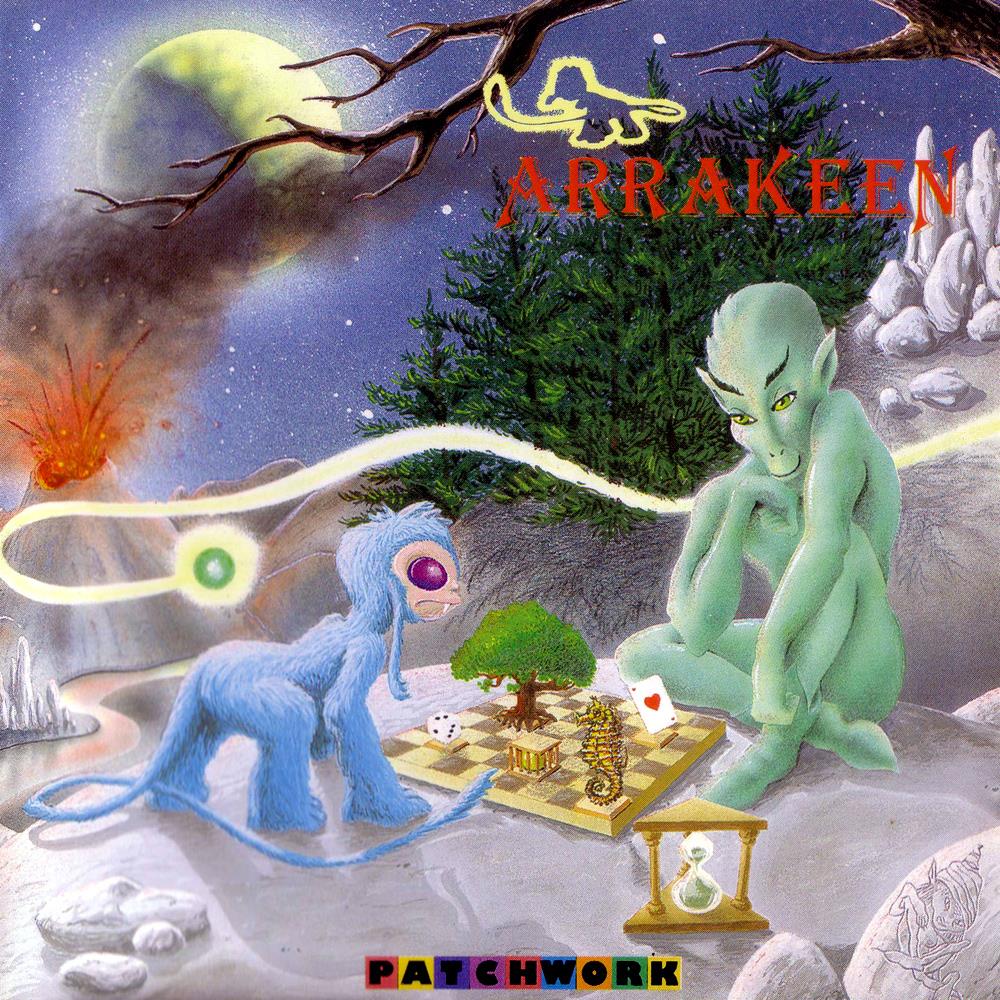
"Patchwork" was Arrakeen's debut album.

This song, the longest one from the album, is intended as a dialogue between five characters (She, He, The Painter, The Other One and The Echo) and is mostly based on a fluid mid-tempo and melodic pattern. Some good guitars and a clever keyboard background are also among its highlights. Unfortunately, Arrakeen were a short lived act and only released two albums. Such a shame, IMHO.

Tuesday, 2 August 2016

The Wood of Tales (Malibran, 1990)

This is exactly what you'd expect from an Italian prog band's track: fairy tales, acoustic instruments, mellow melodies, piano touches and, of course, a good mix of Mediterranean sunsets and Celtic mists. Please don't think I'm trying to underrate Malibran, 'cause I love their music. I sometimes need some labels to start an introduction, that's all. "The Wood of Tales" is a perfect mix of unpredictable changes and familiar sounds, an excellent instrumental full of magic and emotions.


The artwork says it all... doesn't it?


All the instruments add their special touch to the big picture, and especially the dreamy electric guitars (yes, there are two guitarists!) and the flute. The vintage mood is obviously strong, and so are the Golden Era references, but there are many modern settings I appreciate more and more each time I listen to this track. And each time I do so, I wonder how a debuting band could be so mature and well-balanced.

Monday, 25 April 2016

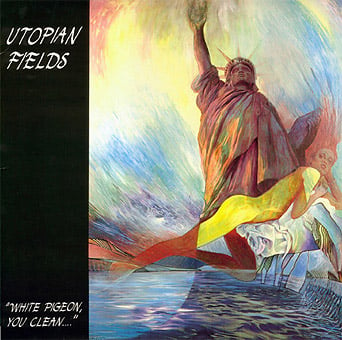
Pictures of Ages (Utopian Fields, 1990)

This track comes from Norway and was released by a rather obscure band called Utopian Fields, active between the late '80s and the early '90s. They were strongly influenced by Pink Floyd, nonetheless they mixed the Floydian spacey moods with other prog canons, setting up an enjoyable and vintage sound this "Picture of Ages" represents very well. It opens the album "White Pigeon, You Clean..." and lasts some ten minutes.

This was Utipian Field's second album. They disbanded around 1992.

The changes in tempo and instruments are excellent and the six musicians never try to rule the composition, so that it's a well balanced and richly arranged one. The dreamy atmosphere is broken here and there by stingy and acid passages, while the ballad-like sung themes are airy and sweet. I really like Utopian Fields' way of being traditional and creative, melodic and dynamic. Constrast is the key to good prog, after all!

Thursday, 11 February 2016

Natt (Thule, 1990)

This is the title track of the second album by Norwegian band Thule. Even if you can pick up here and then some hints from older prog acts, I think it'a a fully original kind of music with dark and energetic moments, many changes - especially mood changes - and aggressive mother tongue vocals. The final effect is that of a sharp and eclectic prog, suspended between symphonic elements and experimental sounds à la Magma.

Even the cover art has an original taste of its own...

The dynamic and intricate interplays support an arcane, even scary  atmosphere, so far from many Scandinavian pale and dreamy prog tracks. Surely an appropriate way to open an album and to capture the listener's attention. That said, the whole CD is worth a keen listening, IMHO. By the way, "Natt" means "Night" in English and I think it's a proper title for such a murky song!

Saturday, 24 October 2015

Brilliant Streams (Asturias, 1990)

Asturias' name could fool many listeners, so let's immediately say that this is not a Spanish band. In fact, Japanese multi-instrumentalist and composer Yoh Ohyama chose this label to release his works with the helping hand of some guest musicians. This is the title track from the second album credited to Asturias and actually is an undivided suite of more than 22 minutes, a delicate and classically arranged trip into a fairy world, with a gentle touch of Eastern sounds. Just a touch.

Abstract and full of details. The cover art announces the music.

The themes are pleasant and the whole composition could be described as Mike Oldfield meets Ant Phillips. I really like the way Yoh and his friends alternate slow tempo, ethereal passages and folkish dances, but also the fluid appearance of this music, that actually flows like a brilliant stream and offers an almost visual sequence of sketches that remind me a Japanese garden. Excellent music, IMHO.

Friday, 23 October 2015

Slow Dance - Part Two (Anthony Phillips, 1990)

Like in this long suite first part (see the post in this blog), "Slow Dance Part Two" is a beautiful, calm and classically arranged succession of good themes and colourful variations, one of the best achievements of Ant Phillips' solo career. The acoustic guitars, the winds, the harp and even the drum machine all cooperate to an elegant and relaxing tapestry ruled by the keyboards.

Ant Phillips seems to live in a pleasant world of his own.

This part spans over more than 26 minutes, but don't expect a challenging listening experience, as the track is so pleasant and so well organised that time flows rapidly and each musical sketch has its own charm. I rarely listened to such a delightful piece of music, that's got the power to infuse wellness into the listener's soul. Not a neglectable virtue, I'm sure you agree.

Wednesday, 9 September 2015

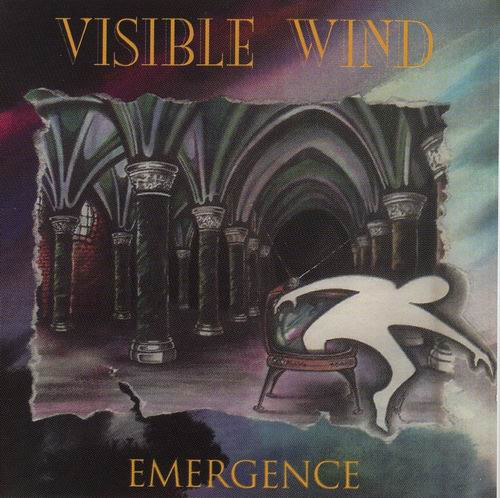
Emergence (Visible Wind, 1994)

Coming from Québec Province, these Canadian artists are a long running band whose discography spans over three decades, from the late '80s to the early 21st Century. This is the title track from their 1994 studio album and shows their dynamic and ever changing kind of neo-prog rock. Not only keyboards in their music: you'll find here a well played guitar and a sensitive, eclectic rythm section.

"Emergence" was the third studio album by Visible Wind.

The sound solutions aren't necessarily new, but the track is built up following an original and unpredictable pattern, lining up diversified moods and many interesting breaks, especially when the bass guitar comes in. It's a pleasant instrumental track, full of energy and atmosphere, exploring a wide progressive spectre from the space rock to the Marillion-like melodies. More than this, these musicians are able to communicate their passion for a genre they like and they're happy to play. An excellent point, IMHO.

Tuesday, 21 July 2015

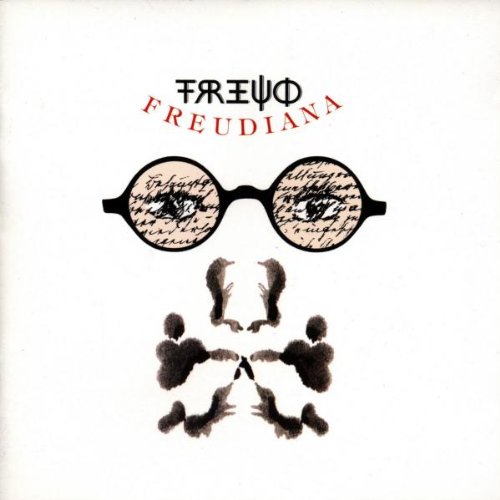
Freudiana (Eric Woolfson / Alan Parsons, 1990)

A song, this time. An apparently plain one, in fact, but - as usual with prog-related artists - there is more than meets the... ear! "Freudiana" is the title song of what should have been The Alan Parsons Project's eleventh studio work and actually is credited to no one (but Eric Woolfson's name appears in the stage cast version). It must be considered, however, as the last brainchild by both Eric and Alan. When Woolfson and Parsons parted their ways, a new album was more or less finished, then Woolfson decided to release it with a more rock opera arrangement, partly done by artistic director Brian Brolly.

The original version of the album features a white cover.


Even so, this song is quintessential APP and is sung by Eric on a very Parsonian electronic background. All the sounds are deep and arcane, luckily more than they ever were in the previous discography of the two artists. The melody is strong and effective with a gentle verse and a rather bombastic chorus, while the final guitar solo by Ian Bairnson provides that little rock 'n' roll that we all like to hear now and then in a song by the Project. The lyrics offer a revealing intro to the album, a concept about life and works of Sigmund Freud that also debuted on stage. An excellent song, unfortunately one of the last ones by one of the most successful musical duos ever.

Wednesday, 21 January 2015

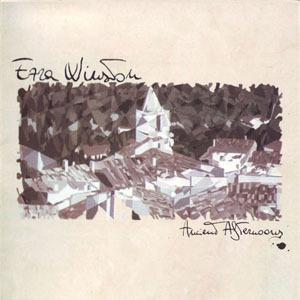
Ancient Afternoon of An Unknown Town (Ezra Winston, 1990)

Taken from the album "Ancient Afternoons", this 26 minutes suite is divided into nine parts bearing as suggestive titles as Magician's Words or The Dragon And The Ruby of Kos. I won't try to sum up the tricky narrative behind this assortment of wizards, dragons and battles, as I'm sure the music will be an enough good reason to listen to this track. The sung sections are just good, but the highlights here are the ever changing, magic, unearthly moods the band provide in the instrumental parts.

"Ancient Afternoons" was the second Ezra Winston's studio work.

There are some of the most praised Italian prog features, like the acoustic instruments (flute and guitar, plus a rich set of winds), the classical influence or the relaxed themes, but you'll also find some jazzy passages, a few medieval devilish dances, a recognizable folk reference, reminding me of the early Ant Phillips' songs and a symphonic setting not far from The Enid's example. Sure, this is not for heavy prog fans, but the rest of you should try this magical journey.

Tuesday, 25 November 2014

The Company (Fish, 1990)

When "Vigil in A Wilderness of Mirrors" was released, back in 1990, this rather short song immediately captured my attention because of its catchy melody and its vaguely medieval arrangement. But I soon realised that there were another reason why I listened to this one more and more: it was full of energy, the same energy I appreciated in early Marillion songs. All was done in order to support the overflowing strength of the singer, his dynamic way to communicate feelings and to narrate stories. Fish wrote the lyrics of this track, while the music is by keyboardist Mickey Simmonds, involved in many other prog releases (Mike Oldfield, Renaissance, Camel...).

"The Company" was released as a single for the German market.
 
The folk mood of this song is assured not only by the melody, circular and enthralling like some popular dances, but also by Phil Cunningham's, Gavyn Wright's and Aly Bain's acoustic instruments: accordion, violin, whistles and even the Irish drum called bodhrán. The irresistible drumming is by the well known Portuguese session man Luís Jardim, whose collaborations include the like of Yes, Rolling Stones, Paul McCartney, Asia, David Bowie and Elton John. The final result is, IMHO, one of the most enjoyable fast tempo prog songs I've ever listened to.

Friday, 9 May 2014

Humpty Dumpty (Motoi Sakuraba 桜庭 統, 1990)

This is the opening track fromn the debut album Gikyokuonsou (戯曲音創) by Motoi Sakuraba (or Sakuraba Motoi 桜庭 統  in Japanese) and it was a pretty good surprise to me when Musea released this work for the Western market. It's an instrumental track where classical, jazz and experimental influences merge in a coherent, dense sound driven by piano with assorted keyboards and perfectly supported by a creative rythm section provided by Ken Ishita (bass guitar) and Takeo Shimoda (drums).


Motoi Sakuraba released this one year after his last Deja-Vu's album.

Motoi Sakuraba, who also founded the band Deja-vu and composed many anime and video game soundtracks, couldn't have started better his prog solo career: this music is challenging and enthralling, strange and familiar in the same time. It's such a modern musical blend that I couldn't believe it was originally released in 1990: so many bands do this kind of music in the 2010s and are considered among the most updated and innovative proggers... listen to this, my friends, and I'm sure you'll be impressed by Mr. Motoi Sakuraba.

Wednesday, 23 April 2014

Melrose (Tangerine Dream, 1990)

Tangerine Dream's discography is simply exceeding, more than a hundred titles, including studio albums, live recordings and original soundtracks, not to mention reissues and compilations. I beg that's why some of their albums are seldom neglected. Unfortunately, this is the case with "Melrose", whose title track I'm introducing here. As this song demomstrates, this early '90s version of TD isn't mere ambient music at all: you'll find here two fully developed themes, a keen work on programming and a clever choice of warm electronic sounds.

Paul Haslinger left the band after this album in 1990.
 
The human factor is also important, as the second theme is played on sax by guest musician Hubert Waldner and, believe me, this is a real emotional peak. As usual, Tangerine Dream mix electronic paraphernalia and melodic skills in a special trademark blend going over the decades and the unavoidable ups and downs of such an overwhelming activity. Each time I listen to Melrose, I feel something good going up my spine and I remember how grateful we should be to this bunch of old boys over there...

Saturday, 5 April 2014

Rozmowa (Collage, 1990)

This song comes from Collage's first album, titled "Basnie", meaning "Fairytales", that's saying something! Please note that a previous version of this song (1986) was also released in the "Changes" compilation. Sure, "Basnie" production was a little disappointing and there were also some lack in the musical coherence of the longer songs, but the band's potential was great and clear. This "Rozmowa" (the word for it in English is "Conversation") is a splendid example of their bright and variated progressive rock. Keyboards and guitars are in the foreground, of course, but all the band's skills contribute to the track.


Collage finally re-united in 2013 and planned a series of shows.

The changing rythm and the clever arrangement are winning points for a song whose main feature is the compact and cohesive architecture, where instrumental and sung sections follow one another in a whirling but never messy pattern. I even like the spoken effects in the background, something I usiually don't appreciate so much. An excellent closing song for a debut album announcing so many good things to come.

Wednesday, 12 February 2014

Vigil (Fish, 1990)

The solo career of Fish, the first Marillion's frontman is a fluctuating one, with good and bad moments since he left the band. For sure, his first album, "Vigil in A Wilderness of Mirrors" still is one of his best achievements and its opening track, "Vigil" is probably my favourite one. It's an atmospheric song of more than 8 minutes, featuring a very good mix of moods, with a sensitive verse, an airy chorus and some interesting instrumental passages, including John Gilbin's bags, as a welcome Scottish signature.

Mark Wilkinson's art for Fish's first album.

Also the lyrics are excellent, with the typical Fish's uneasiness towards life and social ties. Maybe you'll miss some more rythm here, but the pliable, intimate and painful voice of Mr. Dick will certainly compensate for that. Each time Fish has a good song like this one, I'm there to listen to him.

Monday, 30 September 2013

Erpland (Ozric Tentacles, 1990)

Prog? Space? Ambient? Post-rock avant la lettre? Ozric Tentacles have a genre of their own, or maybe morer than one. Each Ozric's song is a world apart and I introduce here the title track of one of their most known albums, "Erpland", released in 1990. If this one isn't prog, it is certainly something akin. It's a beautiful rock song, with a well found recurring guitar riff and kind of a wall of sound throughout the track.

In this album cover appears for the first time Erp (right),
the character that would become one of the group's trademarks.


Moreover, rythms and the themes change and cross themselves, building up an original and rather intricate plot. But energy is the winning point. There's a mighty and joyful spirit in "Erpland", a colourful push reminding me some '70s West Coast band or an early '80s British Art-rock group. Be as it may, those English boys once again prove themself an eclectic and highly creative act, one of the last European cult bands.

Wednesday, 11 September 2013

Jeszcze jeden dzień (Collage, 1990)

There's a long debate among prog rock fans about this theme: can a good prog song be done lasting less than 5 minutes? I think Collage provided a very good and positive reply to this in their debut album "Basnie" with the song I'm introducing here, "Jeszcze jeden dzien" ("One More Day" in English). It's an energetic and compact opening track, including all the quintessential neo.prog features: splendid keys, wall of sound, catchy melody, good vocals, instrumental bridges, enthralling riffs and so on. Plus, no prolixity.

I recommend the 2003 remastered edition of "Basnie".

The musical ideas are well developed without any pointless loss of time, just the essential in the right place and time. You feel the joy of building up a song and performing it, you're dragged inside the band's mood and you don't need any further trwirls: the song is complete and perfectly done. This fast tempo track will always be one of my favourite Polish prog songs ever.

Monday, 25 March 2013

Slow Dance - Part One (Anthony Phillips, 1990)

IMHO "Slow Dance" is the best Ant Phillips' album ever. It's a suggestive and pastoral piece divided in two parts, equally enjoyable, even if I better like Part One. The slowness of the title result in a serene and grand musical architecture, where three main themes intertwin and evolve, building up a rural and airy symphony driven by keyboards and classical instruments.
 
Ant & his guitar...
 
This relaxed atmosphere has the power to calm me down even in my most nervous days. This music is full of visual suggestions, mainly from natural landscapes, but this isn't just a description: like a romantic poet, Phillips creates strong links between the nature's elements and the listener's soul, prompting a deeper and private exploration.

Tuesday, 19 March 2013

Le Chant du Monde (Minimum Vital, 1990)

Joy and optimism aren't necessarily the most widespread moods in prog rock songs. But this is the case with "Le Chant du Monde", the opening track of Minimum Vital's album "Sarabande". This French musicians know too well how to blend folk roots and vigorous rock in a unique sound. You'll find here the Mediterranean sun and the Occitan taste in a seven minutes instrumental fresco weaving acoustic and electric moments, slow and fast movements.

A recent line-up of Minimum Vital.

The background idea is to depict the variety and richness of the world, its multi-ethnicity in a joyful and enthralling dance pointing out, of course, the keen flavour of Southern France. That is not common and if you're new to this group, I highly recommend this track as your first sample.