Showing posts with label 1989. Show all posts

Saturday, 23 July 2016

The Portrait of A Boy / портрет мальчика (Horizont / горизонт, 1989)

Back to one of the best Russian acts ever, this suite in three movements fills the A-side of the original LP released in 1989 and bearing the same title. It's an interesting, uncompromising piece of music including contemporary classical elements, avant-garde electronic passages, tricky improvisations and, of course, a symphonic rock structure. The King Crimson inspiration is expecially strong during the first movement, but these musicians have their own musical point of view, based on fluid keyboards, stingy guitars and a highly creative rythm section.

"The Portrait of A Boy" was the second and final album by Horizont.

Even if they follow a rather experimental path, they never neglect the melodic side of their work and this suite features a good deal of well found themes and beautiful riffs during the first movement. The most stunning moments here are provided by Igor Pokrovsky's guitar interplays with Sergey Kornilov's and Andrey Krivilev's keyboards, but some of you (the most adventurous listeners, I daresay) will love the fully experimental second movement and its mysterious, spacey effects or the devilish improvised-like final section. I do think the entire track is still daring and original today as it was in the late'80s.

Tuesday, 5 July 2016

Journey to A Nightmare (Shamall, 1989)

Norbert Krueler, the German musician and DJ behind Shamall label, signed this mini-suite divided into six parts and chose it as the title track of the debut album of his project. As Smamall went on a long way, releasing a dozen of studio albums to date, it seems to me this is the right moment to look back at the very roots of this musical adventure. Since then, Kruel went through different genres and many experiments with Shamall, but this track will prove how strong his ambient, spacey and electronic inspiration was in the first place.

Shamall's long and prolific adventure began in 1989.


"Journey to A Nightmare" combines Floydian elements with krautrock sources and even with electro-pop (we're in the '80s, after all!). A rich choice of effects and some good, simple melodies are the highlights of the suite, but please don't forget Krueler's skills as a player. Plain and even naive as it is, this song has a powerful evocative strength I'll always appreciate. A long, fluid sketch, a quiet and tense journey toward a far, arcane star!

Monday, 2 May 2016

Presto (Rush, 1989)

This is the title track of an album released by Rush in 1989 and playing a special role in the band's musical evolution: the strong presence of synths characterizing their '80s production gets more discreet and the typically rock instruments are once again in the foreground, even if the trio don't come back to their early heavy sound. The resulting mix is however a very interesting one, as this song will prove: fresh rythm guitars, airy and light keyboard backgrounds, strong a neat vocals. 


"Presto" is the thirteenth studio album by Rush.

But what I especially like in "Presto" (mainly the song, but also the entire album) is the ever changing and unpredictable plot: when you're sure the tempo will raise up, it actually goes down and when you're expecting a melody, here comes a rock riff. This is exactly what a prog song should be, so... enjoy "Presto" and let the music vivify your lives!

Saturday, 5 September 2015

Quartet (Anderson, Bruford, Wakeman, Howe, 1989)

I like this track so much. It's a four part suite lasting some nine minutes and they all are minutes of chilling out delight. The first movement, called "I Wanna Learn" is an acoustic composition, driven by gentle guitars, a mandolin and, of course, Jon's vocals. The second section is titled "She Gives me Love" and continues on a more lively rythm the same acoustic and vaguely folk mood, giving this time more place to Wakeman's keys (a profusion of keys, to say the truth, but all very gentle).

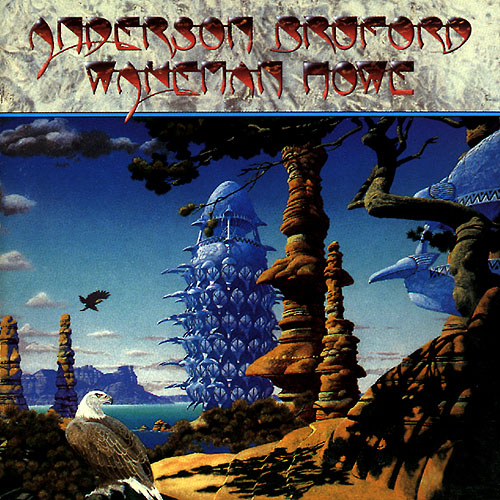
The only ABWH studio album is now considered as a classic one.
 

The third part is "Who Was The First", it's only slightly different from the previous one, and also resumes the first section main theme adding a choral arrangement a some Renaissance era touches. The last section, "I'm Alive", is simply heartbreaking, with its well found melody, its brilliant arrangement and an outstanding vocal interpretation. Finally, this is one of the finest examples of mainly acoustic prog rock and a convincing proof of those four musicians' talent both in songwriting and performing. And YES, they were great even without Squire's devilish bass guitar.

Friday, 17 April 2015

33 Years (Isildurs Bane, 1989)

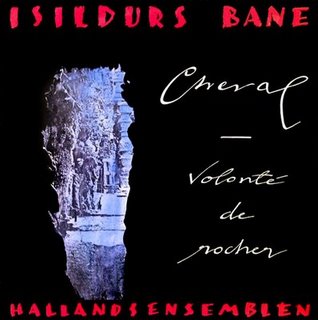
The story of the French postman Ferdinad Cheval, who decided to build up a castle - the "Ideal Palace", as he called it - using the stones and the rocks he collected during his walks, has always charmed me. In not alone there, as Isildurs Bane recorded an entire album inspired by Cheval's extraordinary project, titled "Cheval - Volonté de rocher" (meaning "Cheval - A Rock Will").


This is the album cover...
 
...and here you are the Postman's incredible achievement.
 
This orchestral track including a spoken expanation of the story is called "33 Years", the time Cheval spent building up his fairy castle. The theme is very well found and the orchestra / rock band mix perfectly works. As always with Isildurs Bane, there's a classical arrangement graced by properly prog rock cameos. And a good deal of good taste, too.

Tuesday, 17 March 2015

Prodigy (Lord Flimnap, 1989)

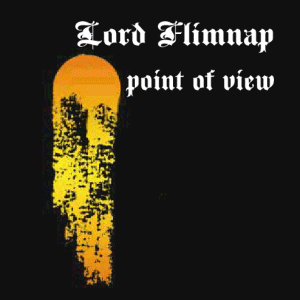
Can prog be a children's play? Not exactly, but not far from that. Take Lord Flimnap's only album, "Point of View", released in 1989 and luckily re-issued in 2004. All very, very young, those three Israeli musicians met in USA and decided to put down in songs their longing for good ol' prog rock times. Songs like this "Prodigy" sound like naive outtakes from "Trespass", but actually they're full of faith and genuine enthusiasm.

The Israeli label "The Third Ear" re-issued this album in 2004.

Listen to the opening 12 string guitar, enjoy the organ, appreciate the rythm variations and the guitar riffs... and be young, very young for a few minutes. The instrumental passage ruling the centre of "Prodigy" isn't a brand new idea, but it's a prodigy of gentleness and fairy fantasy. No, those boys didn't change the musical world, but I'm sure that prog still exists today thanks to them and to all the people like them, keenly preserving a dream and passing it on.

Friday, 30 January 2015

Go on My Way (Social Tension, 1989)

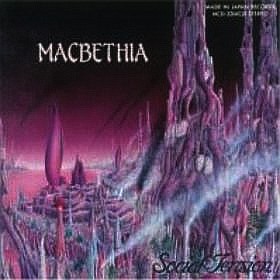
If you like keyboard-oriented prog and powerful trios, this track is for you. It comes from the album "Macbethia", by Social Tension, a Japanese band active between late '80s and early '90s, strongly influenced by ELP, but also liking up to date electronic devices. Mainly instrumental (but including some good sung melodies), this song isn't boring or monotone at all: many tempo changes and some original sounds catch the listener's attention.

This band released two studio albums.

As you can imagine, along with the modern samplings you'll find here some Hammond progressions by Nobuo Endoh and an excellent old style rythm section, provided by Suguru Iwasaki (drums) and Masahiko Õta (bass guitar). The classical influence is obvious, but the Japanese lyrics and the wall of sound climax give a rock opera taste to the song, something I usually don't like so much, but I actually appreciate here.

Friday, 16 January 2015

Easter (Marillion, 1989)

This is a very popular prog song, and that's saying something. In fact, it isn't a trivial song at all, displaying a somehow original architecture, with a first section reminding me of a folk ballad and the second one a more lively and uneven finale, plus a guitar solo bridge between them. The sung part is sweet and catchy, but also very well arranged, blending a 12 string guitar and the keyboards, while the rythm section gently stresses Hogarth's vocal performance. 

This single peaked at number 34 of UK Charts.
 
Then, Steve Rothery offers a splendid dreaming guitar solo, the aforementioned bridge, actually an emotional peak of the song. The last parti is leaded by H's vocalizations, with the whole band coming in to build a mid-prog mid-pop effect. The lyrics are about Northern Ireland conflict and I think they're one of the best ones in Marillion's discography. In its variety, this really is a great song, IMHO, one of those rare progressive tunes some purists contemptuosly criticize and irresistibly sing along.

Saturday, 27 December 2014

And I'll Recite An Old Myth from... (Providence, 1989)

These Japanese musicians released their debut album, including the long track I'm introducing here, in 1989, followed by a  second work eight years later. Then unfortunately they disbanded in the early 2000s. I didn't write "unfortunately" without any reasons, as this track should prove. It's a 20 minute epic, practically a well organized suite, including dreaming, sweet passages, guitar + mellotron explosions, a jazzy piano interlude and - of course - some bombastic, symphonic rock sections.

This abum includes four long, epic tracks.

The five members of Providence play as one, with no hedonistic tendencies, so that each note has its good reason to be there. Anyway, a special mention goes to Yoko Kubota's beautiful voice, both sensitive and aggressive. Last but not least, the melodies are well found and even better exploited in a variety of arrangements and variations. This ever changing song didn't change the History of prog, but certainly was an excellent addition to it.

Friday, 29 August 2014

I Can't Look Away (Trevor Rabin, 1989)

Mostly famous for being a member of Yes between 1981 and 1995, Trevor Rabin has a long and brilliant career both as a solo artist and as a producer, and he also wrote many successful original soundtracks major films, like "Armageddon" or "American Outlaws". But he's responsible for many good prog rock songs too, such as this "I Can't Look Away", taken from the album "Can't Look Away".

This was Trevor Rabin's fourth studio album.

As you can easily imagine, it's a guitar driven, mostly instrumental epic, well balancing majestic solos and delicate interludes. Rabin managed to merge some '80s electronic devices and a classic prog rock texture, not so far from Hackett's and Howe's solo projects from the same era. But the thing I especially like here (and also elsewhere in Rabin's albums) is the emotional side of the track, full of passion and intimate sadness. Trevor's technical skills do the rest, of course.

Sunday, 13 April 2014

The Angel And The Soldier Boy (Clannad, 1989)

Sure, Clannad don't belong to the progressive family, strictly speaking. But if they're not relatives, they're very good friends, as this beautiful suite demonstrates. This was the O.S.T. of a poetic animation movie based on a children's picture book by English author Peter Collington. In its more than 51 minutes, the CD contains both the music (first track, some 25 minutes) and the narration of the story (second track, 26 minutes), read by Scottish actor Tom Conti.

If ever you need some relaxing moments...

The music themes are very sweet and feature excellent arrangements, describing 18 different scenes. The suite begins with the main theme, the only sung part, where we can appreciate once more Ciarán Brennan's pure voice. This theme also closes up the suite in an instrumental version. The rest of the song is a treat for keyboard effects lovers, but also for those of you liking dreamy and nostalgy music, featuring a childhood taste and a bit of sadness too. Clannad inspired so many bands out there...

Tuesday, 28 January 2014

Good Days, Bad Days (Kenso, 1989)

Taken from "Sparta", the Japanese band's fourth studio album, "Good Days, Bad Days" is a very varied track. The first 2 minutes and a half are a dreaming guitar piece, slow and pensive, not far from Steve Hackett's style. Then the tempo rises up and we enjoy a short intricated prog-rock passage. The third theme is a slightly Oriental one, with a good amount of jazz inside, something Kenso used to like, and followed by a series of almost improvised guitar solos. Here I also appreciate the piano, leading the rythm section.


The album title is in Ancient Greek. Cool.
 
The finale is mostly an accelerated reprise of the first theme and the dreaming guitar finally comes back. This is a beautifully arranged instrumental track, with lots of tempo changes and several different moods and even different genres. The musicians' performance is really good, showing a strong, solid fusion taste, but also a pleasant melody skill, so that even those not liking jazz so much - that's my case - can enjoy such a rich composition.

Sunday, 20 October 2013

Seasons End (Marillion, 1989)

As you probably presumed, I like Marillion. And this for many reasons, including this one: they can write songs both prog and catchy. "Seasons End" is one of my favourite ones in this style. Plain as it is, this track is also a brilliant and deep example of prog ballad, where a beautiful melody meets a clever arrangement and, of course, a dreamy Steve Rothery's guitar solo. The lyrics about climate change are worth a careful listening (and eventual reading):

Marillion's line up for "Seasons End": welcome, Mr. H!

We'll tell our children's children why
We grew so tall and reached so high ,
We left our footprints in the earth
And punched a hole right through the sky.

We'll tell them how we changed the world
And how we tamed the sea.
And seasons they'll never know
In England.


The instrumental section leading to the end of the song is also one of my favourite moments, both gentle and tight, with Hogarth's lead voice in the background. Here (and elsewhere too) Mark Kelly leaves his trace choosing the most effective sounds for the song and its message. Excellent song, if ever one was written.

Friday, 17 May 2013

The Space (Marillion, 1989)

This is the last track on the first Hogarth's era Marillion album. And it's one of the nicest tracks from this band, so full of tension and vibrations. H sings it eagerly and all the melody's parts are beautiful: a stretched verse, then a strong bridge, finally what seems to be the bombastic chorus.  But, wait a moment, what a surprise: after an atmospheric instrumental passage, here comes the real chorus, sung with a shrill, piercing voice.

Season End came with a cover by Bill Smith Studio.

I highly recommend the live versions of the song, where this surprising finale is further expanded and enriched. Hogarth himself often explained the lyrics of this song are about indifference and incommunicability of human experiences, something he wondered about seeing a tram in Amsterdam crushing a car without even noticing what was happening. Maybe we're all like that tram, going on our way and unable to realise the surrounding world and lives and when we see all that, when we get through our ego, we are overwhelmed by a frightening sense of wonder. I like this song and I can't help shivering each time I listen to it.

Tuesday, 14 May 2013

Brother of Mine (Anderson, Bruford, Wakeman, Howe, 1989)

The short adventure of ABWH in the world of prog produced one wonderful album including many good songs. "Brother of Mine", for example, is a 10 minute mini-suite in three movements full of good music, rigorous performances and a lot of fantasy. The reduced duration of each movement not only doesn't harm the artistic merits of the track, but even magnifies the splendid harmonies, the enthralling solos and the very good themes by the foursome.

Roger Dean's art for ABWH.

Basically, this is a yes song, but lighter and brighter; it's an intricate plot, but without any presumption, open to the listener. Jon Anderson sings with a special delight his own lyrics about universal friendship and spiritualism and also the musicians seem to enjoy their job very much, so that a positive atmosphere emanates from the track. Chris Squire, the owner of the trademark "Yes" is not there, but I daresay Tony Levin isn't exactly beginner...