Showing posts with label Yes. Show all posts

Wednesday, 27 June 2018

To Be Over (Yes, 1974)

Another masterpiece signed by Yes, coming from the album "Relayer". With Patrick Moraz jazzy style and a beautiful melody by Steve Howe born during a guitarist's boat ride on The Serpentine lake in Hyde Park. Anderson added his signature spiritual lyrics focusing on the liquid element (We go sailing down the calming streams / Drifting endlessly by the bridge / To be over) and flying high, as usual. 

Yes lineup for "Relayer". It didn't last long, but worked well.

To enhance the spiritual side of "To Be Over", Howe also plays the sitar here, topping the rich arrangement with an Eastern touch. I also like the classical sounding solo by Moraz, so perfectly matching with the rythm section... and it's a White / Squire section, that's to say something! What a beautiful song, my dear progfriends! 

Tuesday, 16 August 2016

Into The Lens [I Am A Camera] (Yes, 1980)

As you might have read in other posts from my blog, "Drama" is an album I like very much, in spite of its weird Buggles  + Yes line up. More than this, "Into The Lens" actually was a fully-Buggles song (the duo also was working on it when they joined their new band and also released it in 1981 as "I Am A Camera"). To transform a synthpop tune in a progressive rock track was a challenge Yes accepted and won. The song has a an epic flavour, even if its "plastic" and 80s side isn't completely abandoned. Chris Squire provides the backbone for this version and a series of interplays, changes and vocal harmonies are spread throughout the song.

A short-lived line up, still responsible for an excellent album. 

Of course, the melody was a good one in the first place and the tricky arrangement only enhances it and gives to it the special symphonic rock touch that we all know and love. I also like the pleasant contrast between the tight and rythm-based verse and the wide open, full-bodied chorus, something that Downes had in common with the Yes tradition. Still an excellent track this one, and always worth one more listening.

Saturday, 23 April 2016

Holy Lamb [Song for Harmonic Convergence] (Yes, 1987)

I couldn't say "Big Generator" is among my favourite albums by Yes, but I was simply fascinated by its closing track, "Holy Lamb". It's one of those songs that remind me how unique Jon Anderson's voice is and how inspiring Yes can be. This track was written by Anderson for Harmonic Convergence, a big New Age convention that took place in Sedona, Arizona, USA. 


"Big Generator" was the twelfth studio album by Yes.

Maybe that's why "Holy Lamb" has such an ethereal and spiritual texture, set up in a moving crescendo and enhanced by lyrics full of hope and inner lights. The melody is beautiful, airy and enthralling, while the band support Anderson's performance in a discreet and effective way. Utopian as it may be, this song is a further and mighty proof of Yes' prominence in rock history.

Friday, 1 January 2016

Tempus Fugit (Yes, 1980)

I heard someone say that "Tempus Fugit" by Yes could be considered as the perfect prog rock track. I don't know if such a canon exists, but I like very much this song, taken from "Drama", one of my favourite albums ever. This is a somehow devilish piece of music, with each instrument engaged in a musical battle against the other ones, and still the final effect is that of admirable harmony and coherence. Just another progressive miracle, I daresay.

The Yes+Buggles line-up in 1980.

Sure, Geoff Downes' sensible touch contributes to the artistic amalgam, but the track is nonetheless sparkling and even pyrotechnical with a stunning series of accelerations and abrupt changes. That's why if I cannot agree with the above draconian quotation, I surely reckon this is great, great prog!

Wednesday, 12 August 2015

Siberian Khatru (Yes, 1972)

Just think this 8 minutes and more song is the shortest one from "Close to The Edge" album! Its opening guitar riff is legend and so are the following intricate bass line and vocal harmonies. Of course, you'll also find here two solos (not too long, to say the truth): one for Steve Howe's guitar and one for Rick Wakeman's keyboards. All is perfectly "yes": the alternate themes, the vocal largos, the thick and irregular rythms, the tempo changes, the circular structure with the outro resuming the intro, and so on.

That's what I call a Dream Team!

Did you notice I didn't mention Jon Anderson? Well, that's because any reader of my little blog knows too well how much I like his voice, so... I take him for granted! And after all, "Siberian Khatru" is one of the great classics from the Golden Era of prog rock: I just couldn't forget to add such a masterpiece to my collection! Listen to it one more time... I'm doing so right now.

Thursday, 5 February 2015

Wonderous Stories (Yes, 1977)

Here you are one of my favourite progressive short songs. It's one of those tracks that don't need any introductions, but it's useful to remember that such a melodic, ethereal song leaded its album ("Going for The One") through the 1977 punk wave up to the top of UK charts. It's a Jon Anderson's composition and Jon's vocals surely are the most impressive feature of "Wonderous Stories", so sweet and pure.

Here's the German cover of the 7" release.

That said, Rick Wakeman's keyboards have an essential role too in building up a fairy atmosphere and after all, despite the shortness of this song, we enjoy both keyboard and guitar solos. This little jewel was also released as a single and got a good reception, even on some of the most anti-prog radio shows. When I'm feeling down or tired, that's one of my favourite remedies, so I dare recommend it to anyone else.

Monday, 1 December 2014

Starship Trooper (Yes, 1971)

Taken from "The Yes Album", this song has everything - and more - to be considered as an all time prog rock classic. Set up like a suite in three movements (Life Seeker, Disillusion and Würm), the song is inspired by a Robert Heinlein's SF novel published in 1959 that also won the Hugo award. Mainly written by Jon Anderson and Chris Squire, this actually is a collective song, graced by the skills and the ideas of the whole band. The rock background is enthralling, strong, even whimsical, following the band's habits. I daresay the best feature in this track is the ever changing tempo, something we also see in mood and style.


The "Life Seeker" section of this suitealso was released
as the B-side of "I've Seen All Good People" 7" single.


Nonetheless, the listener perceives (well, at least I perceive) kind of a crescendo, leading to the last, bombastic section. I also think this is one of the best examples of interaction between lyrics and music, both concurring to the final, deliciously intricated effect. And in the middle of this whirling sounds, there you are some of the most beautiful and homesick Anderson's lines:


Speak to me of summer, long winters longer than time can remember,
Setting up of other roads, travel on in old accustomed ways.
I still remember the talks by the water, the proud sons and daughters that,
In the knowledge of the land, spoke to me in sweet accustomed ways.

Monday, 13 October 2014

Time And A Word (Yes, 1970)

The title track of the second studio album by Yes will always fascinate me. Not only its melody is one of the best creations by the band (well, this is co-signed by Jon Anderson and his Warriors ex-bandmate David Foster, so this is only 50% pure Yes made!), but I think that some of the most known features of the rising Yes sound start here. The loud bass lines, the airy chorus, the rich wall of sound, the keen vocal arrangements, the hiatus between Anderson's angel voice and the rock band background... it's all there!

In 1970 Yes were ready to launch their new musical vision.
 
Of course, here the lyrics aren't as tricky as in the following albums, and the classic song structure is still visible, but some expansions are already in place, so that we're halfway between the good old pop-rock and the new, exciting prog. That said, this is a song I never get tired to put in my playing list...

Friday, 19 September 2014

Homeworld (The Ladder) (Yes, 1999)

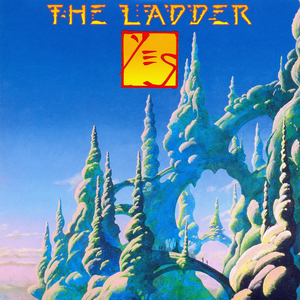
When Yes released "The Ladder" album in 1999, just a few of their fans really believed they could come back to their prog roots and offer as good a CD as this one proved to be. In fact, the opening track "Homeworld (The Ladder)" was like tumbling back the years and Jon Anderson's pure voice sounded better than ever. This song is a flowing stream of great prog rock, including time changes, instrumental interplays, choral passages, intricate rythms and good melodies.

One of my Roger Dean's favourite paintings ever.

Chris Squire's bass guitar doesn't need any comment, but Igor Khoroshev's keyboards were a big surprise for me: full bodied and creative, they're never too intrusive and so far better than in the previous "Open Your Eyes" album, where he played as a session man on three tracks. Also Billy Sherwood does very well here, both on electric and acoustic guitars. It was going to be a short-lasting lineup, but this is an everlasting song, IMHO.

Sunday, 1 June 2014

The Revealing Science of God (Dance of The Dawn) (Yes, 1973)

All the worst has been said about Yes' "Tales from Topographic Oceans" double album. Nonetheless, I still love this suite, the first one out of four in the set. Of course, after such masterpieces as "Close to The Edge" or "Fragile", the band couldn't possibly do better music, but here they were once again at their best, full of ideas, good melodies, varied arrangements and assorted visions. Jon Anderson's lyrics are weirdest than usual, but his voice is perfect, and so is the wall of sound provided by the rest of the band. The choral passages are fascinating, IMHO, and when they sing "What happened to wonders we once knew so well" I can actually see the Seven Wonders of the Ancient World and all the jewels of our planet before my very eyes.

 
...And thanks to Roger Dean, as usual.

And Howe's guitar soon translates all this in a dynamic musical progression, while Squire's bass never takes a rest. And when you begin to wonder where Rick Wakeman is, here come his piano and  keys to join the feast. The rare down tempo movements are also very good, with a nacturnal acoustic guitar singing to the rising moon. Yes, I'll definitely ignore the fashionable reviewers' pieces of advice and I'll listen to this song once more. A deadly sin?

Wednesday, 8 January 2014

Owner of A Lonely Heart (Yes, 1983)

This is maybe the most successful song by a prog band and it's astonishing how it remains popular today and as actual as it was in 1983. Sure, "Owner of A Lonely Heart" isn't a typical fully progressive Yes song, I'd say it's one of the first examples of prog-pop track, a model many will follow but only a few (Genesis, mostly) will reach in terms of sales and quality. In fact, I think this is a great song, progressive in a way, because it's so full of ideas, so flushing in its sound solutions that each time I listen to it I find something new. After all, the original Trevor Rabin's composition was widely enriched by Jon Anderson's and Chris Squire's contributions. In its final version, it opened the 90125 album, the first Yes album of the "Rabin era".
 
The single version of the song was shorter than the album version.
It peaked at # 1 in US Billboard single charts.

The Yes brand is recognizable in the syncopated rythm, in Chris Squire's excellent performance, in Jon Anderson's inimitable voice and in the clever arcitecture of the the track. Probably the band knew they were working on a virtual hit, but they avoided any unnecessary repetition of their catchy tune and put in good variations, instrumental interludes and a final fading bridge. But they won all the same and if the early fans turned up their noses, the song is still there, across many years and generations. Listen: another radio DJ is broadcasting "Owner"!

Wednesday, 20 November 2013

And You And I (Yes, 1972)

How could I forget this song? It's a 10 minutes song divided in four parts, each one bearing its own title and introducing a new theme, so that we can consider it as a short suite. Its acoustic intro show the listener inside a musical Wonderland made of sounds and colours, with the ineffable guide of Jon Anderson's voice, singing like an angel three different tunes until Rick Wakeman comes in and opens the sky. It's like diving in liquid music and the adventure goes on with Jon Anderson doubling the keys and closing the first section.

The single version of "And You And I" only features the second
section of the song, titled "Eclipse". Another US single version
included instead the whole song split in two parts.

Then, Steve Howe's guitar restarts the song and we're one more time in a ballad mood, rapidly evolving in more complicated forms, thanks to the rythm section and some more keyboard effects. So a choral theme rises up and the last word is for Jon Anderson. It's always surprising to me how this song can be both simple and intricated, a kind of balance and freshness Yes won't often achieve.

Friday, 9 August 2013

Heart of The Sunrise (Yes, 1971)

This song, taken from "Fragile" album, is certainly one of the creative peaks of Yes, but IMHO is above all a rythmic tour-de-force. Chris Squire's bass and Bill Bruford's drums are simply incredible: they create and de-create tempos and rhytms, weave alaborate lines and open the track with a crackling firework. When Jon Anderson comes in with his splendid voice, the volume of the track drops down, but Chris and Bill never leave the stage. Wakeman's keys and Howe's guitar add some embroderies to the big picture and... this is it! Just the time for a tutti last section and some piano touches to top the cake.

One of the finest artworks by Roger Dean, IMHO.

Yes had an incredible potential (maybe they still have today), five men = five monster talents, and when, in addiction, they write some great music and some intriguing lyrics, like here, we can do nothing but acclaim.

Wednesday, 10 July 2013

Then (Yes, 1970)

A fascinating song, IMHO. Firsly because it runs exactly on the edge between the '60s and the '70s, incorporating the best of both, then because it's one of the first Yes' songs going plainly beyond the traditional song structure: no verse, no chorus, no bridge... al is somewhat shuffled and still recognizable in a new and challenging order. The second half of "Then" is particularly exciting, with the instrumental part, a real war of the instruments set off by keyboards and drums, then expanding to the whole set and leading towards Jon Anderson's reprise of the main sung theme.

Yes in 1970.

This reprise is worth a note: Jon sings it with a whispered and broken voice creating one of the greatest vocal performances of his career. Of course, this is not yet symphonic rock, not exactly the way of prog Yes contributed to spread all around the world, but it's a creative and unpredictable music, full of soul and feeling. Something that left its mark. On music and on my own experience as a humble listener.

Friday, 21 June 2013

Machine Messiah (Yes, 1980)

This is a song from "Drama", the most debated album based on a mixed line-up from classic Yes and pop duo Buggles. So, no Jon Anderson's angelic voice here, nor Rick Wakeman's spectacular keyboards. Having said that, "Machine Messiah" is great, IMHO. Chris Squire's bass explores tricky and unusual lines, with a little help from Alan White's drums, Steve Howe's guitar offers some edgy moments and the Buggles really do their best.

"Drama" features one of the best Roger Dean's covers.

But I especially like the track's architecture, where good melodies and rythmic sections follow one another, melting the typical Yes composition features and a somewhat more plastic shape. Ten minutes of enjoyable prog rock, amazing changes and top class performances. Should I ask for more?

Saturday, 4 May 2013

The Gates of Delirium (Yes, 1974)

Maybe because of so many masterpieces in their discography, or maybe because of the mixed feelings the previous double album had inspired, the LP "Relayer" has been too soon underrated by both reviewers and fans. But recently many prog sites revised their opinion and this is specially true for "The Gates of Delirium". It's a 22 minute suite somewhat reminiscent of "Close to the Edge", but also very different in mood. Patrick Moraz, the new keyboards man, was less known than Rick Wakeman and somewhat unrelated to the English progressive world, but his touch made the Whole atmosphere lighter, and also the rest of the band adopted a "chamber music"tone, in which classicism is replaced by a Pre-Raphaelite approach.

Another wonderful cover signed by Roger Dean.

 As usual, we appreciate the awesome skills of the band members (Steve Howe, in particular, really shines here) and a special mention goes to Jon Anderson's terrific performance in the "Soon" section, also released as a 7" single. Last but not least, the lyrics. Loosely based on Tolstoy's  novel War And Peace, they heavily influence the music, so that the suite movements are more or less up-tempo following the depiction of the battles and their mournful aftermath. That's why the "Soon" section can be read as a payer for peace. And what a peace it is...

Thursday, 11 April 2013

Turn of The Century (Yes, 1977)

When the album "Going for The One" was released, back in 1977, many Yes fans were expectant for the line-up changes and especially for Rick Wakeman's coming back.  And they were fulfilled when they listend to this "Turn of The Century" (let alone "Awaken"), a typical Yes song with a rarefied atmosphere powered by Wakeman's  experience and improved knowledge in electronic keys. Jon Anderson's voice shines like a diamond over this crystalline ground, relieved here and there by Steve Howe's guitar. Even if this is essentially a down tempo song, the rythm section never takes a rest, as usual with Yes and every single beat comes like a surprise.

Yes in concert for "Going for The One" (1977).

The music is so beautiful that you could underestimate the lyrics of this track, but I'd like to add something about that. Facing so much incomprehensible Jon Anderson's lyrics, one could imagine this strange love story including stone and clay shaping, sleepless nights and illness belongs to the same category. Well, it doesn't: the song is actually inspired by the famous painter Marc Chagall's own relationship with his wife, suffering the lack of attention of an husband completely absorbed by his artistic work, so that she eventually got ill and died. A further emotion source when listening to "Turn of The Century".

Saturday, 2 March 2013

Roundabout (Yes, 1971)

Many prog fans and sites say this is the ultimate prog song. That's what I don't know, but for sure you'll find here all the basic elements of classic prog and many more. First of all, the intricate musical plot, including tempo changes, instrument dialogues, syncopated rythms, complex vocal arrangements, mystic and ecological lyrics and -last but not least - mountains of technical prowess! Is this all? No, that would make a good song, a display of skills, not a masterpiece as undoubtedly it is.
The 7'' version of "Roundabout" peaked #13 in USA single charts.

IMHO the extra value is provided here by two important qualities: harmony and balance. All the instruments play as one, both technically and emotionally. A perfect clockwork, yes, but with a beating heart inside. A last note: a single version of this song exists, during 3'27'' and released in january 1972, but please if you don't know Roundabout (well, there must be some...), listen to the full album version (8'29''): you'd loose 5 minutes of pure joy.

Monday, 12 November 2012

Close to The Edge (Yes, 1972)

The title track of Yes' fifth album is another long song (some 17 minutes) and - IMHO - another masterpiece. As usual, I don't even try to "explain" the track - lyrics nor music -  I just write down my feelings. I still remember my first listening, a very hard try. The first 2 or 3 minutes of the suite were a real challenge, an apparently messy wall of sound that knocked me out. I gave up and put on an Abba record instead!

The album's inside drawing illustrating the song.

Later, I tried again and won the big prize. I saw the song building up before my eyes (yes, eyes, not only ears...) and the messy sounds getting more and more solid. The song evolved like a living being, passing through different phases: rock ballad, heavy, sacred hymn, and back to rock'n'roll. Epic, this was the word (...and still is).

Being the incurable romantic I am, the Rick Wakeman's solo at the pipe organ will always be my favourite passage of "Close to The Edge", but I like the whole lot, a perfect clockwork mechanism. More recently (English is not my mother tongue) I focused on the lyrics. I know... Yes' lyrics are usually considered too pretentious, anyway I like these ones. They fit into the music admirably. I'm not a philosopher, but I see a spiritual journey from darkness and confusion to light and order, and the words are carefully chosen to strengthen the song's musical impact. Last but not least, Jon Anderson's voice always moves me.