Sunday, 30 November 2014

Sümfoonia Seitsmele Esitajale (In Spe, 1983)

During the '80s, just a few bands wrote uncompromising and beautiful symphonic rock like this Estonian banddid with "Sümfoonia Seitsmele Esitajale". Its leader Erkki-Sven Tüür abandoned his own musical creature after the release of its first self titled album to start a new career as a classical composer. This opening suite in three movements (Ostium, Illuminatio and Mare Vitreum) surely is his most important addition to prog rock history. Its title means "Symphony for Seven Performers" and the whole track actually sounds as chamber rock, featuring three different moods.

After E.S.Tüür's abandon, "In Spe" also released a second LP.

The first one is based on electronic keyboards - played by E.S. Tüür himself - and is the most experimental one. Illuminatio flows quieter on the classical side, mixing traditional instruments and some discreet synths. The final section probably is my favourite one. It includes both rock and classical sounds, ranging from delicate interplays to majestic musical waves, with a pinch of folk inside. Many changes, many sounds and many instruments grace this suite, along with well found melodies. That's why I hope my prog friend will appreciate this composition as much as I did.

Friday, 28 November 2014

La Roca del Diablo (Cai, 1980)

Cai's album "Noche abierta" ("Open Night" in English) is rightly considered as one of the best flowers in Spanish progressive garden and this track, "La Roca del Diablo" (meaning "Devil's Rock") is one of my favourites. The elegant keyboard effects, the melodic and mysterious atmosphere and the changing tempos are but some of the strong points of this instrumental. You'll also find some vague folk passages and a very good choice of interplays and even a slight jazzy orientation.

"Noche abierta" was the second studio album by Cai.

All is done with passion and a great deal of good taste, mixing the classic prog features and the Spanish colour. Listening to this is a good way to spend some 8 minutes and opens a gate to a less known progressive rock coming from early '80s, even before the neo-prog season. A quiet but not peaceful musical trip I surely recommend to you all.

Wednesday, 26 November 2014

The Boat Song (Agam, 2012)

If you never listened to Agam, this song will be kind of surprising for you. This Indian band from Bangalore mixed the traditional Carnatic music with old good progressive rock and the final effect actually strikes me. The vocal performance has a strong ethnic taste, while the vocal harmonies, the rythmic background and the instrumental interplays sound like prog heroes from the past.

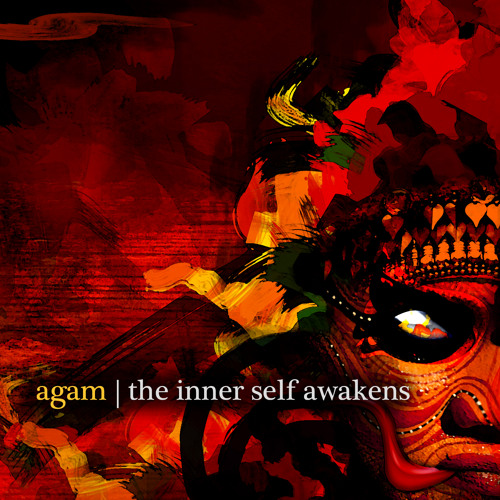
"The Inner Self Awakens" is Agam's debut album.

There's an incredible electric guitar solo by Praveen Kumar in the second half of "The Boat Song" I simply adore and the rythm section has the right beat to support Harish Sivaramakrishnan's passionate voice. The final result is an enthralling piece of music, something you hardly can label, full of Eastern and Western influences, but no doubt original and intriguing as only prog can be.

Tuesday, 25 November 2014

The Company (Fish, 1990)

When "Vigil in A Wilderness of Mirrors" was released, back in 1990, this rather short song immediately captured my attention because of its catchy melody and its vaguely medieval arrangement. But I soon realised that there were another reason why I listened to this one more and more: it was full of energy, the same energy I appreciated in early Marillion songs. All was done in order to support the overflowing strength of the singer, his dynamic way to communicate feelings and to narrate stories. Fish wrote the lyrics of this track, while the music is by keyboardist Mickey Simmonds, involved in many other prog releases (Mike Oldfield, Renaissance, Camel...).

"The Company" was released as a single for the German market.
 
The folk mood of this song is assured not only by the melody, circular and enthralling like some popular dances, but also by Phil Cunningham's, Gavyn Wright's and Aly Bain's acoustic instruments: accordion, violin, whistles and even the Irish drum called bodhrán. The irresistible drumming is by the well known Portuguese session man Luís Jardim, whose collaborations include the like of Yes, Rolling Stones, Paul McCartney, Asia, David Bowie and Elton John. The final result is, IMHO, one of the most enjoyable fast tempo prog songs I've ever listened to.

Monday, 24 November 2014

Sea of Delight (Brainbox, 1969)

As some posts in this blog prove very well, proto-prog songs and albums weren't an exclusive British feature. These Brainbox, for example, came from The Netherlands and in 1969 cleverly mixed R'n'B, psychedelic sounds and plain melodies in a new, unpredictable style we could easily call prog rock. I think this long suite "Sea of Delight" is the best way to approach their music. Jan Akkerman plays here his acid guitar some years before founding Focus, the legendary Dutch prog band (see elsewhere in this blog).

This was the cover art for Brainbox self titled debut album.

But you'll also find here Pierre van der Linden's creative drumming and solos - he'll also join Focus later - and the "talking" bass guitar played by Andre Reynen. Both musicians succeed in drawing a collection of weird, synchopated rythms. A final special mention goes to the Polish singer Kaz Lux, whose sensual vocals grace the sung sections of this track... and his hums, woos and assorted whispers  are among the most puzzling sounds of the whole proto-prog era, IMHO. Really, this is a very interesting and unusual track, that's why I sometimes listen to it and always appreciate those pioneering guys.

Saturday, 22 November 2014

The Crawler (Saens, 2002)

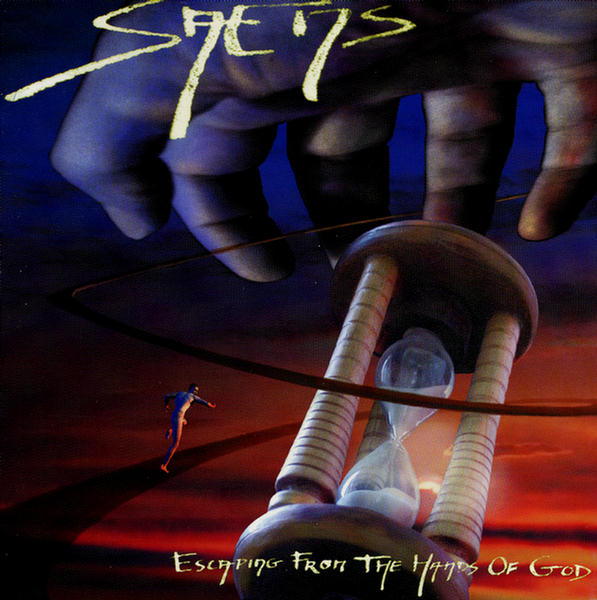
I really like the way Saend take neo-prog standards and enrich them with a series of original ideas, eclectic sources and variated moods. This "The Crawler", taken from the album "Escaping from The Hands of God", is a good specimen of such a musical attitude. It includes some Marillion-like melodic lines, but those are mixed with many other things, including a jazzy intro, some unpredictable piano chords, a warm voice and a collection of tempo changes.

This was the second studio album by Saens.

All the instruments are well exploited, even if the piano does play a central role and the guitars are especially good. No, youcan't be bored by such a song, reminding me a turning stage, always leading to something new. Almost 14 minutes of excellent prog rock, if you ask me.

Thursday, 20 November 2014

Light Elements (Patrick Moraz, 1987)

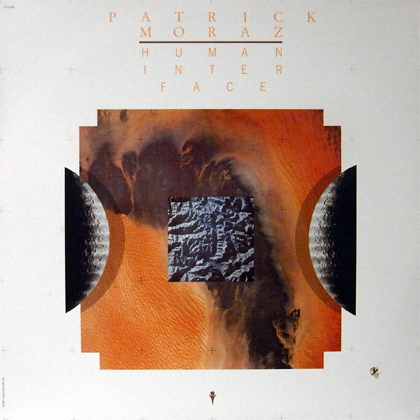
Here's a synth-prog track by Patrick Moraz, the Swiss keyboardist and one-man band, also famous for his short lived collaboration with Yes. This instrumental opens his album called "Human Interface" and is a very good specimen of symphonic keyboard driven music. It's a perfect depiction of light, like a summer dawn or a distant star approaching, one of those spacey tracks suggesting interstellar trips.

This was the seventh  studio album by Patrick Moraz.


The almost orchestral drums and the effective double lined melody are full of the sense of wonder I appreciate in good electronic music. The little but effective variations are very well found and that's why, even if there's just one melodic loop during the whole song, I'm never bored by it and I seldom re-start my CD reader and take another go to "Light Elements". Moraz really knows how to exploit flushing effects and devilish devices keeping a human soul in his music. Not so easy.