Friday, 31 July 2015

Anyway (Genesis, 1974)

Who says an excellent prog song must be long? Well, if necessary, "Anyway" shows you can be prog in the deepest sense in three minutes or so. "The Lamb Lies down on Broadway" is a special album in many ways, being so unpredictable and diversified, so this song seems one of the most traditional ones in such a pioneering work. But if you keenly listen to this, you'll think better. True, the main theme of "Anyway" comes from the very early era of the band, but the piano-driven arrangement can't hide a deal of awesome ideas: the sound has a sharp edge, I daresay there's an evil backtaste in it and Gabriel's vocals  go down the same way.


...Many years later...

All along this track the listener is somehow overwhelmed by the strong contrast he perrceives between the delicate arpeggio on the piano amd a definite sense of violence. And after all the lyrics are about Death. The instrumental bridge is also surprising, with its bombastic piano plus sampled guitar and, of course, the rythm section's neat work. In two words: pure emotion.

Wednesday, 29 July 2015

En aio paeta (Wigwam, 1969)

No doubt Procol Harum played a central role in defining what we call today proto-prog. And they influenced so many bands all around the planet. Finnish Wigwam also started their huge career including two or three Procol-shaped songs in their debut album. This "En aio paeta" ("I'm not going to escape", more or less) is a good example of their proto-prog period and also a good song. The finnish lyrics add an exotic mood to the track and the piano plus organ arrangement is essential and effective.

Wigwam's first studio album was called "Hard n' Horny"...
 
A vague folk inspiration and the well released vocal harmonies underline the pastoral atmosphere and I especially like Matts Huldén's bass line, so warm and neat. Some say those old songs are just archaeological curiosities, but when I listen to this plain and short composition I wonder how many glorified current bands could give me as strong emotions as "En aio paeta" does in its three minutes or so of old, charming poetry.

Tuesday, 28 July 2015

Kaleidoscope (Transatlantic, 2014)

I know Transatlantic epics may be too long and too intricate, even for prog ears. But I actually like this "Kaleidoscope", despite its huge duration time. It's a seven part suite, a real one, not a random rhapsody, nor a collection of songs without pauses. Not only the melodies are good and the players among the best ones in the worldwide prog scene, but there is a strong structure, a beautiful architecture supporting this song. The different moods, tempos and themes are lined up following a pleasant scheme and the returning riffs and lines punctuate this composition giving a variated and coherent shape.

"Kaleidoscope" was the fourth studio album by Transatlantic.


The first half of "Kaleidoscope" (lest's say parts 1, 2 and 3) are strongly influenced by Roine Stolt, while the second half seems less "Flower Kings-oriented" and each musician and author adds his own recognizable musical world to the big picture: Neal Morse's prog ballads, Mike Portnoy's energetic crescendos and Pete Trewavas' unpredictable changes. Different souls and different stories are just like one here, and the bonus gift is... emotion!

Monday, 27 July 2015

Virtual Reality (The Skys, 1999)

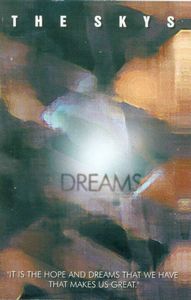
The Skys (sic) released their first full-length album only in 2004, but I decided to introduce here this fascinating "Virtual Reality" coming from a short cassette recorded in 1999 and rightfully titled "Dreams". These Lithuanian musicians like unusual arrangements and suspended moods, so this track is exactly what you need to enter their musical world. Please note this is not ambient nor post-rock: I think we could describe it as a highly descriptive and inner kind of prog, where everything is done to show the listener into a secret and somehow disquieting dimension.

The original cassette cover art.

All the imstruments are employed in a rarefied and arcane way, even the vocal theme is half-sung and half-said. The acoustic guitar and the sax add a warm touch to the song and the discreet, sliding keyboards back a heartbreaking piano. Emotions come out of this apparently bare musical box and directly reach my soul. Is it me or these Skys should deserve more attention outside their Country?

Sunday, 26 July 2015

Sasquatch (Camel, 1982)

"The Single Factor" isn't my favourite album by Camel and it is unlikely to be yours, as far as I can see. But there are excellent tracks in it, especially the instrumental ones, like this "Sasquatch", a true prog gem. Its lively and changing rythm, the intricate interplays and the usual camel-esque warm melodies are but three of the good reasons to listen to it. Let's see some other ones.

"The Single Factor" was the ninth studio album by Camel.

The simultaneous presence of 12-string and electric guitars creates a sparkling and enjoyable mood, so that the tempo and theme changes can count on a constant and never too invasive background. Latimer's guitar is another highlight of "Sasquatch", but then I'm saying nothing new: Andrew's original touch has a brilliant and cheerful nuance in this track, rather on the sunny side of Camel. That said, my dear progfriends, I'll leave you the pleasure to start this enthralling musical journey.

Friday, 24 July 2015

La Magna Carta (Drama, 1998)

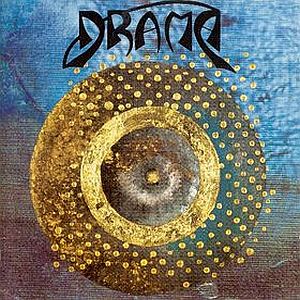
When French band Drama released their album called "Flying over The 21st Century", some reviewers found it a little incoherent, being full of disparate ethnic references. I can't deny it's actually weird to fly over the entire planet in a single CD, but there are many beautiful moments in this record. Among my favourite ones is the opening song, "La Magna Carta", lining up in an enthralling succession Scottish bigpipes, Peruvian flutes, Spanish guitars, Genesisian quotes, Oldfield lanscapes and Floydian breaks.

This album was the second studio work by Drama.

Despite such a composite lot (and, alas, the programmed drums), the electric guitars and the rythm section succeed in their desperate effort to draw a coherent pattern in which each moment finds its place. It's a foolish rhapsody, maybe, but I like its liveliness and the sincere love for prog rock it reveals. Not for the purist ears, but highly recommended if you're searching for a sunny and easy piece of music.

Thursday, 23 July 2015

Fenris (Ragnarok, 1975)

Kiwi prog scene probably is the least known among the progressive scenes of English speaking Countries. That said, Ragnarok have their worldwide cult fandom and I think they deserve far more than this. They had an original style, somewhere between space rock, mainstream rock and prog. They created a special sound, full of good melodies and strong constrasts. See how they mix acid riffs and celestial keys un this "Fenris", listen to Lea Maalfrid's beautiful voice, a female version of Geddy Lee's (or a male version of Jon Anderson's? lol...).

This track comes from Ragnarock's self titled debut album.

What I actually like here is the sense of proportion: never too rock, never too electronic, an excellent mix of guitars and keys, rythmic background and melodic lines, finally a perfect balance between sung and instrumental sections. P.S.: Not to be confused with a bunch of other bands bearing the same name. Probably our friends from Auckland started a trend and they did it without knowing.