Thursday, 18 December 2014

Am I Very Wrong? (Genesis, 1969)

Their debut album "From Genesis to Revelation" isn't the best reason to love Genesis, as we all know. That doesn't mean this record hasn't any good music inside. Actually, "Am I Very Wrong?" features one of  my favourite melodies ever and even if the song is apparently plain in its structure - quite a piano and guitar driven ballad - it always charms me and is worth some consideration.

Surely not one of the most elaborate album covers...

To explain the fascination this track turns on, its good melody wouldn't be enough. There are also a very good choice of chords, an original 12 string guitar background, and - last but not least - a sensitive vocal performance by Peter Gabriel. The vocal harmonies of the chorus are another pleasant surprise, making an unusual contrast with the verses, and introducing a bright tambourine too. The instrumental intro (mostly a Jonathan King's addiction) is one of the best ones in the album, featuring two pianos, one of which was handcrafted to imitate  the tone of a harpsichord. All is well done and announces more to come. So much more...

Wednesday, 17 December 2014

Horsemen to Symphinity (Windchase, 1977)

You'll find one album, just the one called "Symphinity", in this Australian band from the '70s, but in fact they were kind of a reincarnation of Sebastian Hardie, likely the most celebrated prog band in their Country (and also represented in this little blog). This track shows how much those musicians were influenced by contemporary UK bands, especially Camel, I daresay.

Pyramids, UFOs, ancient warriors... what else?
 
But you'll also find many original features, especially when Mario Millo's guitar comes in. There's a long and beautiful electric guitar solo in this song I can only admire. And the final part of this performance has a bonus gem: the bass / guitar interplay. Actually this is a perfect example of creative, free, enjoyable progressive rock, coming from the years where it was really difficult to get noticed... but those guys surely did so and they still stand among the most beautiful pearls of the Southern Emisphere.

Tuesday, 16 December 2014

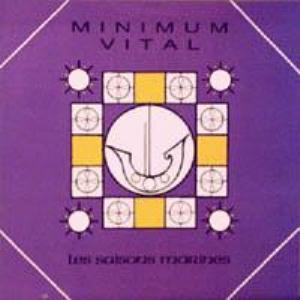
La tour haute (Minimum Vital, 1987)

This lively, beautiful track comes from Minimum Vital's debut album, called "Les saisons marines". The title (meaning "The Tall Tower") immediately suggests the Medieval and folk mood of the song, but there is more than this in this 10 minute instrumental. Firstly, there is the splendid fusion of the traditional instruments and the synth, imitating ancestral sounds and adding a special flavour to the track. It isn't so common to find acoustic guitar and synth interplays, after all.

Since their first album, this band foud its peculiar way to prog.

And what could I say of the ever changing drumming? In a way, Christophe Godet enlightens and enhances the music, stressing all the passages with essential but never trivial rythmic solutions. As always with this French band, there's a Mediterranean mood, a blue and green shade, maybe the Sea Seasons the album title conjures up. If ever there is a dancing way to prog, you'll find it here.

Sunday, 14 December 2014

Valley of The Shadows (Cairo, 1998)

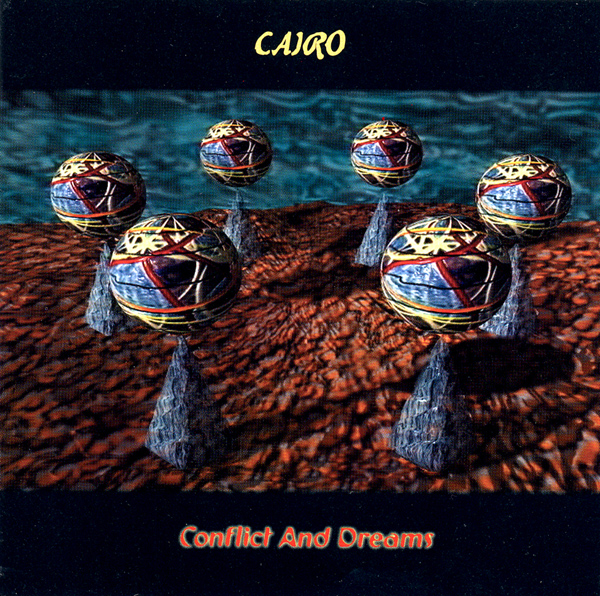
Taken from Cairo's "Conflict And Dreams" album, this track perfectly illustrates the highly dynamic kind of prog these American musicians released in their three studio album, between 1994 and 2001. The sung sections and vocal harmonies are obviously reminiscent of Yes, but this "Valley of Shadows" has an original up tempo,intricate and enthralling structure I really like. Bret Douglas surely is a good singer, as he mixes very well power and sensibility in his performance and the backing voices are also very good.

"Conflict And Dreams" was Cairo's second studio album.

Mark Robertson's keyboards rule the track, but the band act as one, especially when they open the listener's view over wide horizons and distant landscapes. I daresay Cairo found a perfect balance between vintage sounds - mostly Keys - and up to date solutions, that's to say between symphonic rock and neo-prog. For sure, if you like fast fingers and virtuoso interplays, devilish piano and flushing arrangements, you won't be  disappointed by this.

Friday, 12 December 2014

Bitter Suite (Marillion, 1985)

One of my favourite (neo-)prog songs ever, this "Heart of Lothian" is the symbol of Marillion's sensitive, romantic and somehow aggressive style. A thrilling pathos rules the entire track, supporting the autobiographical lyrics by Fish, whose vocals are both deep and biting... even his narrating intro, probably the only prog spoken section I adore. And the J'entends ton coeur passage is one of the most touching and sincere anthems of the '80s prog rock, IMHO, a bleeding heart's cry. Then, what about Steve Rothery's solo? Or of the intro of the last section?


An early Marillion press photo: the way they were...

Being a short suite inside an album that's kind of a suite itself, this song is actually divided into three parts: I. Brief Encounter, II. Lost Weekend, III. Blue Angel. It is difficult for me to select one of these as the best one, as they're all so enthralling and melodically rich that I'll never be tired to listen to them. And to say it all, I'll never be tired to listen to the whole "Misplaced Chilhood" album. Will you?

Thursday, 11 December 2014

Good at The Art of Surviving (Notturno Concertante, 1993)

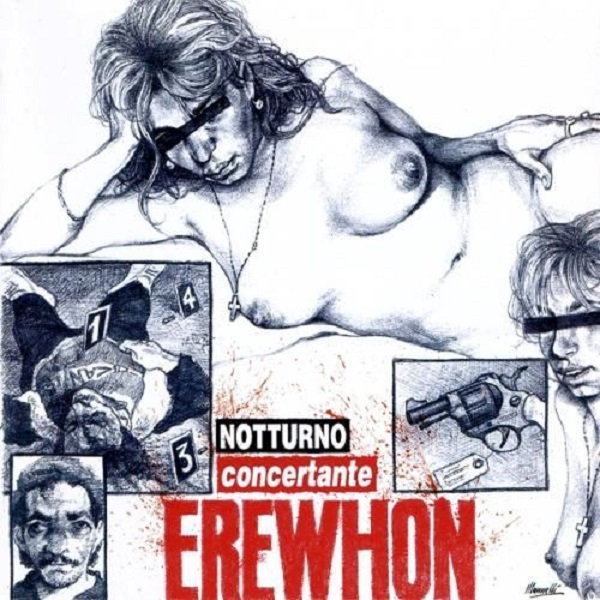
Lucio Lazzaruolo and Raffaele Villanova, the core duo behind the Italian act "Notturno Concertante", surely are among the most coherent and interesting musicians of their generation. "Good at The Art of Survival" comes from their debut album "Erewhon" and it features many of the band's trademark features. Firstly, you'll appreciate here the keen piano and guitar work, kind of a special touch , giving a nocturnal mood to many songs of theirs. Then, listen to the tempo changes, always coming in the right time, but never too sharp. Last but not least, see how Lucio's lyrics describe, with no indulgence at all, the criminal and narrow minded outlook of mafia's adepts.

"Erewhon" features Riccardo Mannelli's effective artwork.

I really like the way Notturno deal with some strong concepts in their albums, keeping such a delicate musical approach. This song flows gently through its different moods, respectively ruled by classic guitar, guest Betty Iandolo's voice and keyboards, so that the track's last note is just like a dream's last image. Don't loose this trip, my prog friends!

Monday, 8 December 2014

Septagone (No Name, 1995)

Listening to some easy going neo-prog is something that chills me out. And when this music is well written and well played, I daresay it's kind of a cure to me. No Name come from Luxembourg and all their records pay loving respects to Fish era Marillion's music, even if their most recent albums are a little more synth-oriented. This isn't necessarily a reason to reject them, as No Name have their own intense and passionate way to make prog. This "Septagone" is a good way to discover tha band's approach, with all its keys progressing and its very good tempo changes.

A Victorian cover art... just "la Belle Époque"!

The track comes from the album "The Secret Garden" and I like the way the band exploits both acoustic and electric instruments to build up a dreamy rock song with good interplays and solos. The Victorian mood of the album shows itself then and now, especially in the atmospheric bridges and Patrick Kiefer's voice has a good balance between sweet and agressive tones. All in all, some pleasant 6 minutes of music, IMHO. That doesn't always happen, nowadays.