Sunday, 7 December 2014

In-A-Gadda-Da-Vida (Iron Butterfly, 1968)

Progressive rock didn't come out of the blue in the late '60s. The role played by seminal bands like Iron Butterfly is essential, IMHO, to correctly set this new genre in the big picture of its era. Coming from San Diego, these musicians, leaded by vocalist and keyboardist Doug Ingle, released a fantastic 17 minute title track in their second and still highly appreciated album. The song occupies the whole B side of the LP and its title is a mispronunciation of "In The Garden of Life", including a Spanish contamination of the last word. A very short version of this suite will be also released as a successful single.
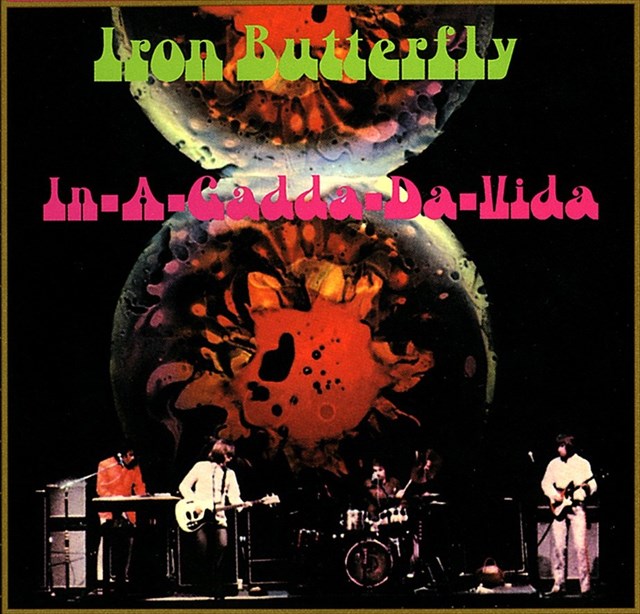
It's a most psychedelic cover art, isn't it?

You'll find everything late '60s here, I mean it. From the captivating opening riff to the long drum solo and from spacey organ atmospheres to intricate bass / guitar / keyboard interplays.The circular pattern of the song, opening and closing with two similar sections, was also going to be a typical prog feature.  Doug's vocals are rather on the heavy side, and this makes a pleasant contrast with the slow tempo passages. A psychedelic monument announcing both prog and hard rock, something all music lovers should know, if you ask me.

Saturday, 6 December 2014

Limites (AlexL, 2004)

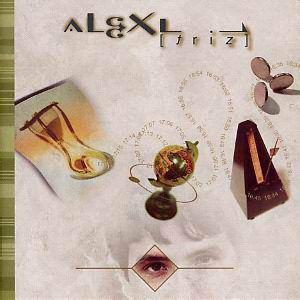
The Brazilian multi-instrumentalist and composer Alexandre Loureiro released his only solo album "Triz" with a crowd of other musicians in 2004 and it seems to me this record still represents an original and eclectic approach to progressive rock. Take this track, called "Limites" ("Limits" in English), for example. It starts like a Genesis' Trespass-era song, including pleasant vocals in Portuguese, then an instrumental bridge reminds me of Robert Fripp's most dreaming moments.

"Triz" includes 12 sketches exploring many sides of prog.

When vocals come back, the harmonies sound a little like Gentle Giant, then the delicate folkish touch comes in once again to end up the song like a fairytale. Many influences, but a strong, definite personality re-interpretating the whole prog history in a modern and essential way. I actually recommend this song - and the album too - to all my most open-minded friends.

Friday, 5 December 2014

The Emperor in His War Room (Van Der Graaf Generator, 1970)

One of my favourite prog songs ever. And that's saying something. The first sung lines are irresistible to me, with their sad and almost liturgical taste, then Peter Hammill goes through the first section (that's called The Emperor) running up and down his vocal extension and the listener's spine. The vocal harmonies, the keyboard backgrounds, the instrumental bridge between this part and the second one (The Room), well, all is highly emotional and bloody well done.

A wonderful season for VDGG... and for us all!

And when the first theme comes back, I'm actually KO... it's pure progressive juice to my lips, a fatal succession of dark and lights, whispers and cries, stops and progressions. No, I don't need to say more: when good melodies, skilled performances and emotions meet in a single song, that is my song. And something tells me it isn't only mine... but I'm not a jealous guy, after all!

Thursday, 4 December 2014

Révolution Industrielle (Jean-Michel Jarre, 1988)

Jean-Michel Jarre signed so many electronic suites that I couldn't easily choose my favourite. But this one surely is a strong contender in such a competition. Coming from the album "Révolutions", this track - also known with the international title of "Industrial Revolution" -  is divided into four parts, the Ouverture, followed by Parts 1, 2 and 3, for a total running time of 16:49 minutes.

This was Jarre's ninth studio album, if you include the
mysterious "Music for Supermarkets".

All the main features of Jarre's style are there, including the lushing effects and the visual sound, but here you'll find a little more up tempo passages and a strong, articulated architecture we can easily label as symphonic. The different parts build up a  powerful, still also sensitive track, ruled by the Roland D-50 synthesizer and by many excellent melodic inventions. If you like Jarre and his colourful world, this is definitely for you.

Wednesday, 3 December 2014

Hallelujah (Little Tragedies, 2011)

Another excellent proof by Russian band Little Tragedies, something full of old good prog rock, but also reminiscent of Eastern European folk music. This is taken from the album called "Obsessed" and it actually became an obsession to me since the first time I listened to it. The joyful theme on which the track is based is elegant and enthralling. It includes some original variations on both popular and cultivated sides, involving all the instruments.

"Obsessed" was Little Tragedies' ninth studio album.
 
 It's a hymn to life, a real Hallelujah sung to the world using all the progressive tools. Even the rather short duration time is perfectly fit to the final effect, as unnecessary repetions or incongruous interludes are simply cut off. That's why this instrumental goes directly to the listener's heart. For a band accostumed to long and intricated suites, this is aperfect way to remember how beautiful prog can be in its shortest sketches when a good melody and a bunch of good players are involved.

Tuesday, 2 December 2014

Forse le lucciole non si amano più (Locanda delle Fate, 1977)

The title track of "Forse le lucciole non si amano più" (something like "Perhaps the fireflies don't love themselves anymore" in English) is one of the most romantic and atmospheric tracks in the entire Italian prog discography, IMHO. Leonardo Sasso's strong voice shines over the mellow musical background and some dreaming instrumental interludes enrich the song. The piano and the flute kind of draw the fireflies' aerial paths in a nocturnal sky, while the rest of the band set up some fluid tempo changes and more picturesque sketches.

The band came back in 1999 after more than 20 years of silence. 
But their debut album still stands as an Italian prog masterpiece.

Really, this is a song carrying the listener into a nostalgy dimension, a fairy world outside time and space. Such a pity this beautiful album had no success in its era. The prog world discovered it some twenty years later. Well, never too late, I suppose.

Monday, 1 December 2014

Starship Trooper (Yes, 1971)

Taken from "The Yes Album", this song has everything - and more - to be considered as an all time prog rock classic. Set up like a suite in three movements (Life Seeker, Disillusion and Würm), the song is inspired by a Robert Heinlein's SF novel published in 1959 that also won the Hugo award. Mainly written by Jon Anderson and Chris Squire, this actually is a collective song, graced by the skills and the ideas of the whole band. The rock background is enthralling, strong, even whimsical, following the band's habits. I daresay the best feature in this track is the ever changing tempo, something we also see in mood and style.


The "Life Seeker" section of this suitealso was released
as the B-side of "I've Seen All Good People" 7" single.


Nonetheless, the listener perceives (well, at least I perceive) kind of a crescendo, leading to the last, bombastic section. I also think this is one of the best examples of interaction between lyrics and music, both concurring to the final, deliciously intricated effect. And in the middle of this whirling sounds, there you are some of the most beautiful and homesick Anderson's lines:


Speak to me of summer, long winters longer than time can remember,
Setting up of other roads, travel on in old accustomed ways.
I still remember the talks by the water, the proud sons and daughters that,
In the knowledge of the land, spoke to me in sweet accustomed ways.