Monday, 31 August 2015

Houdini (Kate Bush, 1982)

Kate Bush is one of the most influential artists in the world since her debut in 1978 and surely is considered as a prog related singer and songwriter. We don't need to search for long and tricky compositions to find the avant-garde habits and the musical research that are the essential elements of prog rock. Take this "Houdini", coming from such a beautiful album as "The Dreaming".


"The Dreaming" was one of the most creative albums by Kate.

All the tempo changes, the passionate vocals, the orchestral touches and, of course, the keen work on sounds make of this song a pure jewel. The chorus is heartbreaking and Kate is perfect when she digs very deep in the human soul as she does in this song. Is this progressive rock? I think so.

Sunday, 30 August 2015

Ilusões (Tésis Ársis, 2002)

A one-man band from Brasil, this Tésis Ársis in the brainchild of Anderson Rodrigues and offers long instrumental tracks, like this "Ilusões", a rather atmospheric epic lasting some 12 minutes and based on ethereal keyboards and well played electric guitars. Sure, this is not a musical revolution, but it's full of real emotions, something I'd like to find in all prog rock tracks.

The debut album by Tésis Ársis includes five long tracks.

The leading guitar has a beautiful, sad touch, something between Hackett and Gilmour, I'd say. Anderson plays all instruments and is also responsible for the drum programming. The main theme is well exploited and the atmospheric bridges are also pleasant. If you like dreaming guitar-driven prog, this is definitely for you.

Saturday, 29 August 2015

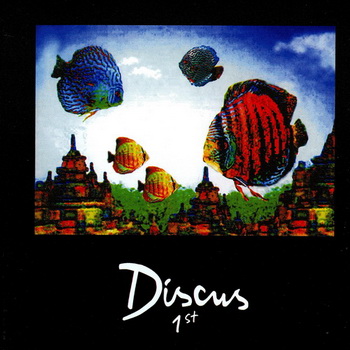
Contrasts (Discus, 1999)

Sometimes the title says it all. That's the case with this track, coming from the debut album of the Indonesian band Discus and closing it. This is a stunning - but never unpleasant - series of musical contrasts, actually. Some gentle flute-driven landscapes, jazzy breaks, electronic and experimental passages... you name it, you have them all (or almost all...). 

Discus debuted in 1999 for the Italian label Mellow Records.

The melodies - when there are melodies - are beautiful, the instruments are absolutely well played (especially the flute, the electric guitar and the keys), the rythmic section is highly creative... in short, this is I track I love. Of course, such an ordeal is not for all listeners, I mean you must like unusual things in order to fully appreciate this instrumental, but if you are into avant-garde prog, please, don't miss this pearl"

Friday, 28 August 2015

El viaje (Supay, 2007)

An andean prog folk rock track from Peru. Supay mix the local  colours, some r'n'r instruments and a modern rythmic section very well and they also try to gradually change the mood of this instrumental, adding here and there a good tasted keyboards touch and even a slightly west coast electric guitar. I think they deserve more attention, especially in their proggest moments.

"El viaje" was the second studio work by Supay.

They really offer something new, these musicians, and this is not common today. Unfortunately, I daresay. Listen to this song and when the final aggressive guitar bursts out, please don't forget the andean pipes: they're two different faces of the same band... and I'm sure you'll appreciate this "viaje"... oh yes, that means "trip", as you surely know.

Thursday, 27 August 2015

The Love in Your Eye (Caravan, 1972)

Coming from the "Waterloo Lily" album, this song has both an orchestral and jazzy mood, being a diversified suite in four movements: "To Catch Me A Brother", "Subsultus", "Debouchement" and "Tibury Kecks". As always with Canterbury bands, you couldn't find one prominent style here: you got them all. Sure, there are some passages I better like: the flute solo in "Subsultus", for example, but all the details cooperate to the big picture, a tricky and colourful one, I daresay.

"Waterloo Lily" was the fourth studio album by Caravan.

All the instruments find their way to the foreground sooner or later and all the tempos come in in time. The sung parts are like islands in a fluid, unpredictable, instrumental river. Nonetheless, this track is pleasant and fully enjoyable to all listeners (well, almost all). The jazzy taste is always supported by a very British sense of humour and it seems to me like Uncle Sam and Queen Victoria going on very well. A strange but peaceful coexistence... that's what we need nowadays, isn't it?

Tuesday, 25 August 2015

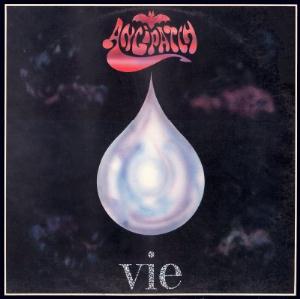
Vie (Angipatch, 1981)

This instrumental title track of "Vie" ("Life" in English) has a very special taste, suspended between the '70s and the '80s and immediately captures the listener's attention with its rythmic pattern, an unusual one for prog rock. Then, little by little, the other instruments come in and bring back a more (but never too much) traditional progressive texture. The track shows how eclectic Angipatch were and how unique their sound was in the French prog rock scene of the late '70s and the early '80s.

Angipatch debuted with this interesting concept album,

They tried to give a fresher face to our genre and surely they weren't the only ones there, but their solutions actually are interesting still today and even if some key sounds seem a little dated nowadays. This convincing (my opinion, of course) fusion of symphonic rock, electronic music and mainstream pop-rock is worth another listening and an addiction to my blog.

Monday, 24 August 2015

A Gadarai Megszállott (After Crying, 1992)

If ever you like experimental and classically-conceived prog, After Crying could be your band and surely you'll like this epic track, opening the 1992 album "Megalázottak És Megszomorítottak". It's an uncompromising suite, starting with a slow, long and acoustic crescendo, an instrumental, atmospheric section providing the background and the mood for the entire song. The cello and the piano drive this part, with the support of a delicate drumming. An obscure landscape rises around the listener and dark shadows seem to surround the music. No other bands sound like this. After more than 7 minutes, the vocals (in Hungarian) come in drawing a gentle and beautiful melody, with a violin underlining Péter Pejtsik's voice... something original, but not too far from Hammill's way, if you ask me.

I think this cover art is perfect for After Crying dark prog.

I really like this section, but after this, a deep, sad experimental one gets the listener's attention: it's a slow, diversified and atmospheric section, lining up sung and instrumental moments, with a cello on the foreground. It gradually changes in a somehow more dynamic section, including a rythmic piano and the oboe. Well, this is heartbreaking, IMHO. A female reciting voice introduces a strange and short bridge, where wild sounds and atmospheric chords follow one another. The final section is announced by a trumpet and has a joyful rythm for a change.... then the birds come in and the track is over. Should I say more?