Showing posts with label Jethro Tull. Show all posts

Thursday, 30 June 2022

Up to Me (Jethro Tull, 1971)

 When I think of a perfect prog ballad, full of true emotions and a wonderful melody, one of my first choices surely is "Up to Me", the closing track of the first side of Jethro Tull's "Aqualung". Even if the musical theme has a mellow and somehow folk flavour, there's an underlying tension all through the song, provided by Ian Anderson's powerful vocals and Martin Barre's guitar. 

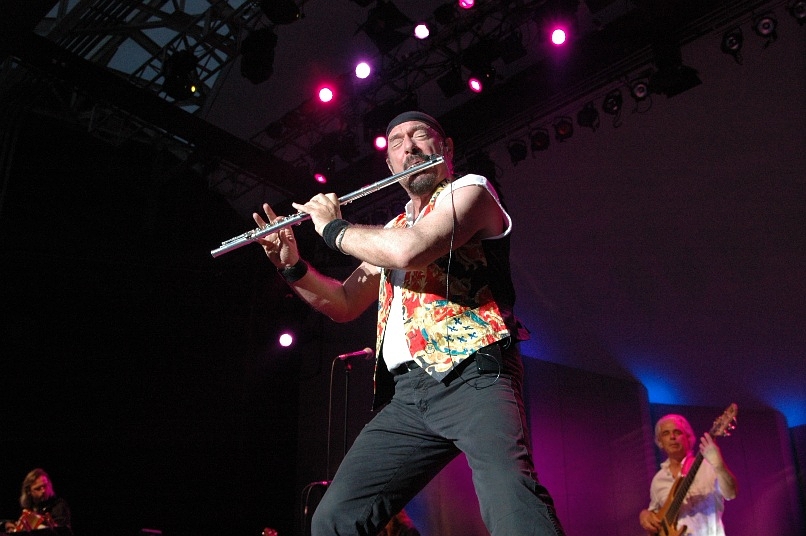
Jethro Tull in the early Seventies.

Mostly acoustic as it is, "Up to Me" is a powerful, biting song, also graced by a beutiful flute riff. If you can put so many things in a three minute song... well, you're great. And of course that's what Jethro Tull are.

Thursday, 8 September 2016

Locomotive Breath (Jethro Tull, 1971)

I wonder why this song wasn't in my blog long before this post, but, well, now it is here. "Locomotive Breath" is a Jethro classic and a live favourite of them, including many musical elements linked to their blues side, but also a rich, unpredictable, diversified srtructure that sounds definitely prog. Ian Anderson's flute is of course the most impressive feature of the track, so impressive that one could forget all its other stunning virtues.

"Locomotive Breath" was also the B-side of "Hymn 43" single.
 
I won't, and I'm glad to remember the rythm section building up a devilish background, inspired by a locomotive's noise, Ian's strong vocal performance, the rough guitar riffs, and - last but not least - the piano, softly introducing the song, then providing its own cadence to the final section. And I won't forget the lyrics, comparing the unstoppable locomotive to human lives. Lives that can't be fully enjoyed, because the train won't stop going, no way to slow down...

Sunday, 5 June 2016

Cross-Eyed Mary (JethroTull, 1971)

One of the most iconic prog songs ever, "Cross-Eyed Mary", stands as a big favourite of all Jethro Tull fans. From the misty intro, down through the rocky main theme, the electric guitar solo and until the theatrical finale, this is quintessential Jethro sound. Energetic and diversified in both rythm and tempo, this is a perfect example of lively, enthralling and earthy progressive rock, the way Ian Anderson & friends know too well. The syncopated bridge between the intro and the first verse is simply perfect, ans so is the short and effective double solo (flute, then guitar).

Ian, Aqualung and Mary. Three of a perfect pair....

I won't forget the piano touches here and there, sharp and precise. Just a couple of words about the lyrics, describing a young and somehow liberal London prostitute granting her graces to beggars and poor men, including our old friend Aqualung. This Robin Hood of Highgate is another amazing character from Ian Anderson's manifold sketchbook.

Monday, 15 February 2016

Minstrel in The Gallery (Jethro Tull, 1975)

When it comes to folk / rock / classical cohabitation, Jethro Tull deserve our greatest respect and our highest gratitude. "Minstrel in The Gallery", for example, is a well mixed and even better set up specimen of crossover song, starting like a Tudor era piece of music - including minstrels and dance room galleries - then going heavy and fully rock (Mr. Barre is simply great here) and finally drawing all the baroque'n'roll style and the flute features we love. 

An edited version of this painting, "Twelfth Night Revels in the Great Hall, 
Haddon Hall, Derbyshire", by Joseph Nash (1838) was adopted for the cover art.
 
This dynamic profile and the manifold structure of the track are especially admirable in the album version, lasting more than 8 minutes. Useless to say, the minstrel of the song was going to get the alter ego of Ian Anderson since the first live performance of the track... for sure, my favourite mistrel ever!

Wednesday, 4 November 2015

Spiral (Jethro Tull, 1999)

"J-Tull Dot Com" is unlikely to be among JT's best albums, but I surely like its opening track. "Spiral" is a rich and thick song (as a brick, I'd say...), based on a well found guitar riff, a rocky sung theme and a winding flute work. And I also like the slow tempo and somehow mysterious central section, one of the proggest passages of the 90s production of the band. It's a highly dynamic song, a mixture of energy and poetry that I can only call quintessential Jethro Tull.

This album was number 20 in Jethro Tull's studio discography.

And even if Ian Anderson's voice was less aggressive than in his best years, his flute and his songwriting were as good in 1999 as they were in 1971. The lyrics also contribute to the breathtaking final effect with their hurricane of sounds and colours. Nothing new, maybe, but still a beautiful song after more than 30 years of prog. Chapeau, Mr. Anderson & friends.

Wednesday, 6 May 2015

Farm on The Freeway (Jethro Tull, 1987)

Another good reason to love Jethro Tull's "Crest of A Knave" album surely is this song. It starts like a Jethro's classic, then goes on even better than you can imagine, with a full r'n'b soul, a pinch of baroque'n'roll and some hevier riffs now and then. A good song, IMHO, with a devilish Anderson's flute and Martin Barre at his heights. The lyrics are about the declining rural habits in USA and the invasion of the modern freeways criss-crossing the American landscape, kind of a "Heavy Horses" topic put on the other side of the Atlantic Ocean.

A good bootleg CD was named after this song, from a Philadelphia
concert featuring some members of Fairport Convention. It was in 1987.

The highlights of "Farm on The Freeway" probably are the country music intro, the first Barre's break and the following duet with Anderson's flute. But the sung melody is also excellent and the whole song should be more appreciated even by the band's fans. Be as it may, I like it very much and I recommend it to all my progfriends.

Monday, 22 December 2014

Hunting Girl (Jethro Tull, 1977)

Well, this is exactly what you expect on a Jethro Tull's song. Folk roots, baroque'n'roll interplays, catching sung melody, warm and rather aggressive vocals, good old keys with rather heavier guitars. Everything Jethro is here. It is difficult to resist: the rythm is enthralling and the mood changes come unexpected, ranging from rock'n'roll to medieval music. Energy everywhere, of course, but under control. So that each instrument has got its own right place, just like the low class boy coming across the hunting lady in Ian Anderson's lyrics.

Caught in the act!

And when the flute comes in to stress the socially uneven encounter, it seems to me that those lines perfectly describe old Ian's character:

I'm not inclined to acts refined, if thats how it goes.
Oh, high born hunting girl,
I'm just a normal low born so and so.

Low born, maybe. But let us judge about the refinement of your musical acts, Mr. Anderson!

Sunday, 9 November 2014

Thick As A Brick Part One (Jethro Tull, 1972)

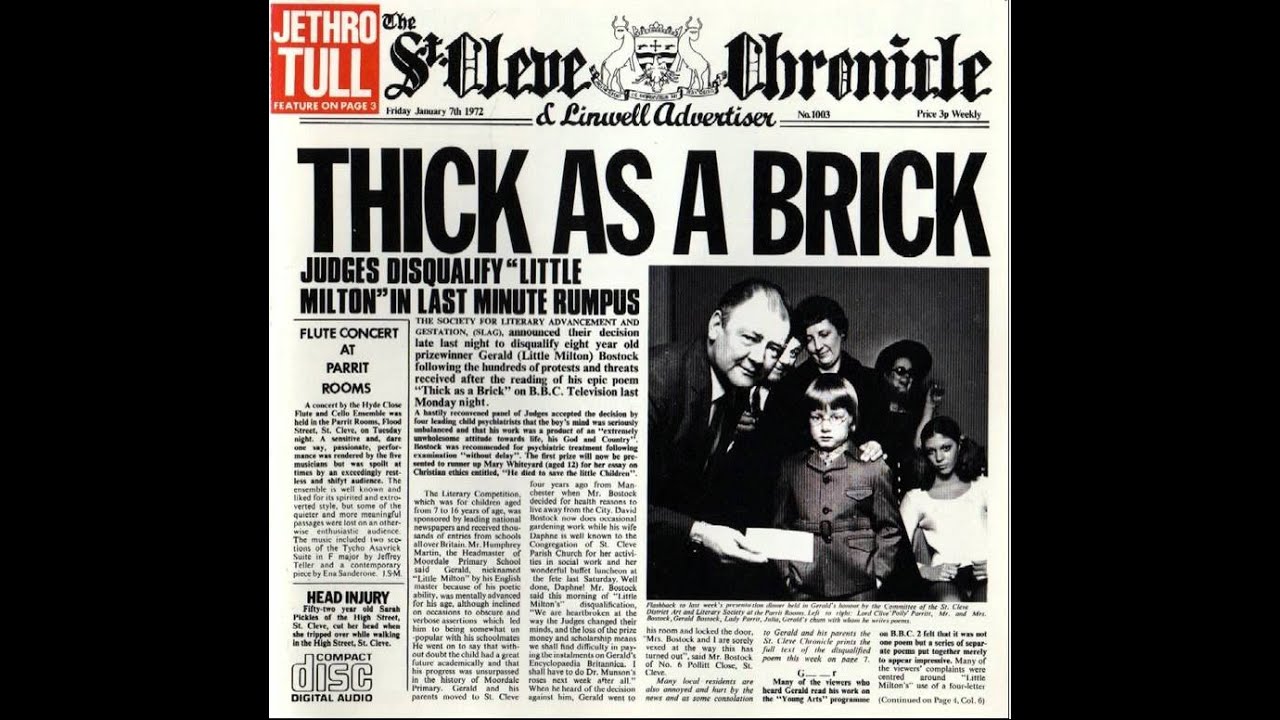
This is no doubt one of the greatest classic suites in prog rock history, so no long presentations will be necessary. That said, this Jethro Tull's epic deserves some reflections. Firstly, I like the humour - a very British one - this song features, from the story of the schoolboy Gerald Bostock (also known as "Little Milton") winning a poetry competition and being ignominiously disqualified, to the album package reproducing a local newspaper full of convinging still unlikely news more or less related to the band.

The funniest newspaper I've ever read...

But the music is the strongest point here, with one of the best blends of folk and rock I've ever listened to, especially in the first part of the masterpiece. The tempo changes, the returning themes, the enthralling rythms...all was made to build up a memorable piece of music. Ian Anderson and his bandmates succeeded in a very difficult task, as they welded epic and irony, melody and rythm, refinement and satire. I'm very grateful to them.

Tuesday, 5 August 2014

Moths (Jethro Tull, 1978)

This song comes from Jethro's "Heavy Horses" album, so it belongs to the band's most folk-oriented period. It's a rather short song, but it includes many of Ian Anderson's creature beloved features. First of all, it is popular in the positive meaning of the word: catchy and brilliant, rythmically sustained, perfectly arranged. Then, it is prog in the widest sense: for its flute solos, for its original pattern and for its unpredictable bridges.

"Moths" was also released as a single,b/w "Life Is A Long Song".

Another not so common aspect for a prog track, this is a love song, but not an usual one. Ian Anderson figures out the clever trick of suggesting the lovers' actions through the moths' dance around a candle, so that the brief and suicidal life of the animals also represents the ardour of love. Tricky, yes, but this is prog, my friends.

Saturday, 21 June 2014

Valley (Jethro Tull, 1995)

As this song comes from "Roots to Branches", it belongs to the 1990s, but its sound and its structure reminds me of the folk age of Jetrho Tull, around late '70s and I like it as it was actually part of that magnificent bunch of songs. Really, all is good here: the arcane intro, the bluesy measures, the rock riffs, the instrumental passages, the coarse vocals, some acoustic guitars here and there, and, of course, Ian Anderson's flute.

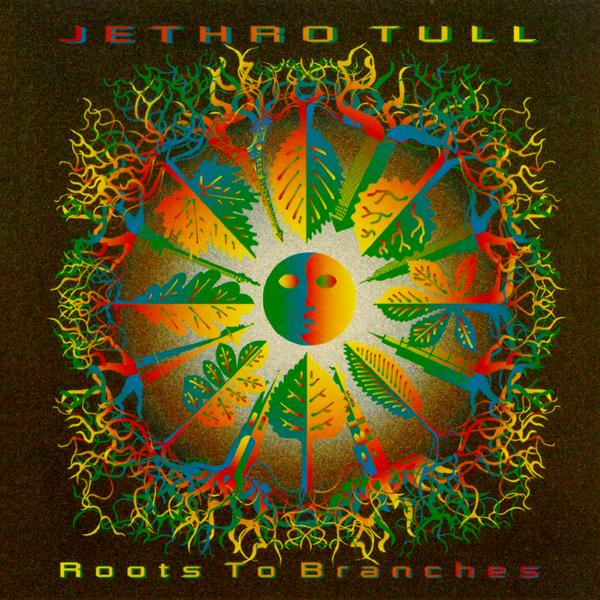
Some consider this as thelast good JT's album. Don't know...

Sure, some discreet electronic fragments and the neat, digital production suggest another moment in the band's life, but the inspiration and the soul are the best ones a fan could ask for. I remember I saw the band live in their "Roots to Branches" tour in Naples, Italy, and I was rather disappointed by Ian's voice (but then he had been seriously ill, as you may remember), but when he started playing his flute... well... thank you my Pied Piper!

Wednesday, 16 April 2014

Fylingdale Flyer (Jethro Tull, 1980)

Tull's "A" album inspired mixed feelings to the band's fans back in 1980. I still think today that it was severely underrated. Take this "Fylingdale Flyer", for example. It's a solid, pleasant, highly tull-esque song, with an excellent melody, folk rock harmonies, surprising tempo changes, Anderson's flute and a very good bass guitar work. Kind of an abstract of all the band's typical features... some things never change, I daresay.


"A" was the thirteenth Jethro Tull's studio album.

Actually there is something new and this innovation arose some acid remarks: guest musician Eddie Jobson's keyboards. True, electronic effects hardly fit in Jethro Tull's music, but I like Jobson's work in this song: he's clever and discreet, just adding some '80s flavour to a tasty pie. Just a final note: the whole album was originally intended as a Ian Anderson's solo LP, then it switched to a band's release. This explains the "A" title, but the final result is a fully Jethro Tull's work, as this song proves too well, IMHO.

Wednesday, 25 December 2013

Birthday Card at Christmas (Jethro Tull, 2003)

Well, today is Christmas, after all. And this is a great song, IMHO. It's the opening one of "The Jethro Tull Christmas Album", a band's hardly predictable hit released in 2003. Ian Anderson explained this song title: his daughter was born on Christmas day and her birthday was always on a minor key, as the big event somehow diminished it. So, this is kind of a repayment for her and all the others born that same day.

...And what a beautiful, seasonal cover art!

It's a short and folkish track with a very strong and beautiful flute intro leading to a classical Jethro Tull's ballad. Another splendid flute solo graces the middle section of the song and a third one, tight and windy, closes it. Really, listening to this track is a very good way to wake up at Christmas and it's exactly what I did today... but I'm sure I'll listen again to this long before next december!

Saturday, 2 November 2013

Dark Ages (Jethro Tull, 1979)

A dramatic track, "Dark Ages" is, with its freezing intro and its pessimistic lyrics about the future of  both Earth and humanity. A 9 minute epic about the deadly struggle between human greed and Nature, featuring in all "Stormwatch" album songs. But if many prefer the shorter ballads from this album, I better like this track. Maybe because the song is definitely prog, stretched and rather elaborated, with all instruments engaged in the musical description of human senselessness.

Ian Anderson watching the storm approaching...
...such a good cover painting by David Jackson!

The instrumental interplays involving keyboards and guitars are impressive and Ian's vocal performance is strong and rugged. A tough and never boring track, including softer and arcane interludes and sudden tempo changes. The gloomy mood of "Dark Ages" isn't the one you'd expect in a moonless night... it's more like the sharp darkening preceding a storm. A good, deeply emotional song, IMHO.

Thursday, 19 September 2013

Life Is A Long Song (Jethro Tull, 1971)

This is one of the most loved three minute prog songs ever... and it deserves it. This gentle ballad provided an evergreen standard when it comes to prog folk, a very fruitful one. The band originally released it in the 1971 EP featuring the same name, them included it in several anthologies and compilations.

The original cover of "Life Is A Long Song" EP.
It peaked at #11 in the UK charts.

The track is certainly on Jethro Tull's soft side, but - in spite of the orchestral arrangements - it isn't a mellow one. I'd rather say it's a sweet and nostalgy song, with  lyrics wandering through sadness and hope. The short and airy refrain fades out in a guitar chord and still reminds us how that life's a long song, but the tune ends too soon for the song. Really, one can't be tired of a such a song!

Friday, 16 August 2013

Heavy Horses (Jethro Tull, 1978)

I have no doubt: "Heavy Horses" is one of the best songs by Jethro Tull. Its delicate intro and the following, beautiful Renaissance style verse, the rockier chorus... all is admirable IMHO. It's the title track of the Tull's 1978 album, lasting almost 9 minutes and strongly progressive in its structure and in its sound. The orchestra adds kind of an old fashioned scent, but never disturbs the grace and the folk oriented atmosphere of this track.

"Heavy Horses" was the second album of the so called JT's folk trylogy,
along with "Songs from the Wood" (1977) and "Stormwatch" (1979).

It is important to say that the live performances of "Heavy Horses", in spite of the lack of orchestra, are as good as the studio version, proving the merits of Ian Anderson's composition. This song also features Darryl Way's violin (do you remember him? He's a founding member of Curved Air), a further folky touch. I like the lyrics too, celebrating the horses, whose role in the English fields was declining in favour of the machines. One of the several tributes of the band to our friends of old, the animals.

Saturday, 13 July 2013

Baker St. Muse (Jethro Tull, 1975)

Often underrated, the suite "Baker Street Muse", from the album "Minstrel in The Gallery", is one of my favourite Jethro Tull's songs. True, there's an orchestra and this changes a bit the traditional rustic sound of Ian Anderson & Co., but the strings are always in the background and the group still plays the leading role all along the track. The melodies are wonderful, all accompanied by Ian's acoustic guitar, while his legendary flute appears here and there enriching the arrangements with its distinctive sound. The suite is divided in five parts, titled "Baker Street Muse", "Pig Me, And The Whore", "Nice Little Time", "Crash Barrier Waltzer" and "Mother England Reverie". Basically, each one is a ballad with arrangements and variations in the usual Jethro Tull way.

"One day I'll be a minstrel in the gallery..." (I. Anderson). 


The final result is certainly a little less aggressive than in previous masterpieces like "Aqualung", "My God" or "Thick As A Brick", but the melodic parts and the musical architecture are even better. Also the lyrics, inspired by Anderson's own life contribute to the intimate atmosphere of most of the epic's themes. I think one should listen to this without any comparison with previous and following developments, just for the pleasure this almost 17 minute song can give. It's a lighter side of Ian Anderson's band, with a touch the Elizabethan imagery shown in the album cover art and - let me say this - a great deal of good music.

Friday, 28 June 2013

Bourée (Jethro Tull, 1969)

For the date of its release, the influence it had and the musical impact still strong after so many years, "Bourée" has a place in the inner circle of essential prog tracks. As anyone knows, this is a Ian Anderson loose arrangement of a Johan Sebastian Bach's composition, namely a "bourrée" (a kind of dance, correctly written with a double "r") being the fifth movement of a longer suite, numbered BWV 996 in the German composer's catalogue. Anderson chose this track for the album "Stand up", improved the rythm and added folk, jazz and rock elements to the track, giving one of the first examples of his explosive style in less than 4 minutes. 

The cover for the 7" single of "Bourée", b/w "Fat Man".

The first part of Jethro Tull's "Bourée" is an observant performance of Bach's theme, with the flute replacing the original lute. The central section is an apparently free improvisation on this theme, abandoning any classical measure with a strong jazzy approach. The final part resumes J.B. Bach's sheet music with two Anderson's overdubbed flutes. The group recorded many live versions of this anthemic song (a very long and good one is in "A Little Light Music", released in 1992) and also an alternative studio version in the "Jethro Tull's Christmas Album" (2003). Of course, the original "Stand up" version features in all the band's compilations. It's an amazing track, a very strong one, with an enthralling rythm and the wild flute performance that made a legend of Mr. Ian Anderson.

Saturday, 15 June 2013

Aqualung (Jethro Tull, 1971)

This is one of my firt progressive rock favs. It's a very strong opening track, in the best tradition of the '70s rock bands and a very influential one. Its mix of rock, folk, prog and stinging irony is simply perfect. Ian Anderson's vocal performance is aggressive and allusive, drawing a rock ballad with some sudden tempo changes.

                                                    Do you remember this filthy man?
 
The lyrics about a perverse homeless suggest a diffrent point of view over moral and social conventions, an unusual perspective and a satirical vein pervades the whole track. I really love the succession of rough sounds and more sophisticated arrangements, the simultaneous presence of energy and melody, something that will become a trademark of Jethro Tull. Long live Aqualung and his park bench...

Monday, 6 May 2013

Songs from The Wood (Jethro Tull, 1977)

This is a wonderful song from a well balanced  and solid album. Showing the folkier side of Ian Anderson's band, this title track is also strongly prog-oriented for its complex structure and the outstanding richness of instruments involved. Apart from the usual flute performance, Anderson creates in this track convincing vocal harmonies, partly inspired by the English popular tradition and with a fantasy flavour. The main theme of the song is catchy, but the variations are so elaborate and diverified that the listener's attention is steadily aroused.

Let's join Ian Anderson's wildlife experience!  
 
The lyrics flow in the pastoral and ecological strand, but with that pinch of humour Anderson likes so much. A medieval touch not far from Sir Walter Scott's style - maybe provided also by the talents of David Palmer - finishes this very good work. What else? I'll just quote the song: Songs from the wood make you feel much better. They really do.

Wednesday, 20 March 2013

Budapest (Jethro Tull, 1987)

I immediatly fell in love with this song back in 1987 and I still adore it. Yes, there's a strange Dire Straits meets Jethro Tull connection here, but the track's architecture is gorgeous, with a bueautiful tune and many instrumental passages (flute solos above all, as you can easily guess) dotting the composition now and then. There's also a great vocal performance by Ian Anderson, one of the last, alas!
 
"Budapest" is here!
 
The guest musician Ric Sanders guarantees an additional hungarian atmosphere with his violin... and I swear those violin / flute plots are among the best Jethro Tull's inventions ever! The lyrics are about some Anderson's touring memories on the banks of the Danube and fit the music perfectly well. I must admit the rest of "Crest of A Knave" album is not at the same level, but thanks to this song it's worth buying.