Showing posts with label 1979. Show all posts

Tuesday, 26 March 2024

Where Oppisites Meet (Sky, 1979)

Each time I listen to a Sky's track, their rich melting pot comes to me like a surprise. Pop, rock, funk, classical music... everything's there, including that unmistakeble warm atmosphere from the late '70s. Of course, John William's guitars are a treat for everyone and all the musicians here are so skilled, but in this 20 minutes (or so) epic written by keyboardist Francis Monkman there's more. First of all, an awesome collection of good musical themes, a well found series of mood changes and a polished, brilliant sound.

As Sky was their name... 

The somewhat esoteric inspiration the song title implies perfeclty fits in the light, measured and nonetheless surprising plot of this track. We breathe the end of the prog era and the beginning of the lighter '80s scene through the classical hints and the electric, dynamic, even essential rythmic carpet of the suite. All in all, this is a highly enjoyable piece of music I'm glad to add to my blog.

Tuesday, 30 November 2021

Ice with Dwale (Neuschwanstein, 1979)

This band has never known an international recognition and still is a hidden gem from German Golden Era of Prog. "Ice with Dwale" is taken from the band's debut album "Battlement" (even if a promo cassette of previous songs was released on CD by Muséa label in 2008). Packed with acoustic passages (flute and guitars), but also gaced by a beautiful electric guitar, "Ice with Dwale" is a remarkable period piece, influenced by the likes of Genesis and Camel and featuring well found melodies.

A less known and very good side of German prog rock.

Keyboardist Thomas Neuroth and singer Frederic Joos do their best to run through the Charterhouse boys' early days and main features, but even so they are fresh and natural like a mountain spring. I really like the keys / flute interplays, something I rearely listened to and I surely recommend this song (and the whole album as to that) to all pastoral rock lovers. 

Friday, 20 January 2017

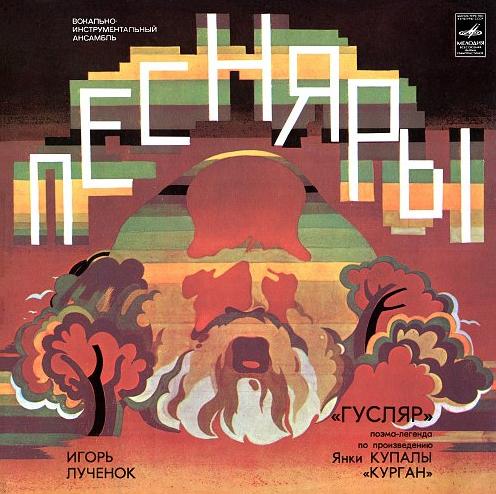
Gusliar / Гусляр (Pesniary / Песняры, 1979)

This is the only track included in Pesniary's album bearing the same title and released in 1979. This Byelorussian band is responsible for several long suites based on local legends and poems and featuring music by contemporary composers from the Soviet Union. This track is divided into twelve sections and has a strong folk flavour, but also a recognizable symphonic plot.

The 1979  LP release on Melodiya label. You'll also find a
2000 CD re-release by Boheme Music.
 
The tempos follow one another with the most enjoyable variety and the vocal harmonies (a Pesniary's well known trademark) are simply impressive. Of course, the classical infuence is everywhere, but "Gusliar" is never too grandiloquent and has many intimate passages. If you like an unclassifiable kind of music and the orchestra / band interplays, this one is for you.

Tuesday, 4 October 2016

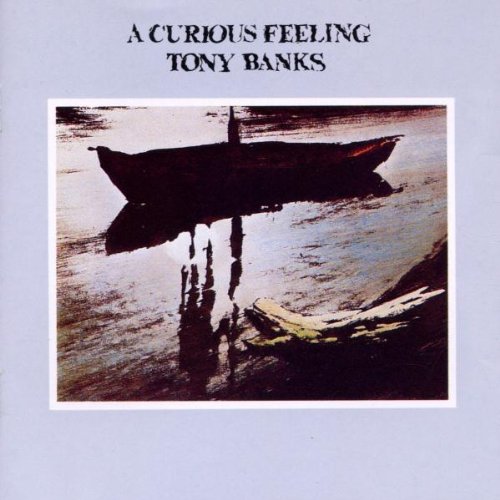
You (Tony Banks, 1979)

Tony Banks's solo career somehow disappointed the musician himself, who surely deserved more. That said, Banks released some great songs as a solo artist and this "You", taken from his debut album "A Curious Feeling", is one of his best compositions ever, IMHO. The melody is simply beautiful, so sweet and sad, and the arrangement - liquid and suspended between pop tempations and prog roots - magnifies it.


"A Curious Feeling" was remixed and re-released in 2008.


The keyboard solo is obviously a highlight of "You" (and there's a 7/8 passage too!), but the entire track has a magic and impalpable mood I admire each time I listen to it. Another strong point here is the voice of the late Kim Beacon of String Driven Thing fame, so  warm and with the right folkish mood in it. This song is just another good reason to rediscover and rightly value a musician to which we owe so much.

Friday, 24 June 2016

Höstbris (Autumn Breeze, 1979)

Even if this Swedish band's sound got more elaborated and intriguing after their 21st Century comeback, I still love the pastoral and plain songs from their debut album "Höstbris". The right word for it (and especially for its opening title-track) is "pleasant". The music seems to come out of a fairy tale, still it never goes sweetish or childish. Mellotron waves gently rise and fall, guitar riffs and drum cavalcades liven up the tempo, and finally a liquid guitar finishes up the musical trip.

This gently sketched cover matches with the music inside.

If several keyboard effects sound dated or derivative to the modern listener, the final effect is charming in its own way. Autumn Breeze didn't like spectacular walls of sound, nor devilish gigas, but their approach to prog, quiet and delicate, conjures up a sweet, caressing wind as light as a smile.

Monday, 11 April 2016

Oameni și fapte (Progresiv TM, 1979)

This Romanian band created a highly diversified and fully enjoyable kind of rock that in many ways can be considered as progressive, not only because of the name they chose for themselves. The first interesting features in this opening track of Progresiv TH's second album "Puterea Muzicii" ("The Power of Music" in English) are the ever changing tempo and the pleasant succession of rock, pop and properly prog parts.

This album is rather popular among the '70s record collectors.

The electric guitars do a strong, even heavy work here and there, while the acoustic instruments, the organ and the piano provide a sweeter touch to this 8 minutes song. The native tongue lyrics of "Oameni și fapte" (meaning "People and Facts") are welcome to me, and so are the beautiful sung theme and the guitar / piano interplays. Perhaps the 70s Romania wasn't the easiest place to go prog, but these musicians went their own way and songs like this one didn't loose their naive and delicate charms.

Tuesday, 22 March 2016

Nueve ejemplares... no tan raros (Sintesis, 1979)

This is the 8 minutes opening track of the debut album by Sintesis ("En busca de una nueva flor", that's to say "Searching for a new flower"), one of the most interesting and eclectic bands from Cuba. During their long career these musicians went through a great deal of styles, moods and genres and this song is a perfect example of such a diversified approach. 

This band released many albums during their long career.

There are many acoustic parts, reminding me of Italian progressive rock (especially PFM), and a big choice of vocal harmonies, exploiting both male and female voices. Relaxing keyboards, folk guitars and jazzy piano touches are among this band's highlights, but you'll also find lively passages, some unpredictable changes and even a majestic finale. I think this is a lesser known prog pearl my friends out there will appreciate.

Friday, 4 March 2016

The Trial (Pink Floyd, 1979)

I love this theatrical track from "The Wall" and not only for its live performances (both by Waters and Pink Floyd) featuring giant puppets and assorted special effects. The song is built up like a rock opera and also like an actual trial, based on Roger Water's eclectic vocal performance. The rock elements are also well found, especially when it comes to Gilmour's guitar. After all, "The Trial" represents the climax of the album concept, when the main character Pink draws conclusions about his life and his mental health. 


Some of the characters involved in the trial by cartoonist G. Scarfe.

The judge, the prosecutor, the schoolmaster, the mother and the wife add their depositions in an emotional crescendo until the final and choral breakdown. I also appreciate Gerald Scarfe's cartoon reddition of this track as seen in "The Wall" film, let alone the live version in 1990 Berlin concert featuring the likes of Ute Lemper and Marianne Faithfull. A visionary experience, a musical kaleidoscope.

Wednesday, 23 December 2015

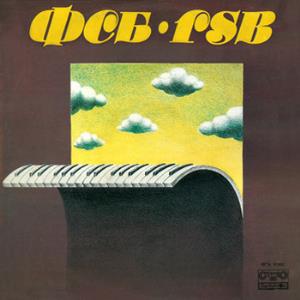
Песен / Song (ФСБ / FSB, 1979)

ФСБ (or FSB in Latin alphabet) stands for Формация Студио Балкантон (Formation Studio Balkanton) and is the name of a very interesting Bulgarian band born during the Seventies and recently reunited. Their prog is a manifold one, ranging from calm and Camel-esque atmospheres (it's the case with this "Song") to jazzy and experimental tracks.

The 1979 line-up: R. Boyadzhiev, K. Tzekov and A. Baharov.

As you'll immediately discover, those musicians knew how to play their instruments and as a matter of fact they were all classically trained. The track I'm introducing here, coming from the album "FSB II", has a good deal of magic and sense of wonder in it, along with plenty of electronic keyboards... well, the band have two keyboardists ouf of three members! So, please, close your eyes and press your "play" button...

Monday, 7 December 2015

El gran senser (Le Orme, 1979)

Here is the closing instrumental track of Le Orme's acoustic album called "Florian". As the entire LP, this track only includes instruments from the classical tradition, closer to the Chamber Orchestra mood than to the symphonic heritage. I like this delicate and well structured composition and especially the rythmic work in it, based on marimba, vibraphone, cymbals and double bass.

The album was named after the beautiful Caffè Florian in Venice.

The long atmospheric section also reminds me of early King Crimson, while the main theme has a special, almost military cadence, a pleasant contrast to the fairy and vaguely Eastern sounds of this song. Last but not least, "El gran senser" is a fully progressive song, despite the unusual choice of instruments and maybe thanks to its Venitian and out of time atmosphere.

Sunday, 25 October 2015

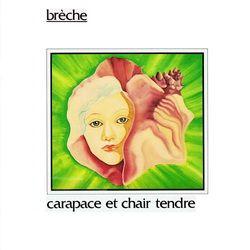
Vent du Midi (Brèche, 1979)

Another pearl from Québec, "la Belle Province", another one-shot band winding between symphonic and folk rock. Their sole studio work was titled "Carapace et chair tendre" (meaning "Shell And Tender Flesh"), and this "Vent du Midi" ("South Wind") is one of the longest tracks in it and likely my favourite one. A flushing choice of acoustic instruments, a good rythmic work, a pleasant series of tempo changes and a bunch of well found themes are but some of the winning points of this instrumental.

This beautiful album still awaits a CD release so far.
 
The violin and the winds alternate on a a piano and acoustic guitar carpet building up a joyous atmosphere and more intimate passages, both full of positive and sunny flavours. It's not a common feature in prog rock and related genres, so I consider this as a welcome bonus. I like each and every moment of "Vent du Midi"... hope you'll like it a little at least.

Sunday, 4 October 2015

Hem (Alter Echo, 1979)

There are so many one-shot bands in all Countries... and most of them left no enduring trace. But sometimes I happen to listen to a good album or a good song and then  I find out that was from a very short lived band. That's exactly the case with the Swedish act Alter Echo, whose sole self-named work has a special and refreshing grace IMHO. Take this song called "Hem" (that's to say "Home" in English). As all the songs in the album, it was released on a cassette tape in 1979, then re-recorded in 1997 for Muséa label.

This is, of course, the 1997 re-release cover art.

It's a very pleasant song, lining up acoustic moments, effective vocal harmonies and electric guitar touches. It was definitely a good idea to ask those four musicians to come back and play once more their music: their delicate and bright sound deserved a second chance! Of course, this song is so strongly rooted into the '70s ground that I retained the original cassette date instead of the CD release year. I'm sure you'll agree with me.

Friday, 2 October 2015

Mox (Prelude, 1979)

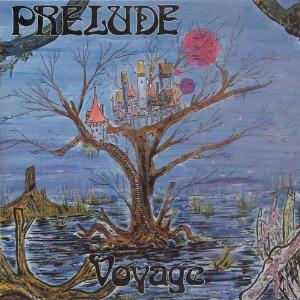
Prelude were a Belgian band that released a sole album titled "Voyage" in 1979, one of the most difficult years in the history of our beloved genre. That's likely why they didn't last so much and disbanded soon after this release. Guitarist Vincent Fis, however, founded a neo-prog band called Now some years later (and you'll find something by them in my blog). Back to Prelude and their opening track "Mox", I'm sure you'll perceive the naive but convincing mood of this song, musically situated between classic symphonic rock and the impending neo-prog wave.

A vintage album with a very pleasant old fashioned sound.

It's a rather long composition featuring a fluid, warm keyboard-driven sound and a good architecture. The sung themes and the instrumental parts follow one another with ease and good taste, mixing the French school (Ange and Atoll, especially) and the British one, namely Wakeman's solo albums, IMHO. A good guitar solo enriches the finale of "Mox" and also the rythm section is fully enjoyable. If you like old and forgotten albums, I bet you'll listen to this with pleasure.

Sunday, 27 September 2015

Bedrohung (Flaming Bess, 1979)

One of the last fully symphonic albums released during the '70s, "Tanz der Götter" ("Dance of The Gods", that's to say) has the eclectic and full-bodied approach of the British prog heroes, but also the theatrical and mainly instrumental architecture we find in so many German bands of the same period. The opening track, called "Bedrohung" (something like "Threat" in English) is one of the most representative ones of the band's style.  
 
The original cover art for "Tanz der Götter".
You'll also find a deluxe edition released in 2005.
 
Flaming Bess had a rather long story behind them when they finally released their debut album in 1979, and they enriched their progressive palette with new colours coming from the late '70s music: pop-rock, funky, folk, even disco... and still the big picture is definitely prog! Acoustic and electric guitars, pulsing basses, bright piano and up to date synths... all in one box! Flaming Bess also added some spoken passages to this song and to all the other ones in the LP. Fascinating, that's the word.

Saturday, 15 August 2015

The Apocalypse (Eloy, 1979)

One of the most spacey tracks in the huge production of Eloy surely is this "The Apocalypse", coming from the album "Silent Cries And Mighty Echoes". The Floydian influence is very strong here, nonetheless the song has its own special flavour. Electronic sounds and electric guitars guide the listener through the three parts of this suite, titled "Silent Cries and Mighty Echoes", "The Vision - Burning" and "Force Majeure". The sci-fi atmosphere and an underlying tension give to "The Apocalypse" an epic mood, while the changes rivet the listener's attention.

This album was the seventh studio album by Eloy.

The sounds are chosen with a sure taste and keenly mixed, and also the sung parts are very well written, so that the track has a solid melodic structure. Here and there, a touch of vintage keyboards and a beautiful female voice à la The Great Gig in The Sky create a pleasant contrast with the up-to-date background. I really like the alien landscapes Eloy can conjure up, something that many neo-prog bands were going to imitate. A good song for the dreaming part of any prog lover.

Saturday, 30 May 2015

Mother (Pink Floyd, 1979)

This song belongs to the darkest side of Roger Water's soul, as most of "The Wall" does, in fact. It's a rather interesting song on the line-up side, 'cause Jeff Porcaro is the guest drummer and producer Bob Ezrin plays the piano and the organ. The song starts on a gloomy mood, then abruptly changes its sombreness into anger and turns out to be one of the most aggressive songs in Pink Floyd's career.

What a mother... what a mother!

Those changes and the deep sorrow inspiring the lyrics always touch me and I feel deeply concerned in Pink's fury and in his utter inadequacy. This is a song I recommend to all those thinking Pink Floyd are cold as ice. That said, the sung theme - Gilmour and Waters both sing it - is excellent, a sweet ballad getting angry and even cruel. The final guitar solo is... simply Gilmour-esque. And that's saying something!

Friday, 29 May 2015

Åtabal-Yémal (Témpano, 1979)

Témpano have a long and successful story in Venezuela and are pretty known and appreciated abroad. They lived many musical lives during their career, exploring different genres, but progressive rock was their first love, as the title song of their debut album proves very well. More than this, their kind of prog was a highly eclectic one, mixing electronic devices, symphonic arrangements and beautiful melodies. It's difficult to label an instrumental piece of music like "Åtabal-Yémal", a lushing series of moods and ideas.

...And my congratulations for your shirts!
 
It surely includes some pleasant synth-pop moments, but it would be unfair to file such a song on the 80s pop music shelf. Too many surprises, unpredictable changes and original sounds enrich this rather long track and single it out as a true progressive fruit. Sure, the period marks are strong, but I daresay "Åtabal-Yémal" keeps today all its charming and dynamic qualities, so that I can recommend it to you as one of the best relics of early Southern American prog.

Friday, 6 February 2015

White Ships And Icebergs (Tibet, 1979)

There is a curious story behind this song, this album and its re-issue in 1994 by Musea label. This German band was almost completely forgotten after its only rerlease in 1979, a good symphonic rock work, something very different from the original idea of setting up a Far Eastern ethnic rock group. Tibet disbanded in 1980 after a nartional tour. When Musea came up with this good addiction to its catalogue, some said the original record was lost and this one was a new recording, a disputed statement that somewhat increased the interest towards Tibet.

An edition of "Tibet" for the Japanese market.

Actually, this really was a good album and the instrumental gem called "White Ships And Icebergs" will prove it. You'll find here all the Mellotron melodies, the Hammond waves and the acoustic interludes you probably love, and also a good amount of tempo changes, a fully progressive feature. I'm sure the intro will remind you a certain British band, by the way. I wonder how many other hidden gems the '70s vaults will reveal in due time.

Tuesday, 4 November 2014

E mi viene da pensare (Banco del Mutuo Soccorso, 1979)

This is a short song, but surely one of the most moving ones I came across during my listener's career. Taken from the album "Canto di Primavera" - an underrated one, IMHO - it's a slow tempo ballad based on a delicate and deep parallel between creativity and Spring. Such a song proves how a prog song can be plain and effective, sensitive and essential. 

 "Canto di Primavera" was the eigth Banco's studio album.

Of course, there is a beautiful instrumental section and the whole arrangement is elegant and neat, but the strongest point in this track is no doubt the melody - so airy and original - along with the vocal performance. The lyrics are also a jewel: "And I happen to think about the enthusiam grown along the road, it was almost a duty to show all my cards and I felt as smart as an idea you can't stop...". Smart, yes, that's the right word!

Friday, 17 October 2014

Daphne (Laurel Tree) (Kayak, 1979)

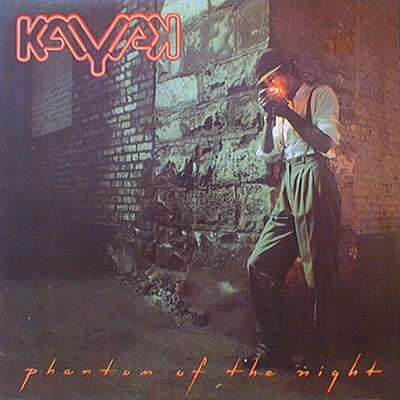
"Phantom of The Night" is a rather good pop album by Kayak I don't especially recommend to the pure-prog friends that grace my blog, but it does includes some excellent tracks and even a properly progressive one, titled "Daphne (The Laurel Tree)". This song begins with an atmospheric ballad, very well written and arranged IMHO, then it rises up in tempo and volume, sounding like an epic song should, and featuring a very good instrumental coda.

This was the original cover of the album...
 
 
 ...and here's the re-issue one, taken from a 7" single art.

As usual with Kayak, the melody is excellent - and catchy too -  and all the instruments come in at the right moment, without any useless excess, but as majestically as they have to be in such a track. Really, this is a song that's worth a listening... and likely more.