Showing posts with label 1978. Show all posts

Friday, 8 August 2025

The Bryden 2-Step (for Amphibians) Part 1 + Part 2 (National Health, 1978)

National Health is one of the most intricate and jazzy Canterbury Scene bands, strictly linked to Hatfield And The North, keyboardist Dave Stewart's band from 1973 to 1975 after his previous experiences with Egg and Khan, but also drummer Pip Pyle's and guitarist Phil Miller's ex band. For their 1978 album "Of Queues And Cures", National Health also included multi-instrumentalist John Greaves of Henry Cow fame. The two parts of The Bryden 2-Step (for Amphibians) respectively open and close this record and are two splendid specimens of Canterbury sound, mixing up melodies, jazz-rock passages and folk-rock elements in a warm, diversified and intricate structure. 

A real cabinet of curiosities...

The two sections are rather different in mood (the first one being more up-tempo and jazz oriented than the second one), but there is a strong consistency between them, reinforced by the recurring main theme and the presence of the same guest musicians: Phil Minton (trumpets), Paul Nieman (trombones) and Georgie Born (cello), whose instruments give a wider sonic landscape to this split suite. A special mention goes to the main theme, one of the most charming Canterbury-branded compositions ever and to the constant search for originality throughout these overall 13 minutes of unpredictable music.

Thursday, 31 October 2024

El Cortejo de un Día Amarillo (Bubu, 1978)

 Bubu were (and still are, a a completely different line-up) one of the most intriguing bands coming from the vibrant Argentinian prog scene. Their music is always surprising, unpredictable and intricated. This two parts suite comes from their 1978 album titled "Anabelas" and fills the entire A-side of the original LP. Its nearly 20 minutes are divided in two sections: i) Danza de las Atlántides and ii) Locomotora Blues. It really is a tricky experience even for the prog-oriented ears, including dissonant passages and a great deal of instruments: there are 8 official members in the band, a guest pianist and a five members choir. 

"Anabelas" is the only album of Bubu's original line-up.

Rather incredibly, each and every musician has its own space in the track's plot, where guitars, violin, flute, sax, drums & assorted percussions, piano, bass and the choir follow each other, perform beautiful solos and perfecly melt into this fluid, rather jazzy and avantgarde piece of music. Beyond the anarchist façade of "El Cortejo" lies a strong, keenly built structure following the best eclectic prog tradition. So don't be afraid and dive into this suite: you'll surely find something you like!

Friday, 30 September 2022

Reyes en guerra (Redd, 1978)

Redd were from Tucumán,  Argentina, and they were strongly influenced by King Crtimson and other early English prog bands. That said, they had their own way to approach prog rock, with a beautiful mix of electric and acoustic instruments, calm and evocative sung sections, impressive and sensitive percussions and some dreamy, liquid guitars. During their career they released just one album titled "Tristes noticias del imperio" (Sad news from the Empire), even if a second LP was recorded in 1979 but only released twenty years later by a Brazilian label. 

A black and white, essential cover... but there a colours inside!

This track, "Reyes en guerra" (Kings at war), opens their debut album and perfectly represents their style, epecially their mellow side. When I listen to such bands as Redd I wonder how many hidden treasures prog will uncover to my ears in due time... 

Sunday, 30 September 2018

Druga strana mene (Tako, 1978)

By the late '70s just a few prog bands existed in Eastern Europe and Tako were part of this short list. This Belgrade-based band had an eclectic approach to symphonic rock, an original sound and a Jethro Tull flavour too, thanks to keyboardist Đorđe Ilijin's flute incursions. Their first self-named album included this 16 minutes track "Druga strana mene" (meaning "The Other Side of Me"), where atmospheric moments, liquid guitar solos, rock riffs and flute passages follow each other setting up a riveting instrumental prog, full of fantasy and well found melodies.

This album was re-issued on CD in 1993.

I especially like the way Slobodan Felekatović's drums gently stress the keyboard rising themes, and also Miroslav Dukić's dreaming guitar and - most of all - the way these musicians link different musical worlds into a strong and coherent frame. Time has come, IMHO, to re-discover this band, whose short discography (two albums, no more than this) offers a bunch of real treats to the prog ears.

Monday, 24 October 2016

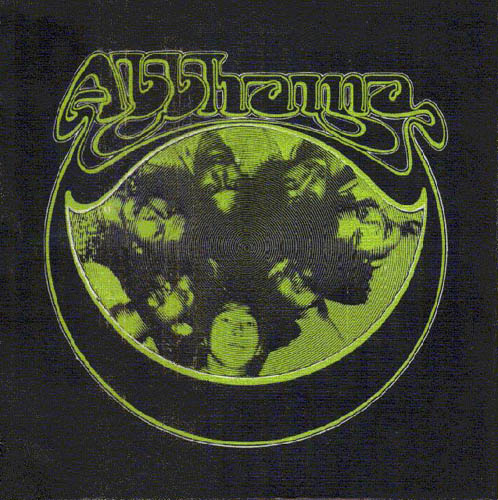
Indonesia (Abbhama, 1978)

As this track clearly states, Abbhama come from Indonesia, and they were active during the late Seventies. They released just one album (originally on cassette format) called "Alam Raya" (meaning "The Universe"), then split up. Unfortunately, I daresay, because their sole work is one of the best Asian symphonic rock album, IMHO, with a slight folk taste and an excellent piano classically played by the band's leader and composer Iwan Madjid.


The CD release kept the original cassette artwork. Good idea.


This atmospheric song was conceived as an ode to the band's homeland, but it's no way popmpous, as it flows slowly on a dreamy and nostalgic tone. The winds (flute and oboe) and the native tongue lyrics add a recognizable and sweet accent to "Indonesia", while the background arrangements could be campared to Camel. A beautiful song from a well balanced album, finally released on CD in 2014 (better late than never!).

Saturday, 13 August 2016

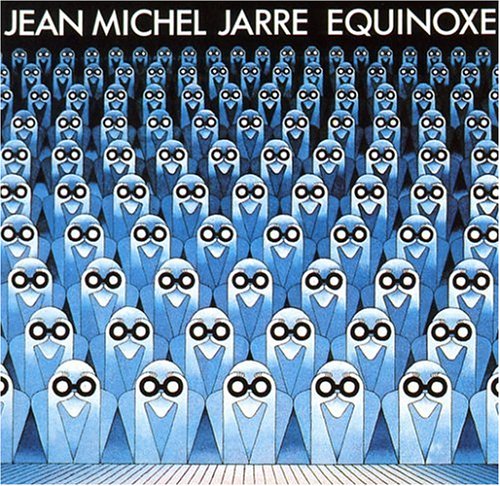
Equinoxe Part 3 (Jean-Michel Jarre, 1978)

Following the planetary success of the album "Oxygène", Jarre released "Equinoxe" two years later and also gained a huge international acclaim. This LP described a day in the life of the industrial world based humans and the two sides of the original vinyl had the same duration time, so that the chosen day had to be an equinox (we still don't know if it is a spring or an autumn one...).

As for "Oxygène", Michel Granger signed the album cover art.
 
That said, this third part of Jarre's work should describe the busy morning, and it actually has a fast tempo and hypnotic rythm. When the main theme comes in, it sounds like a hundred typing machines or a downtown bus queue, still it is so well found and so well placed that one loves even the rush hour. Then here you are a hard electronic passage, kind of a robot dance, followed by the theme reprise. An exciting track, IMHO, full of daily echoes and memorable sounds. Enjoy.

Friday, 6 May 2016

In Search of England (Barclay James Harvest, 1978)

When it comes to BJH, we often forget how important Stuart "Woolly" Wolstenholme's contribution has been during so many years. This song, however, perfectly illustrates his symphonic, nostalgic and catchy approach to prog music. As usual with the greatest songs by this band, the emotional side of "In Search of England" is prominent although never too intrusive.


I'll always love this lullaby's music...


This is a well balanced melodic song, featuring all the discreet and misty atmosphere such a fully British track requires. The lyrics are also good, mounting a dialogue between a boy and an old man about moral duties and productive sacrifices. Once more, BJH show here how great songwriters they are...

Tuesday, 29 December 2015

Acrostichon (Isopoda, 1978)

This is a very good example of European symphonic rock from the late Seventies. These Belgian musicians surely liked Genesis, Camel & Co., but they had their own style and created a pair of excellent albums where the classical plots went along a free, almost Canterburian vision. This is the title track from their debut LP and it surely is an enjoyable song, featuring a long instrumental intro and a sung section full of delicacy and intensity.

 
Isopoda were a foursome plus some very good guest musicians.
 
Some of the singer's passages aren't too far from Ian Anderson's tone and there's a constant interplay involving all the instruments, with a folky touch. Most of all, the electric guitar has an original sound, somewhere between Hackett and Gilmour. If you like classic prog with a special twist, Isopoda is for you.

Friday, 6 November 2015

Calatorul prin Nouri (Sfinx, 1978)

"Zalmoxe" by Sfinx is often considered as the best prog album from Romania and actually it's a fascinating and original work. "Calatorul prin Nouri" ("Journey through The Clouds" in English) is the longest track of the LP and features pactically all of the band's trademarks: the good vocal harmonies, an extensive use of electronic keyboards and a pinch of electric guitars. These and a clever songwriting are good enough reasons to discover and enjoy Sfinx.

"Zalmoxe" was the second album by Sfinx out of three.

I also recommend in this track the pulsing background and a decent drum work. Sure, sometimes all those effects are too invasive, but these musicians know when it's time to land on the solid ground of melody. It wasn't so easy, I think, to go proggin' in Romania during the '70s, but Sfinx did it and did it well. Definitely, prog seeds germinate everywhere...

Monday, 10 August 2015

Introspect (Cathedral, 1978)

The entire "Stained Glass Stories" album by Cathedral is a prog gem and this "Introspect" will prove my point. Deep and diversified, full of charming atmospheres and sharp changes, this song could be adopted as a progressive rock manifesto. The vocals are delicate and inspired, while all the instruments play original, unpredictable partitions. Take the bass guitar and its winding lines, the Crimson-esque keyboard or the wide spectrum drums à la Phil Collins. And what about the acoustic coda?

The boys behind this beautiful music in the CD edition of the album.

No commercial compromise here, still not a single note of "Introspect" is too difficult or too experimental to be fully enjoyable. An universe of emotions and secret landscapes flows gently before the listener's ears and gets into his soul. Too bad they disbanded so soon: Cathedral could have strongly shaped the prog rock canons. But then, this album surely did so.

Sunday, 14 June 2015

Berlin (Barclay James Harvest, 1978)

Probably because I'm not from UK, I'm fond of all things related to Old Britain. BJH are quintessential English pop-rock (even when they sing Berlin) and their prog vein runs behind the musical lines of well found melodies and dreamy arrangements. I like this song very much. This pearl comes from "XII", one of my favourite albums of theirs, but it's likely well known as part of the "Concert for the People" the band performed in 1982, actually in West Berlin.

"Berlin" is one of my favourite live albums ever.

What really strikes me - here and in so many other BJH's songs - is the fluid composition and the way those musicians had to be sweet and never sweetish. Of course, a tough progger wouldn't even accept to listen the first chord of "Berlin", but I'm not in that company and I like the pop side of prog as well. Only, I can only love this kind of songs as long as they move me. And this is exacly what "Berlin" does.

Thursday, 7 May 2015

Neonlicht / Neon Lights (Kraftwerk, 1978)

Another melancholy post-industrial track by Kraftwerk I'm adding to this blog. I love the decadent mood of this song, its winding slow time and its passionless, almost indolent vocals. The instrumental section is excellent and perfectly fits into the crepuscular atmosphere of the lyrics iterating: "Neon Lights / Shimmering neon lights / And at the fall of night / This city's made of light".

The original vinyl 12" single was whitish in daylight...

...and phosphorescent green in the dark.
 

The hypnotic sung theme is supported by a slowly pulsing electronic background, until the synth solo comes in. This song was also released as a single b-side (with "The Model") and lately as a stand alone 12" single. And, of course, a luminous vinyl was employed. If you like retro moods and stylish electronics, well, this is for you.

Monday, 9 February 2015

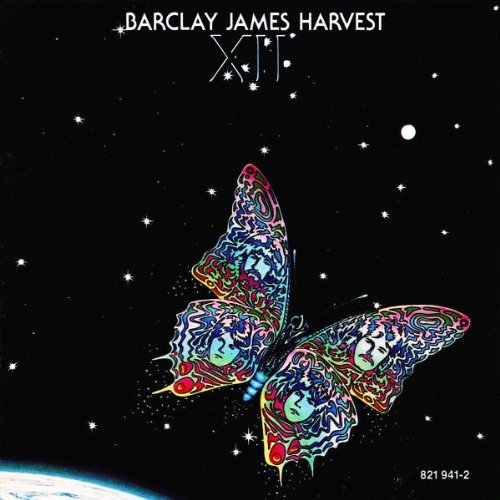
Nova Lepidoptera (Barclay James Harvest, 1978)

Labelled as "Science Fiction" - and with a synth intro justifying such a tag - this is one of my favourite BJH's songs (the album "XII" has a good bunch of them) and even one of my favourite melodic prog tracks ever. Calm and Majestic, the sung theme is rich and winding, while the arrangement is an atmospheric one, ethereal and spacey.Of course, the instrumental sections are worth a note, particularly the electric guitar solo by John Lees.

This album features many of the best BJH's melodic songs.

Also Les Holroyd's effective bass lines and Woolly Wolstenholme's assorted key effects are among the highlights of this song. Back to SF, the song begins with a Morse code message spelling U.F.O. and the lyrics are about interstellar trips and alien encounters... so the way the band merged those Sci-Fi themes with the most romantic music is simply stunning, reminding me some Ray Bradbury's novels.

Friday, 22 August 2014

Já nejsem já (Ota Petřina, 1978)

A rather vast production of prog or prog related rock sprung up in Eastern Europe between 1973 and the early '80s.  Ota Petřina is one of the finest authors of that wave and he released the album "Super-Robot", probably his best one, in 1978 under a label band bearing his own name. This track, "Já nejsem já" (something like "I'm not myself"in English), opens the LP.

Ota Petřina also released an extended 2-CD version of this album in 2009.

It's a mellow and spacey epic, very well written and played, somewhat reminiscent of the most known British prog heroes, but with a special, introspective and pulsing sound of its own. Also the lyrics in Czech contribute to that, and even more do so the delicate acoustic interludes, breaking the ruling keyboard / bass guitar interplays. I really enjoy this song each time I listen to it and so I hope yo'll do.

Tuesday, 5 August 2014

Moths (Jethro Tull, 1978)

This song comes from Jethro's "Heavy Horses" album, so it belongs to the band's most folk-oriented period. It's a rather short song, but it includes many of Ian Anderson's creature beloved features. First of all, it is popular in the positive meaning of the word: catchy and brilliant, rythmically sustained, perfectly arranged. Then, it is prog in the widest sense: for its flute solos, for its original pattern and for its unpredictable bridges.

"Moths" was also released as a single,b/w "Life Is A Long Song".

Another not so common aspect for a prog track, this is a love song, but not an usual one. Ian Anderson figures out the clever trick of suggesting the lovers' actions through the moths' dance around a candle, so that the brief and suicidal life of the animals also represents the ardour of love. Tricky, yes, but this is prog, my friends.

Wednesday, 23 July 2014

Al otro lado (Asfalto, 1978)

A classic, enthralling keyboard driven prog track by one of the most important and prolific Spanish bands ever. "Al otro lado" ("To The Other Side", in English) is a '70s up tempo song, coming from the album bearing the same title. If Jorge Walter García Banegas and his keyboards play the lead role here, all the musicians do their best to create a lively and diversified piece of music. All the long intro is an instrumental track of its own, then a short and melodic sung section comes in, adding an atmospheric moment to the track.

"Al otro lado" was the second studio proof of this seminal band.

The up tempo prog comes back soon after with a jazzier vein and another pulsing sung theme. This is a Yes-oriented passage, with a very good bass guitar, IMHO. The instrumental finale takes the shape of a powerful wall of sound and also includes some excellent elevctric guitar flashes by Julio Castejón. As you may imagine, the final result is a sparkling kaleidoscope of sounds and moods, one of the richest (and proggest) arrangements in the whole Spanish rock scene of the Golden Era.

Sunday, 13 July 2014

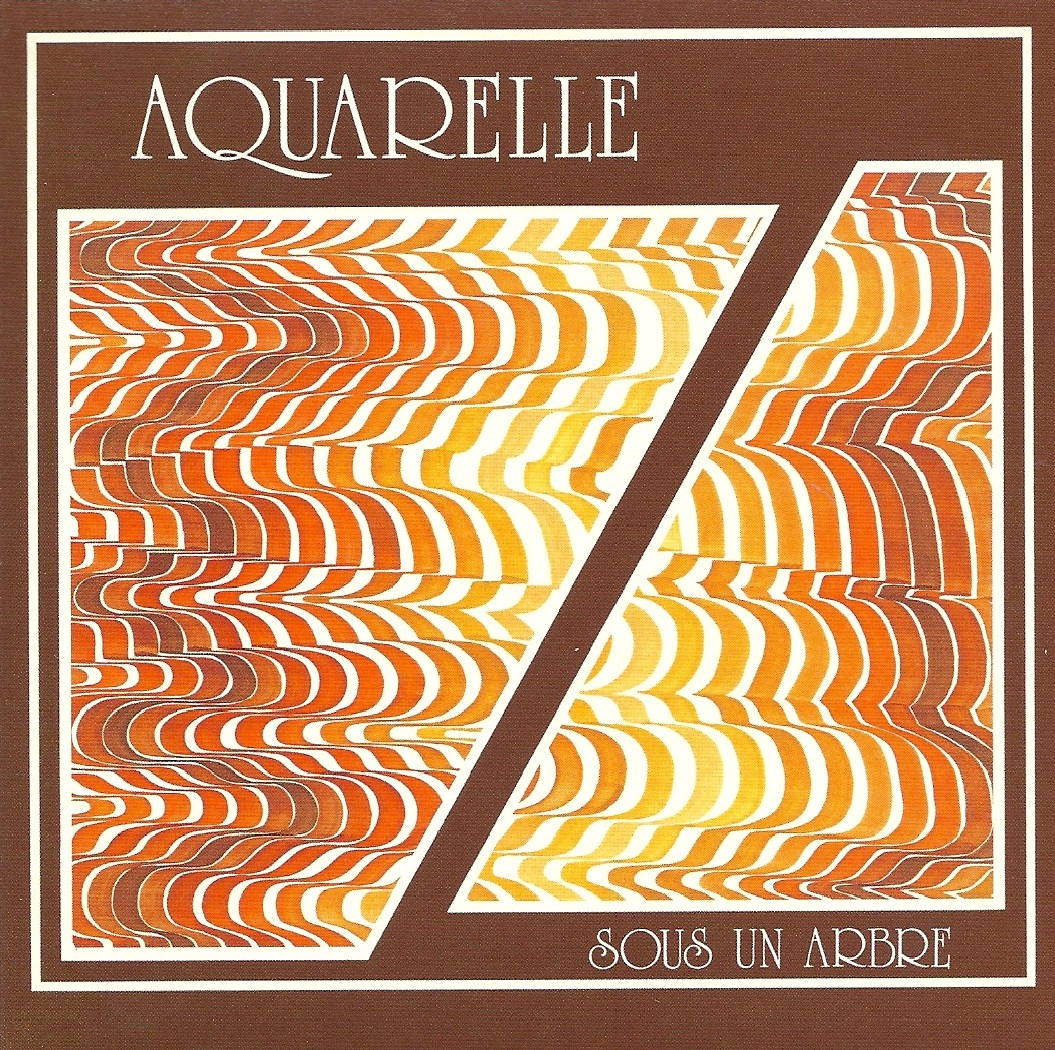
La Magie des sons (Aquarelle, 1978)

A delicious album opening song by Canadian band Aquarelle. Those guys only released one studio album and one live LP between 1978 and 1979, and their music deserves more consideration. Based on keyboardist Pierre Lescaut's and violin player Pierre Bourmaki's talents, they managed to compose and release such tracks as this "La Magie des sons", aka "Magic of Sounds", where classical and jazz influences merge to create a plesant and suspended atmmosphere.

This album is also known as "Aquarelle".

This instrumental gem comes from the album "Sous un arbre", and proves once more how rich and skilled was the Québec prog scene between 1974 and 1979. The sadness and the joy live together in this track: up tempo movements and down tempo pauses follow one another in an enthralling diversity I really appreciate. Just sparkling like fire and flowing water side by side, I daresay.

Wednesday, 25 June 2014

Historia d'una gota d'aigua (Gotic, 1978)

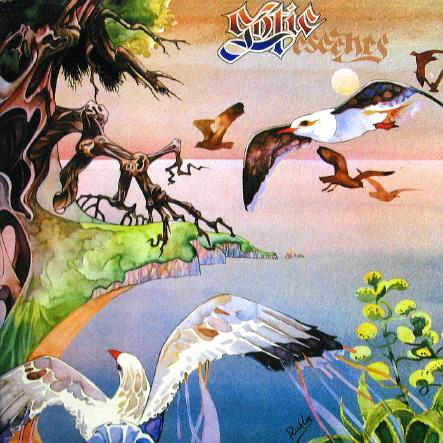
This track, taken from the album "Escenes" ("Scenes") is a Spanish (Catalan, to be more precise) prog gem, one of the sweetest ones, IMHO. It's a relaxing, descriptive still varied 10 minutes instrumental track, kind of a trip in a natural, clean, aerial world. The titles says it all: it's the story of a waterdrop, narrated by Jep Nuix and his flute supported by a clever percussion work, gentle keyboards and some acoustic guitars. The musical themes are simple and well found, so that you actually feel your body flucuate between white and pink clouds.

The whole "Escenes" album is Worth your attention.

The rythm gradually increases as the track goes on and our little drop grows up and joins the rain pouring down. Really, this Camel-esque track may be too naive for an intellectual prog listener, but as I'm a very simple man, I like it and I listen to it when I need to calm down. It perfectly works, believe me.

Wednesday, 7 May 2014

10.000 anos depois entre Venus e Marte (José Cid, 1978)

"10.000 anos depois entre Venus e Marte" is the best of the few prog albums by this prolific Portuguese artist, composer, singer and (especially here) keyboardist. The title track of this SF concept fully represents the core ideas of the whole work. A Mellotron plays an up tempo progression, then other instruments join it and the track gets more and more epic, sort of a space opera. The sung section (in Portuguese) offers a relaxing bridge, soon replaced by another José Cid's show.

José Cid explored the prog rock planet between 1977 and 1978.
 
All the vitues and the vices of such keyboard-driven projects are there, but the clever succession of progressions and largos, some unpredictable changes and - most of all - the solid melody on which this spacey castle was build up surely rivet the listener's attention. Each sound has its own colour, each passage is like an opened curtain leading on the prog dimension. So '70s, so vintage, still... so good.

Wednesday, 19 March 2014

Lau Teilatu (Itoiz, 1978)

I was immediately charmed by this folk prog ballad, coming from the debut album of the Basque band Itoiz. "Lau Teilatu" (meaning "Four Roofs") is a pastoral, sweet, intense song featuring acoustic instruments and positive feelings. Even if this album features longer and more progressive songs, first I choose this one for my blog because of its sincerity and its naive, beautiful accents.

Itoiz became very popular in Spain during the early '80s.

Describing the joy of life in their Basque Region countryside, Itoiz seem to offer the key for happiness to their listeners and surely a calm, smiling, warm bridge over daily life and its troubled waters. The song has bicome since its release a hymn to the Basque country and lifestyle, but also a worldwide well known prog anthem. Definitely, you don't need too many intricate plots to write down a good song. Take this one, for example, and be happy for a little while...