Showing posts with label 1987. Show all posts

Monday, 31 July 2023

Al filo del abismo (Praxis, 1987)

This Mexican band released their only album in 1987. Originally called "La eternidad de lo efímero", this instrumental work was re-issued on CD seven years later by Italian label Mellow Records with a different title, simply "Praxis". Useful to know, one of the members of Praxis comes fron the Mexican well known act Iconoclasta (also present in this blog). "Al filo del abismo" is the opening track, a very lively and intriguing example of symphonic prog, even with a 80s instrumentation. 

I must admit the cover art is as intricated as most of the music inside.

At first sight, the listener is overwhelmed by the instrumental skills of the band and especially by the keyboard / guitar plots, so swift and dazzling. A further  examination will reveal the brilliant work of the rythm section and the clever exploitation of the main theme. If it is true that a different keyboard set would have improved the general effect of this song (and album), but it is also true that each era has its own sounds and some would consider that as a further reason to rediscover this forgotten work.

Saturday, 23 April 2016

Holy Lamb [Song for Harmonic Convergence] (Yes, 1987)

I couldn't say "Big Generator" is among my favourite albums by Yes, but I was simply fascinated by its closing track, "Holy Lamb". It's one of those songs that remind me how unique Jon Anderson's voice is and how inspiring Yes can be. This track was written by Anderson for Harmonic Convergence, a big New Age convention that took place in Sedona, Arizona, USA. 


"Big Generator" was the twelfth studio album by Yes.

Maybe that's why "Holy Lamb" has such an ethereal and spiritual texture, set up in a moving crescendo and enhanced by lyrics full of hope and inner lights. The melody is beautiful, airy and enthralling, while the band support Anderson's performance in a discreet and effective way. Utopian as it may be, this song is a further and mighty proof of Yes' prominence in rock history.

Friday, 15 April 2016

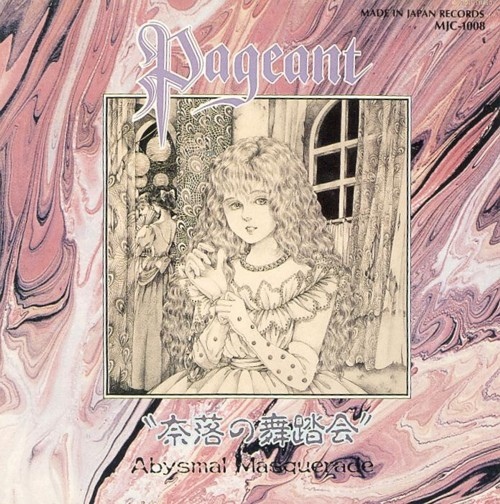
L'enfer des poupées (Pageant, 1987)

Pageant are a really original band. Born during the flushing Japanese prog era of the '80s, they set up a mix of prog, electronic pop and symphonic rock that still inspires many musicians in and out the Rising Sun Empire. "L'enfer des poupées" ("Dolls' Hell") opens the "Abysmal Masquerade" album and is a good specimen of Pageant's idea of music: synth-pop flashes, neo-prog riffs, a high-pitched female voice and a lot of irregular rythms.

"Abysmal Masquerade" was the second studio album by Pageant.

The dark side of the track (well, a hell will always be a hell, won't it?) gets along with a lighter, even childish side: nursery songs and a distorted guitars background... wow! Pageant like catchy tunes very much, but they also like unpredictable and abrupt changes, so this is a song you can listen to in both your rocky and mellow states of mind. Weird. Good.

Wednesday, 10 February 2016

La Sagrada Familia (The Alan Parsons Project, 1987)

"La Sagrada Familia" is the opening epic of "Gaudi", the last official album by APP, as the following release "Freudiana" was never credited to the Project. It's a track full of dark grandeur and of special effects. Describing Gaudi's greatest architectural achievement, this song also features excellent melodies and a powerful orchestra directed as usual by Andrew Powell. John Miles' voice perfectly fits into this mood, adding its clear and strong accent to the big picture. 

"Gaudi" was the tenth studio album by The APP.
 
Somehow this song (and most of the album) mark a return to what some call prog pop, after a pair of song-driven albums... and as you can imagine, I welcomed back home both Parsons and Woolfson. Some of the instrumental bridges in "La Sagrada Familia" are simply thrilling and the manifold arrangements provide all the rest... so sad the band was going to stop!

Tuesday, 20 October 2015

Josephine Baker (Premiata Forneria Marconi, 1987)

"Josephine Baker" is IMHO one of the finest prog songs from Italy during the '80s. Nevertheless, it is a greatly underrated track, probably because of the somewhat deceiving "Miss Baker" album it comes from or even because the band had lost in those years their progressive fandom. For sure, everything is moving and well done in "Josephine Baker", from the opening guitar to the closing violin. And in between there are a beautiful sung theme, a classy arrangement and a nostalgic set of lyrics about an African  beauty, the very icon of the Parisian dance halls, the famous Afro-American dancer quoted in the title, or - more probably - only her poster on the wall of a lonely room.

"Miss Baker" was the twelfth studio album by PFM.

The atmosphere of this song is full of melancholy but not necessarily sad, as I breathe a warm mood all along the track, combining Old Europe, Africa and some smoky cafés of a long forgotten Parisian Street. Such a pity this had to remain the last PFM's prog song until their coming back many years later...

Tuesday, 6 October 2015

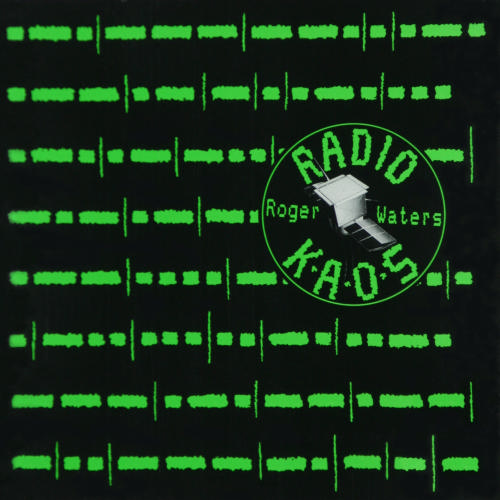
The Tide Is Turning (Roger Waters, 1987)

Also known with its official title "The Tide Is Turning (After Live Aid)", this is one of my favourite tracks by Roger Waters. It has a splendid melody and an atmospheric arrangement flowing and growing like a majestic river. The complete title includes a reference to the Live Aid concerts, even if Waters' participation was turned down by the organisation.
 
"Radio KAOS" was the fourth studio album by Wayters,
including two original soundtracks.
 
This song closes the album "Radio K.A.O.S." with a somehow optimistic note, as the rest of the concept was a bleak one, originally ending with the song "Four Minutes", staging a nuclear war. Thus, "The Tide Is Turning" has a brighter mood, a sort of anthem of hope for the human race. This song was also popular as it was the final track of the celebrated "The Wall Live" performance in Berlin. The studio version is also interesting for its discreet and effective electronic effects and for its first class vocal harmonies.

Tuesday, 11 August 2015

Vent du Midi (Bellaphon, 1987)

This long instrumental track by Japanese band Bellaphon, coming from their album "Firefly" has a very special mood and an even better structure. Based on a keyboard theme, "Vent du Midi" ("Southern Wind", more or less) also has a beautiful guitar work and a very diversified rythmic structure. Sure, you'll find some immediately recognizable '80s sounds, but the general effect is so good that you'll certainly forgive such a lesser fault.

Ther album tracklist reveals a French inspiration.

I really like the central break, giving a classical twist to the song and introducing a more lively part and a series of further changes. Those musical turning stages are IMHO the strongest point of the track, but I think this is one of those prog songs you just have to follow with your eyes closed and your heart open wide. Try and let me know...

Sunday, 12 July 2015

Cuando la música era espiritual y no física o el Adivino del último periodo de paz (Iconoclasta, 1987)

No doubt this is one of the longest titles a prog song ever had. You could translate this with "When the music was spiritual, not physical or the Seer of the last period of peace", so that you can easily guess this is not a love song. It's the opening track of the "Soliloquio" album by Mexican band Iconoclasta and surely is an unusual one. This doesn't mean that "Cuando..." is a weird and experimental song, just for the connoisseurs. Not at all, in fact.

If you think this song title is weird, what about the album art?

There is a fully enjoyable melody and a beautiful arrangement, more peaceful than usual for Iconoclasta. Being an instrumental intro, the band leaves to the listeners any further interpretations, even if such a sunny, catchy theme clearly depicts the utopian "last period of peace" the title suggests and the visions of that mysterious Seer. All in all, I like the song and the gentle but never obvious way it flows away, just like a childish tune or a village fair... but with a strange twist. Sometimes this is the kind of music you need to think over the gravest subjects. Incredible, maybe, but true.

Wednesday, 6 May 2015

Farm on The Freeway (Jethro Tull, 1987)

Another good reason to love Jethro Tull's "Crest of A Knave" album surely is this song. It starts like a Jethro's classic, then goes on even better than you can imagine, with a full r'n'b soul, a pinch of baroque'n'roll and some hevier riffs now and then. A good song, IMHO, with a devilish Anderson's flute and Martin Barre at his heights. The lyrics are about the declining rural habits in USA and the invasion of the modern freeways criss-crossing the American landscape, kind of a "Heavy Horses" topic put on the other side of the Atlantic Ocean.

A good bootleg CD was named after this song, from a Philadelphia
concert featuring some members of Fairport Convention. It was in 1987.

The highlights of "Farm on The Freeway" probably are the country music intro, the first Barre's break and the following duet with Anderson's flute. But the sung melody is also excellent and the whole song should be more appreciated even by the band's fans. Be as it may, I like it very much and I recommend it to all my progfriends.

Thursday, 19 March 2015

That Time of The Night [The Short Straw] (Marillion, 1987)

When Marillion decide to approach a rather traditionally set up song, they do it their way. Luckily. This is exactly the case with "That Time of The Night", sub-titled The Short Straw, and taken from the last Fish era album, "Clutching at Straws". Not only the verse / chorus structure is cleverly enriched and revised by the band, but also the rythmic solutions are very original, providing a suspended and nervous atmosphere, like the darkness before a storm.

A beautiful Picture disc edition of "Clutching at Straws".
 
I actually like the contrasts between the stretched verses and the wider chorus and between the syncopated bass lines and the ethereal keys. Some six minutes of deep emotions, that's what this song is to me. And a very good way for Fish to say goodbye to the band's fans.

Tuesday, 16 December 2014

La tour haute (Minimum Vital, 1987)

This lively, beautiful track comes from Minimum Vital's debut album, called "Les saisons marines". The title (meaning "The Tall Tower") immediately suggests the Medieval and folk mood of the song, but there is more than this in this 10 minute instrumental. Firstly, there is the splendid fusion of the traditional instruments and the synth, imitating ancestral sounds and adding a special flavour to the track. It isn't so common to find acoustic guitar and synth interplays, after all.

Since their first album, this band foud its peculiar way to prog.

And what could I say of the ever changing drumming? In a way, Christophe Godet enlightens and enhances the music, stressing all the passages with essential but never trivial rythmic solutions. As always with this French band, there's a Mediterranean mood, a blue and green shade, maybe the Sea Seasons the album title conjures up. If ever there is a dancing way to prog, you'll find it here.

Thursday, 20 November 2014

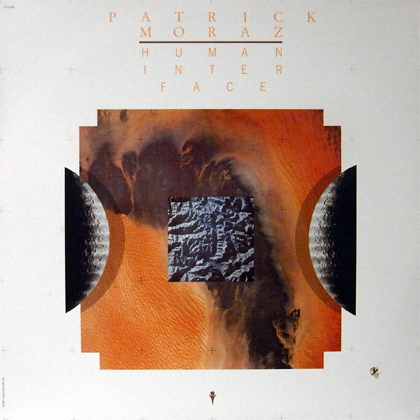
Light Elements (Patrick Moraz, 1987)

Here's a synth-prog track by Patrick Moraz, the Swiss keyboardist and one-man band, also famous for his short lived collaboration with Yes. This instrumental opens his album called "Human Interface" and is a very good specimen of symphonic keyboard driven music. It's a perfect depiction of light, like a summer dawn or a distant star approaching, one of those spacey tracks suggesting interstellar trips.

This was the seventh  studio album by Patrick Moraz.


The almost orchestral drums and the effective double lined melody are full of the sense of wonder I appreciate in good electronic music. The little but effective variations are very well found and that's why, even if there's just one melodic loop during the whole song, I'm never bored by it and I seldom re-start my CD reader and take another go to "Light Elements". Moraz really knows how to exploit flushing effects and devilish devices keeping a human soul in his music. Not so easy.

Sunday, 19 October 2014

On The Turning Away (Pink Floyd, 1987)

With "High Hopes"(also in this blog), "On The Turning Away" is my favourite track from Gilmour / Mason era of Pink Floyd. We don't need to compare this ballad with the far more adventurous track of the early Floyd or with those coming from the band's iconic middle period. Better enjoy this beautiful melody, the wise in crescendo volume and Gilmour's usual atmospheric solos.

By the way, the single version of this song was a US Billboard Rock Tracks #1.

It's one of those songs bearing a PF trademark so well carved in its sound that you immediately recognise it, even if it's the first time you listen to this. And you love such a track immediately, no matter the era or the lineup. It's something so well written, performed and arranged you can only give up one more time and play it again and again...

Friday, 26 September 2014

Firefly (Bellaphon, 1987)

Here you are a Japanese band from the '80s, one of my favourite acts from Far East. Their sound is surely reminiscent of the contemporary British bands (and of Camel, too), but there's something unpredictable in some of their musical patterns and sounds. Take this "Firefly", for example, the title track of Bellaphon debut CD. You'll immediately observe the flushing collection of keyboard sounds, ranging from the vintage Hammond to the most unusual samples. And what about Taiqui Tomiie's drums? How many rythmic solutions, and how gentle his touch can be!

One of the best istrumental albums of the '80s, IMHO.

There are so many changes in this instrumental epic and so many different moods... but each one is graced by a different solo by Toshihiro Tanaka's electric guitar. Here, of course, you'll recognize the influence of some of the greatest instrument masters, but Bellaphon are perfect when it comes to choose the right effect for each passage and each interplay. Yes, this is maybe their greatest virtue: a very good taste. And this is not common, is it?

Friday, 24 January 2014

The Crucifixion (Aragon, 1987)

This 15:39 minutes epic by the Australian band Aragon is a beautiful specimen from the '80s so called neo-prog scene and one of the very few from Southern emisphere. Strongly influenced by the British models of its period, the song - taken from the debut album "Don't Bring The Rain" - has nonetheless its own character, combining in the opening section syncopated drumming reminiscent of IQ with passionate vocals à la Fish and lots of good musical ideas with no specific inspiration. The central part of "The Crucifixion", featuring a rarefied atmosphere and suggestive vocals is maybe my favourite one.

This was the first of six studio albums by Aragon.

Les Dougan really cries out its soul here, and Tom Behrsing's keyboards create a magic universe I still like, with a hint of lost childhood inside. The sound quality isn't perfect (oh, not at all...), but I get the feeling nonetheless and the final sorrowful instrumental brings on the typical kick inside good prog always gives to me. Later in their career, Aragon will grow a more personal style, but I'm grateful to those musicians for this early, easy, bittersweet song.

Thursday, 11 July 2013

Sugar Mice (Marillion, 1987)

Marillion's "Clutching at Straws" album, is about restlessness and alcohol addiction and most of its songs are full of anger or despair. This one is rather on the melancholic side and features a very, very good melody. Fish and Steve Rothery play the main role here, the first for his usual passionate preformance, the secondr for a splendid guitar solo. I also appreciate Pete Trewavas' bass lines, but what really strikes me is the rare balance between the natural expression of inner sorrow and the smooth and neat arrangement.

This was the cover art of "Sugar Mice" 7" single version.


This contrast perfecly depicts the endless separation between social and intimate spheres in most of human beings. So I think this song represents our unavoidable solitude and also our hidden desire of coming out of our social cage. Each time I listen to this I think Fish was the one man who could sing such a thing.

Wednesday, 20 March 2013

Budapest (Jethro Tull, 1987)

I immediatly fell in love with this song back in 1987 and I still adore it. Yes, there's a strange Dire Straits meets Jethro Tull connection here, but the track's architecture is gorgeous, with a bueautiful tune and many instrumental passages (flute solos above all, as you can easily guess) dotting the composition now and then. There's also a great vocal performance by Ian Anderson, one of the last, alas!
 
"Budapest" is here!
 
The guest musician Ric Sanders guarantees an additional hungarian atmosphere with his violin... and I swear those violin / flute plots are among the best Jethro Tull's inventions ever! The lyrics are about some Anderson's touring memories on the banks of the Danube and fit the music perfectly well. I must admit the rest of "Crest of A Knave" album is not at the same level, but thanks to this song it's worth buying.