Showing posts with label 1977. Show all posts

Tuesday, 31 March 2020

Out of The Woods (Airlord, 1977)

Airlord are one of those Oceanian bands mixing with indisputable skills symphonic rock, pastoral moods and good old pop. Just like Sebastian Hardie (see in this blog) did in Australia and during the same years, Airlord imported prog in New Zealand (and then in Australia, where their career actually grew) and set up an enthralling, alternating style, including mellotron work, sudden rythmic changes, beautiful guitar solos, bluesy echoes and a good deal of vocal harmonies.

This artwork reminds me of Moody Blues...

This lushing list is all here, in this six minutes song coming from the only LP the band released in their career, back in 1977, titled "Clockwork Revenge". You'll find an everchanging plot, with some beautiful highlights like the heartwarming guitar solo, some liquid bass lines and of course the folkish opening vocals. There's a bit of early Genesis, a pinch of Moody Blues and even a touch of Canterbury scene, all that presented in a song-oriented package. I do think Airlord are worth a careful listening.

Friday, 30 November 2018

Zombieroch (Hands, 1977)

Hands are an American band with two dfferent lives. Founded in the mid-seventies, they released an amateur album that was not successful, so that Hands - after an intense touring season - disbanded and were almost forgotten. The re-release of their album in 1996 changed somewhat their destiny and a renewed interest among the progfans community brought these musicians to revive Hands with a slightly different line up and to release some new albums. 

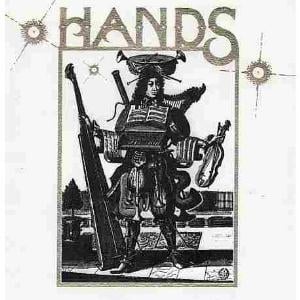
The 1996 reissue of Hand's debut album plus early songs.


This track, however, is the instrumental opener of their reissued early works and features some of the band's highlights: a lively folk rock taste, a recognizable Jethro Tull and Kansas influence, a creative use of many acoustic and electric instruments and - last but not least - an uncommon ironic side. Even if their original production wasn't perfect, the re-release of this track (and of the album, together with more early materials) souds pretty good and brings back to our ears all the colours of its era.  

Tuesday, 29 August 2017

Lady of Shalott (Atmosphera, 1977)

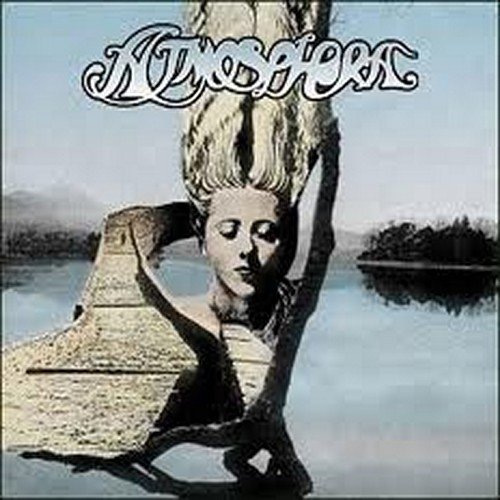
Back to the Seventies, here you are a long epic by Israeli band Atmosphera, taken from their only album, released in 1977 and re-released in 2002 with an entire bonus CD. Efrayim Barak's voice sounds much like Jon Anderson's, but Atmosphera aren't just another Yes clone: their music ranges from Procol Harum to Camel, including glimpses of Genesis, Pink Floyd and - of course - Yes. Rather easy and melodic, this composition also features more tricky passages, some interesting keyboard and guitar solos (Moti Fonseca has an excellent touch, IMHO), and I especially like Yuval Rivlin's piano and Alon Nadel's intriguing bass lines. 

The 2 CDs version  also includes a videoclip of Lady of Shalott.

This suite (well, it is virtually a suite, even if an undivided one) has a solid and coherent pattern and isn't a mere period piece, being as enjoyable as it was in 1977. Some tempo changes actually strike me, and each passage seems to me well conceived and even better performed. In short, if you're searching for neglected jewels from the Golden Era of prog rock, this one's for you.

Saturday, 22 October 2016

Pigs [Three Different Ones] (Pink Floyd, 1977)

"Pigs" still is a great favourite of Pink Floyd's fans all over the world. And I reckon they're right: not only this song has a special and immediately recognizable rythm, but the lyrics are among the most interesting ones by Roger Waters. As the sub-title says, the three stanzas of Pigs present three different powerful individuals, whose identities remain a matter of speculation, even if the third one is clearly identified as the English hyper-conservative  activist Mary Whitehouse.


The pig flying over Battersea power station...


Back to the  musical side, the main theme is catchty and well found, while the beautiful arrangements exploit some less usual devices in PF's typical instrumentation, such as a fretless bass guitar and a talk box. Two bass solos and a guitar solo also grace this track, and it's worth nothing that its live performances were usually longer than the album version, reaching some 18-20 minutes of duration. A true classic, always welcome in my playlist.

Sunday, 25 September 2016

Going Away (SBB, 1977)

This is the first suite from the album "Follow My Dream", released in 1977 by Polish band SBB. It is divided into four parts (Freedom with Us, 3rd Reanimation, Going Away and (Żywiec) Mountain Melody) and spans over 24 minutes of enjoyable, fluid and coherent music. Each part could be considered as a stand alone song and each one's got its own distinctive mood, even if the listener can only get the whole potential of this track by listening it in its entirety.
 
"Follow My Dream" was the sixth studio album by SBB.

The liquid and poppish Freedom with Us is followed by the experimental, jazzy and instrumental 3rd Reanimation, while Going Away has an ethereal and even spacey atmosphere introducing a majestic and fully symphonic section. The final part, (Żywiec) Mountain Melody begins with jazzy rythms, then goes electronic and somehow krautrock. As you can see, there is something for everyone and still the suite has its own peculiar flavour.

Thursday, 4 August 2016

Poor Man's Moody Blues (Barclay James Harvest, 1977)

There's a funny story behind this beautiful melodic song by Barclay James Harvest. The specialised press never loved the band, as you may know, and a journalist went as far as to describe BJH "poor man's Moody Blues". Guitarist John Lees was vexed and wrote this song, arranging it as a Moody Blues' track, and even naming it after the reviewer's comparison. His reply is more convincing because of the beauty of the track.


"Gone to Earth" was the eighth studio album by BJH.


The pastoral melody is calm and deep, the arrangements quote MB's "Nights in White Satin" (also in this blog) with good taste and the instrumental sections are the proggest thing BJH made in "Gone to Earth" album. The symphonic finale is pleasant and slightly ironic. For sure, the entire song is a patent and proud display of what BJH were worth, beyond any high-brow prejudices. Useless to say, we still listen to this song while we forgot the arrogant reviewer's name.

Tuesday, 7 June 2016

L'extrême (Éternité, 1977)

Back to Québec, here you are an interesting track from the album "Les chants de l'éternité" ("Eternity Chants"), released by Éternité, basically a twosome formed by Claude Péloquin and Michel LeFrançois, two eclectic exponents of French Canadian prog scene all along the Seventies. This is a diverse and surprising song, also featuring a couple of beautiful female voices and drummer Gilles Schetagne of Maneige fame. Both acid and symphonic, "L'extrême" offers a charming musical rendition of Péloquin's mystical lyrics, fluctuating between folk elements and jazzy passages, Crimsonian guitars and Woodstock temptations.

The only album by Éternité should be discovered by prog fans.
 
The way the band revives proto-prog moods and hippy colours in the declining progressive era is sweet and even moving, an audio postcard from the past I simply cherish. Rock will soon leave the ethereal spheres and the existential themes, but these musicians prolonged the dream a little further. I'm so grateful to them...

Saturday, 7 May 2016

A Beira Do Fim (Tantra, 1977)

Gone through a series of changes, breaks and reunions, Tantra are all the same one of the most interesting prog bands of the Portuguese scene. "Misterios e Maravilhas" (that's to say "Mysteries and Wonders") surely is one of their most solid albums and the opening track "A Beira do Fim" ("End's Edge") is by far the best piece of music from this LP. It's a highly diversified track, featuring many tempo changes and a good deal of interplays, mostly involving Armando Gama's keyboards and Manuel "Frodo" Cardoso's guitars. 

This excellent debut album was re-released on CD in 2007.

Of course, you'll recognize here the strong - and unavoidable, IMHO - influence of the great British bands from the '70s (Tantra also certify their gratitude and admiration in the liner notes), but there is an original approach to prog you'll also appreciate, leading to some nearly experimental passages. Finally, special mentions go to the hearty vocal performance by Cardoso and to the coherent musical architecture. Do not miss this track!

Wednesday, 30 March 2016

Debka דבקה / (Sheshet / ששת , year 1977)

Among the many flute driven prog groups from the '70s, Israeli band Sheshet ( ששת ) surely weren't the most famous one, but they created a delicate and rather eclectic self-titled album, from which I'm introducing a song called Debka or  דבקה , the name of a Near Eastern dance, an excellent way into Sheshet's musical world. The listener finds, of course, a well played flute à la Ian Anderson, but also beautiful vocal harmonies somehow inspired by Gentle Giant, some ethnic rythms and jazzy instrumental passages.

Such a pity this was going to be their only album...

A good deal of solutions, as you can see, so that the final effect is that of an original and pleasant mix of different moods gathered in a coherent frame. Not an easy task, but the band succeeded in such a daring melting pot and - what's surely more surprising - their music is even more enjoyable today than it was in 1977. Try it and let me know...
 

Wednesday, 17 February 2016

Ladies of The Night (Airlord, 1977)

Musical life wasn't easy for prog bands in New Zealand back in the mid-Seventies. That's why Airlord had to move to Australia and never released a second work after their intriguing "Clockwork Revenge" album. "Ladies of The Night" is a fully progressive and highly diversified epic, including all the main elements I like in such a song. First of all, there's a very good songwriting, that's to say beautiful melodies and well found variations.


This band split up in 1978 and never re-united, as far as I know.


Then, a special mention goes to the arrangements, ranging from atmospheric passages to memorable solo guitars. The symphonic structure of the track is cleverly empowered with arena rock sounds, Genesis-like vocals and - last but not least - a big deal of enthusiasm. True, the fantasy concept about weird toys and wicked clockworks fighting their human masters is beyond me, but this is part of the game, after all!

Monday, 18 January 2016

Lapin (Connivence, 1977)

As you probably know if you come and read my blog from time to time, I'm partial to French Canadian prog rock, especially if it comes from the Seventies. I like the folk elements those bands used to add to their compositions and when those elements are cleverly mixed with fully prog and even symphonic rock, I'm perfectly happy. This is the case with Connivence's self-titled debut album and especially with this beautiful instrumental track, called "Lapin" ("Rabbit" in English). It's a lively and diversified piece of prog, with an irregular rythmic plot and some well found returning melodies.

Three albums were released between 1977 and 1984
and credited to the collective name "Connivence".

But there is more: Connivence was not a proper band, it was more like a shared project set up by many artists living in the same area. So, "Lapin" strictly belongs to a band called Oasis, but in the spirit of this shared record it was graced by a wider collaboration. For its rich and enthralling pattern, this song closed the album with a joyful touch.

Thursday, 3 December 2015

À la poursuite du Nord (Cano, 1977)

I'm back to the French Canadian prog rock (from North Ontario this time, not from Québec) with one of the most beautiful and atmospheric songs from that Country: "À la poursuite du Nord" (that's to say "Going after the North"), taken from the album "Au Nord de notre vie" ("North of Our Life"). Cano, by the way, is the acronym of Cooperative des Artistes du Nouvel Ontario. Likely the first thing you'll notice will be Rachel Paiement's beautiful, pure voice, then the song structure and the delicate arrangements will charm you, especially if you're into melodic prog and Renaisance.
 
This excellent work was the second album by Cano.

This hymn to the Great North and the spirit of Canada is rightly credited as a suite and is also full of good vocal harmonies, delicious piano touches and pleasant changes of themes, tempos and moods. The rich texture of this song also depends from the band being an octet, including many acoustic and electric instruments. Something tells me some of you will listen more by Cano...

Sunday, 8 November 2015

The Mountaneer (Aleph, 1977)

There's a bunch of good bands from the Australian prog scene of the '70s that are rarely found in the sites and books concerning our genre. That could be because of their strongly melodic accents... you know how many intellectual and tricky reviewers love our genre (alas!). Well, as I like good melodies and well played pianos, I also like Aleph, a Sidney-based sixsome that really knew how to write great songs and how to give them an epic and sunny twist.

Unfortunately, the band split up soon after this sole album.

"The Mountaneer" is the 14 minute suite you'll find in the album called "Surface Tension", one of the brightest stars in Oceanian prog sky (IMHO) and the band's only studio work. Not only the different themes are excellent, but they're very well framed in a convincing pattern lining up spacey and prog moments, all as enjoyable as a progfan can desire. Guitars and keyboards come and go, while Joe Walmsey's falsetto voice is simply perfect in this big picture. Try and let me know...

Thursday, 29 October 2015

Movin' on (Circus, 1977)

There are just a few suites that I can compare with this "Movin' on" by Swiss band Circus. It's the title track of their second album and surely is one of the most intricated, uncompromising tracks from the  Continental Europe prog scene of the '70s. Not only this band didn't include a keyboardist, they even didn't had a guitarist! Still, this song proves how diversified and interesting prog can be without the two most iconic rock instruments. King Crimson somehow influenced this music, especially when the winds come in, but there are some vocal harmonies you could easily credit to Gentle Giant and a talking bass guitar that seems Yes-oriented.

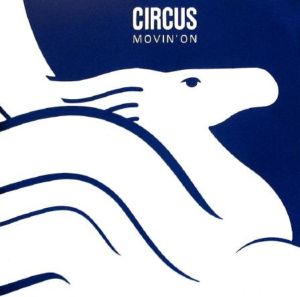
Circus released three studio albums between 1976 and 1980. 

The truth is that Circus were just Circus and their "Movin' on" is a stunning display of melodic fantasy and rythmic invention. And it's simply impossible to get bored when listening to such a series of musical tricks and treats. Some atmospheric moments break the rythm and a few sung verses give a definite idea of the band's songwriting potential. In want of a better description, please listen to this. 

Sunday, 7 June 2015

Starborne (Happy The Man, 1977)

When it comes to creative ways to get into prog rock, Happy The Man's debut album is an excellent choice. In their own slightly dissonant and always surprising way, these American musicians gathered a collection of crossover songs that still remains as an unavoidable reference to the open minded proggers. This leading track is one of the most charming pearls in the LP, based on a spacey mood I could die for, on which all the instruments draw abstract themes.

This album lines up a stunning series of unpredictable tracks.

Kit Watkin's minimoog is of course the main character in the play, but I also love the way drummer Mike Beck and bassist Rick Kennell give a stronger texture to the track... they seem to unveil a wide landscape to the listener, conjuring up new details and unseen skies. A great way to open an album, IMHO, and also a perfect sample of what I call reflection music.

Thursday, 5 February 2015

Wonderous Stories (Yes, 1977)

Here you are one of my favourite progressive short songs. It's one of those tracks that don't need any introductions, but it's useful to remember that such a melodic, ethereal song leaded its album ("Going for The One") through the 1977 punk wave up to the top of UK charts. It's a Jon Anderson's composition and Jon's vocals surely are the most impressive feature of "Wonderous Stories", so sweet and pure.

Here's the German cover of the 7" release.

That said, Rick Wakeman's keyboards have an essential role too in building up a fairy atmosphere and after all, despite the shortness of this song, we enjoy both keyboard and guitar solos. This little jewel was also released as a single and got a good reception, even on some of the most anti-prog radio shows. When I'm feeling down or tired, that's one of my favourite remedies, so I dare recommend it to anyone else.

Monday, 22 December 2014

Hunting Girl (Jethro Tull, 1977)

Well, this is exactly what you expect on a Jethro Tull's song. Folk roots, baroque'n'roll interplays, catching sung melody, warm and rather aggressive vocals, good old keys with rather heavier guitars. Everything Jethro is here. It is difficult to resist: the rythm is enthralling and the mood changes come unexpected, ranging from rock'n'roll to medieval music. Energy everywhere, of course, but under control. So that each instrument has got its own right place, just like the low class boy coming across the hunting lady in Ian Anderson's lyrics.

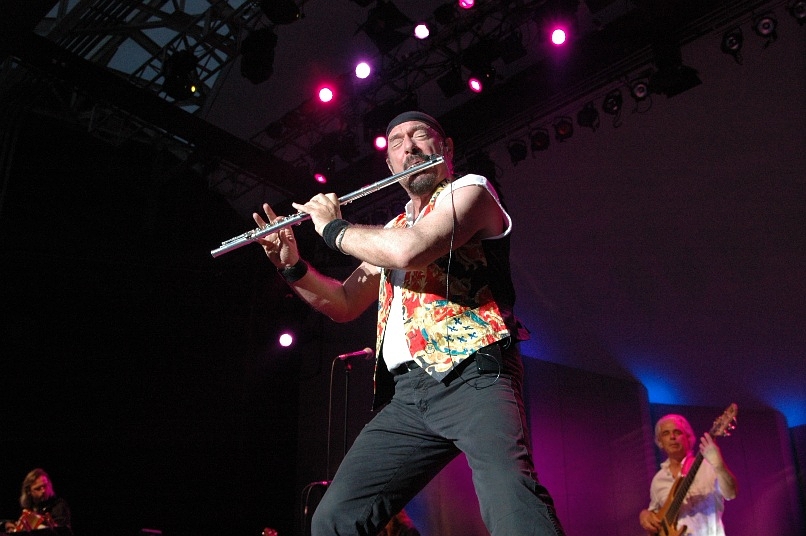
Caught in the act!

And when the flute comes in to stress the socially uneven encounter, it seems to me that those lines perfectly describe old Ian's character:

I'm not inclined to acts refined, if thats how it goes.
Oh, high born hunting girl,
I'm just a normal low born so and so.

Low born, maybe. But let us judge about the refinement of your musical acts, Mr. Anderson!

Wednesday, 17 December 2014

Horsemen to Symphinity (Windchase, 1977)

You'll find one album, just the one called "Symphinity", in this Australian band from the '70s, but in fact they were kind of a reincarnation of Sebastian Hardie, likely the most celebrated prog band in their Country (and also represented in this little blog). This track shows how much those musicians were influenced by contemporary UK bands, especially Camel, I daresay.

Pyramids, UFOs, ancient warriors... what else?
 
But you'll also find many original features, especially when Mario Millo's guitar comes in. There's a long and beautiful electric guitar solo in this song I can only admire. And the final part of this performance has a bonus gem: the bass / guitar interplay. Actually this is a perfect example of creative, free, enjoyable progressive rock, coming from the years where it was really difficult to get noticed... but those guys surely did so and they still stand among the most beautiful pearls of the Southern Emisphere.

Tuesday, 2 December 2014

Forse le lucciole non si amano più (Locanda delle Fate, 1977)

The title track of "Forse le lucciole non si amano più" (something like "Perhaps the fireflies don't love themselves anymore" in English) is one of the most romantic and atmospheric tracks in the entire Italian prog discography, IMHO. Leonardo Sasso's strong voice shines over the mellow musical background and some dreaming instrumental interludes enrich the song. The piano and the flute kind of draw the fireflies' aerial paths in a nocturnal sky, while the rest of the band set up some fluid tempo changes and more picturesque sketches.

The band came back in 1999 after more than 20 years of silence. 
But their debut album still stands as an Italian prog masterpiece.

Really, this is a song carrying the listener into a nostalgy dimension, a fairy world outside time and space. Such a pity this beautiful album had no success in its era. The prog world discovered it some twenty years later. Well, never too late, I suppose.

Thursday, 6 November 2014

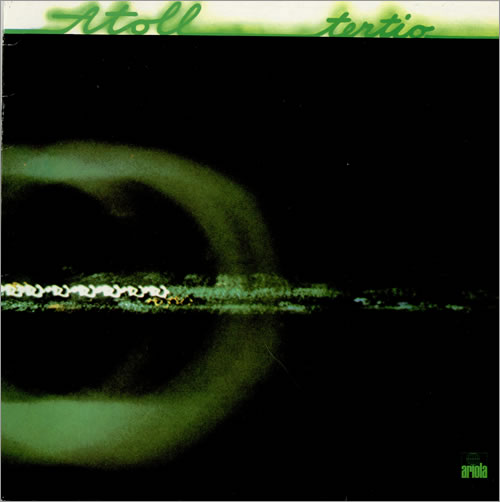
Le cerf volant (Atoll, 1977)

Among the many good tracks released by this French band, I decided tointroduce in my blog this instrumental and relaxing one, taken from the album "Tertio", a rather accessible LP, compared with its precedessors. The first and most important reason of my choice is the spacey, atmosferic and hypnotic mood of the song, bravely exploring all the arcane features of a genre that, back in1977, seemed to belong to history.

The title says it all: "Tertio" was Atoll's third album.

But Atoll still had so much to say and to play, as this magic essay proves very well. Electronic keyboards and an elegant electric guitar are the main features of "Le cerf volant", but I also like André Balzer's delicate and variated drumming. The whole song perfectly depicts the flight of a kite (that's the meaning of the song title in English) high in a blue sky, and the sense of freedom it always suggests. More than a song, this is a vivid, persistent kind of dream.