Showing posts with label Pink Floyd. Show all posts

Saturday, 22 October 2016

Pigs [Three Different Ones] (Pink Floyd, 1977)

"Pigs" still is a great favourite of Pink Floyd's fans all over the world. And I reckon they're right: not only this song has a special and immediately recognizable rythm, but the lyrics are among the most interesting ones by Roger Waters. As the sub-title says, the three stanzas of Pigs present three different powerful individuals, whose identities remain a matter of speculation, even if the third one is clearly identified as the English hyper-conservative  activist Mary Whitehouse.
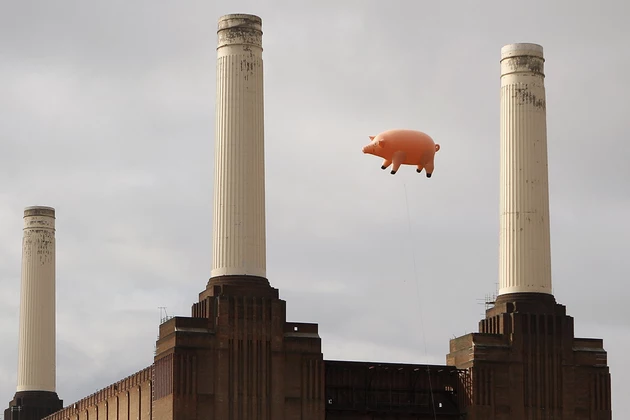

The pig flying over Battersea power station...


Back to the  musical side, the main theme is catchty and well found, while the beautiful arrangements exploit some less usual devices in PF's typical instrumentation, such as a fretless bass guitar and a talk box. Two bass solos and a guitar solo also grace this track, and it's worth nothing that its live performances were usually longer than the album version, reaching some 18-20 minutes of duration. A true classic, always welcome in my playlist.

Friday, 4 March 2016

The Trial (Pink Floyd, 1979)

I love this theatrical track from "The Wall" and not only for its live performances (both by Waters and Pink Floyd) featuring giant puppets and assorted special effects. The song is built up like a rock opera and also like an actual trial, based on Roger Water's eclectic vocal performance. The rock elements are also well found, especially when it comes to Gilmour's guitar. After all, "The Trial" represents the climax of the album concept, when the main character Pink draws conclusions about his life and his mental health. 


Some of the characters involved in the trial by cartoonist G. Scarfe.

The judge, the prosecutor, the schoolmaster, the mother and the wife add their depositions in an emotional crescendo until the final and choral breakdown. I also appreciate Gerald Scarfe's cartoon reddition of this track as seen in "The Wall" film, let alone the live version in 1990 Berlin concert featuring the likes of Ute Lemper and Marianne Faithfull. A visionary experience, a musical kaleidoscope.

Monday, 16 November 2015

A Saucerful of Secrets (Pink Floyd, 1968)

This instrumental is the title track of Pink Floyd's second album and also features on the live LP from "Ummagumma" and on "Pink Floyd at Pompeii" film. That's to say this actually is one of the most important tracks in the band's early live tracklists. It is interesting to note that this song was split in four parts on "Ummagumma", each one bearing its own title (Something Else, Syncopated Pandemonium, Storm Signal, Celestial Voices). 


I think this cover art actually depicts the title song.

Roger Waters explained in an interview that the track was a musical description of a battle and its gruesome aftermath, so that the first part describes the start of the conflict, the second section is the battle itself, then we have the deadly aftermath and the subsequent mourning. For sure, this is a very deep and lysergic track, full of dark atmospheres and unpredictable contrasts, an experimental piece of music that's one of the most tricky, obscure and intriguing songs by Pink Floyd.

Saturday, 26 September 2015

Welcome to The Machine (Pink Floyd, 1975)

One of the most claustrophobic and impressive portraits of the entertainment business ever. The great deal of synths employed here probably is the signature feature of "Welcome to The Machine", and the way those electronic devices interact with the acoustic guitars and a plethora of tape effects is even more peculiar. This song quickly became a popular standard of floydian sound, mixing slow bluesy measures, space rock and basic ballads into a fascinating melting pot. 

Cartoonist Gerald Scarfe created a disquieting video for this song.

Even more, the lyrics of this track, staging a dialogue between a record industry manager and a wannabe pop star, was the iconic rendition of a then widespread cliché about the pretended constrast between the rock and roll rebellion and the greedy record companies. For sure, the noise of the packing machine closing the song never abandoned an entire generation of listeners.

Saturday, 30 May 2015

Mother (Pink Floyd, 1979)

This song belongs to the darkest side of Roger Water's soul, as most of "The Wall" does, in fact. It's a rather interesting song on the line-up side, 'cause Jeff Porcaro is the guest drummer and producer Bob Ezrin plays the piano and the organ. The song starts on a gloomy mood, then abruptly changes its sombreness into anger and turns out to be one of the most aggressive songs in Pink Floyd's career.

What a mother... what a mother!

Those changes and the deep sorrow inspiring the lyrics always touch me and I feel deeply concerned in Pink's fury and in his utter inadequacy. This is a song I recommend to all those thinking Pink Floyd are cold as ice. That said, the sung theme - Gilmour and Waters both sing it - is excellent, a sweet ballad getting angry and even cruel. The final guitar solo is... simply Gilmour-esque. And that's saying something!

Saturday, 31 January 2015

Us And Them (Pink Floyd, 1973)

One of the most popular songs by Pink Floyd, "Us And Them" is also one of the most atmospheric ones. Taken from the sorldwide sensation album "Dark Side of The Moon", like the rest of the LP this track is graced by the neat, ful bodied sound provided by Alan Parsons' engineering. Dick Parry's sax adds a warm, deeply human touch to this song, that also displays a well found melody. Furthermore, a spacey arrangement emphasizes the relaxing mood of the track, carrying the listener in a suspended and loose dimension.

An edited version of this song features as B-side of "Time" single.

David Gilmour's guitar gives of course the final touch to such a picture, practically a legend by now. Just the time to mention Rick Wright's background keyboards, never too intrusive and always essential to the band's sound and here you are a five star and eight minutes addition to your proggy playlist. Enjoy it once again.

Sunday, 19 October 2014

On The Turning Away (Pink Floyd, 1987)

With "High Hopes"(also in this blog), "On The Turning Away" is my favourite track from Gilmour / Mason era of Pink Floyd. We don't need to compare this ballad with the far more adventurous track of the early Floyd or with those coming from the band's iconic middle period. Better enjoy this beautiful melody, the wise in crescendo volume and Gilmour's usual atmospheric solos.

By the way, the single version of this song was a US Billboard Rock Tracks #1.

It's one of those songs bearing a PF trademark so well carved in its sound that you immediately recognise it, even if it's the first time you listen to this. And you love such a track immediately, no matter the era or the lineup. It's something so well written, performed and arranged you can only give up one more time and play it again and again...

Monday, 8 September 2014

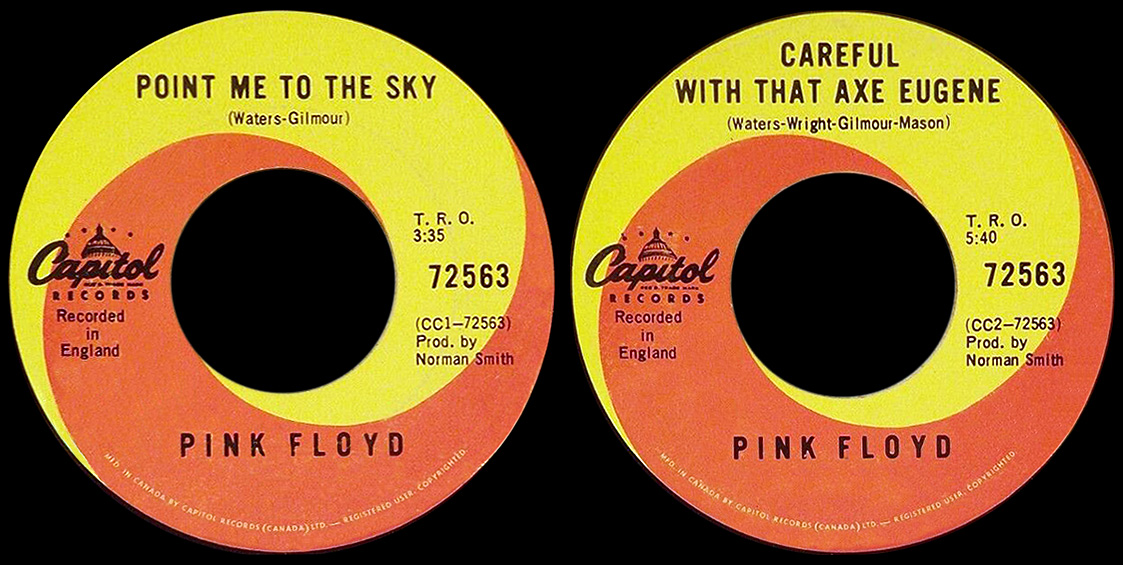
Careful with That Axe, Eugene (Pink Floyd, 1968)

This track surfaces many times in Pink Floyd's discography: released as a B-side in 1968, it is also part of  the live LP of "Ummagumma" (1969) then, in an alternate version re-titled Come In Number 51, Your Time Is Up, it also graces the soundtrack album Zabriskie Point (1970) and, of course, it's one of the strongest moments of the live film Pink Floyd at Pompeii (1972).

This track was firstly released as "Point Me to The Sy" B-side.

It's one of the darkest, most arcane songs by Pink Floyd, including long atmospheric sections and a central "horror" part where the listener comes across the famous spoken part with a final, dreadful scream. The whole track is suspended and stretched like as a violin string, full of spacey echoes and nocturnal effects. I can't really decide if I like this track... let's say I'm hypnotized by it. And this is exactly what they wanted to do, I suppose.

Thursday, 1 May 2014

Set The Controls for The Heart of The Sun (Pink Floyd, 1968)

More than a song, this is an inner listening experience. "Set The Controls for The Heart of The Sun" comes from Pink Floyd's second album, "A Saucerful of Secrets", and it was written by Roger Waters. The original 5:28 minutes track was usually expanded in live shows, and maybe the most known of those reworked versions is to be found in "Live at Pompeii" film and this one exceeds 10 minutes of length. It's a mysterious, exotic, hypnotic trip into another world and, IMHO, it features some of the most fascinating drummings by Nick Mason. I won't bother you with labels such as space-rock, psychedelia or proto-prog... choose yourself, for what it's worth. 

I'm sure you all remember this frame.
I couldn't forget it even if I wanted, as I live in front of Pompeii amphitheatre.

The lyrics aren't exactly simple, and they allegedly include some lines translated form Chinese poems. I don't think words are employed here in their usual meanings, it's better to take them for their sound and their evocative strength, strictly linked to the music. Anyway, the suggestion coming from this track is as powerful today as it was in the early '70s, when the band usually included it in their live sets. A last word about that Gilmour's interview in 2006, in which he said there were in this song both his and Barrett's guitars. Well, if it's true, this adds an historical value to "Set The Controls", but its magic is something you couldn't improve further.

Saturday, 29 March 2014

One of These Days (Pink Floyd, 1971)

This mostly instrumental track surely is one of the trade marks of Pink Floyd and features one of the most enthralling (double) bass lines ever. It was the opening song of the album "Meddle" and the only lyrics in it are the menacing One of these days I'm going to cut you into little pieces, spoken by Nick Mason and allegedly addressed to a BBC's DJ the band didn't appreciate so much. The music seems like a rising wave, full of tension and running over the listener by gusts.

The single was released in November 1971, b/w "Fearless".

The echoed double bass played by Waters and Gilmour is the most noticeable element of the song, but not the only one, as the whole band contibutes to its striking effect and especially Nick Mason with his usual creative drumming. The track also includes a series of effects and assorted oddities, like the opening wind, Mason's distorted voice or the Doctor Who's TV series theme quotation by Gilmour's guitar. For sure, "One of These Days" is a highly influential song, a real rock evergreen.

Monday, 27 January 2014

The Great Gig in The Sky (Pink Floyd, 1973)

Who could possibly forget this track closing the A-side of "Dark Side of The Moon"? Clare Torry's vocal performance is simply stunning and the spacey atmosphere of the song takes the listener away from the Earthly world. The starting Rick Wright's chord progression opens the gates of another universe, then the soft, waving vocals begin. Clare Torry's performance had an interesting lawsuit, as the singer sued the band a royalty sharing, being his vocals a free improvisation and therefore kind of an instant writing. An agreement was reached between the counterparts and Clare features today as a co-author of "The Great Gig in The Sky".


Clare Torry in 1973 and in 2003.


That said, this is one of the most moving Pink Floyd's songs and surely Clare Torry's contribution is essential. But the Hammond organ is also very effective, while the rythm section (drums and bass together, then only the bass guitar) dictates the flowing pace of the music. I also like the piano, appearing in the final and whispering section. Being strictly linked to the previous song "Time", that was about the shortness of life, "The Great Gig in The Sky" deals with life's end, that is death or better, after-life. Never listened to a sweeter depiction of such matters.

Friday, 15 November 2013

Wish You Were Here (Pink Floyd, 1975)

This is the quintessential rock (or prog rock) ballad in my very humble opinion. Cleverly arranged, it keeps an apparent simplicity on which David Gilmour's tight voice sings those beautiful lyrics about Syd Barrett, the ex member of the band to whom most of the "Wish You Were Here" album is dedicated. This song is so well known that I can skip all punctual descriptions, but I want to point out some of its features I especially like.

The band during the "Wish You Were Here" studio sessions.

The intro is one of them. The tuning radio including a glimpse of Tchaykovsky's fourth Symphony and introducing a station performing GIlmour's twelve-string guitar intro is stunning. And when the guitarist overdubs the radio intro with an acoustic guitar, the effect is not only pleasant, but also moving. The melody itself is wide, enjoyable but never too catchy, so that you can't help but sing along. Gilmour's solos and the suggestive lyrics complete the picture of this real masterpiece I can't listen to without a shiver down my spine.

Wednesday, 16 October 2013

Astronomy Domine (Pink Floyd, 1967)

It is Always difficult to say something more about such a famous and inspiring song. "Astronomy Domine" is the opening track of the first Pink Floyd's album, "The Piper at The Gates of Dawn" and one of the most strictly linked to Syd Barrett, the first and not forgotten leader of the band. Music and lyrics draw the picture of a fantastic stellar trip Barrett did under the LSD influence. The bass line is somewhat distressing and the dramatic and psychedelic repetition of sounds and rythms enhance the gloomy mood.

Syd Barrett singing "Astronomy Domine".

But there is also a synfonic though chaotic wall of sound describing a whirling universe, something like a Van Gogh's sky. I also like the working sub-title of this song, "An Astral Chant", reminding me of an ancient ritual, the well known unusual chord progression and the hypnotic series of planet and moon names in the lyrics. The word for all that is devastating.

Sunday, 1 September 2013

Time (Pink Floyd, 1973)

This timeless classic comes from "The Dark Side of The Moon" and in the original album version also includes a final reprise of "Breathe" for a 7 minute total running time. There are at least three good reasons to love this song as many generations actually did. First: the music. Both the ballad (verse and chorus) and the instrumental passages are perfect, with their low swinging and sad tempo. Second: the lyrics. These are in the well known Roger Water's pessimistic vein and describe the eternally lost battle of man against time. Third: the sound. The sound engineer Alan Parsons did a great work here (and not only here), adding effects, polishing each note and each second of the track, from the intro clocks to the stunning passage from the "Breathe" coda to the following song "The Great Gig in The Sky".

 
"Time" was also released in a 7" single edit of 3' 33".
I highly recommend the album version, of course.

"Time" is a pearl in Pink Floyd's career, a strong song with a studied alternation of tight, even claustrophobic moments and bright, melodic openings. And, last but not least, it's a moving song, about something concerning everybody:

And you run, and you run to catch up with the sun, but it's sinking
Racing around to come up behind you again
The sun is the same in a relative way, but you're older
Shorter of breath and one day closer to death.

Monday, 5 August 2013

Comfortably Numb (Pink Floyd, 1979)

This very popular  song comes from "The Wall" and it's a Gilmour / Waters one, based on a rough track David Gilmour composed for his first solo album and Waters completed with the lyrics and probably some chord changes. "Comfortably Numb" is part of the album concept, but also a free standing song, often performed bay the group itself in different tours and by David Gilmour and Roger Waters in their solo careers. Slow and airy, fluid and atmospheric, this track has a strongly stressed verse opening into a relaxed chorus and this contrast really strikes me, so that I think it's the main reason of the song's success.

London, Hyde Park 2005: Last time together...

Well, there is another reason at least, as we all know: two spectacular Gilmour's guitar solos. I'm a perfect ignorant when it comes to technical knowledge, so I can't judge how difficult or how original David's solos are, here or in any other Floyd's song, but there is one thing I certainly know: I could identify Gilmour's guitar among a million. After all, if in 2005 the band decided to perform this song as their last live performance ever during the Live 8 event, there must be some reason...

Thursday, 4 July 2013

Your Possible Pasts (Pink Floyd, 1983)

This my favourite song from the much underrated album "The Final Cut". Sure, this was more a Roger Water's solo album (about his father's story once again) than a proper Pink Floyd's work, but even so there are some very, very good songs in it. Unfortunately, just a few of them actually sound like a rock band production. This is the case of "Your Possible Pasts", where the typical group signature is everywhere. Here, David Gilmour and Nick Mason don't leave the place to the orchestra or to the piano and the song could be part of anyone of their previous albums.

One of the pics from "The Final Cut" art.

I also like Water's vocal performance, so sad and so tight, perfectly in tune with Mason's sharp drums. And the volume and tempo changes, the guitar elegant embroidery and, of course, Gilmour's solo single out this track. Even without Rick Wright's keys, I found here the old good times, one of the last glimpses of the '70s.

Saturday, 8 June 2013

Atom Heart Mother (Pink Floyd, 1970)

One of the most known group + orchestra suites and perhaps one of the most successful ones. This masterpiece of 24 minutes and six movements is more popular today than in 1970 and I think the main reason for this longevity resides in its unpredictable and unclassifiable structure. I won't waste many words to describe a song anyone knows, suffice to say that the whole track is an adventurous exploration of open musical spaces, from rock to jazz, from classical to prychedelia, from blues to electronics. Some acid sounds follow melodic passages and the guideline is provided by a visionary fantasy.

Do you remember Lulubelle III the cow?
Thank you, Storm Thorgerson!

The grand themes and the odd variations, the solos and the orchestral arrangements, the gloomy and the brightness, all is in there and - to say it with other Floydian words - all is in tune. All about this piece has become a legend, after all, from the cover art with no band's name nor album title to the newspaper article that provided the first inspiration for the suite. Recently, I had the chance to attend a public performance of this composition in a crowded arena near my town, set up by an orchestra and a good cover band and I saw so many youths enchanted by the mystery, the power and the intensity of "Atom Heart Mother". I was happy, but hardly surprised.

Friday, 3 May 2013

High Hopes (Pink Floyd, 1994)

I can read your minds: "How comes you present this track with all the PF's masterpieces to write about?" Well, I'm sorry but it happens I like this song very much, I think it's one of the best in Gilmour/Mason's era of the band, an atmospheric, intense, touching piece of art, IMHO. First of all, the music is perfecty Pink Floyd-esque, a rarefied ballad gliding on Rick Wright's keyboards and leading to a long, beautiful guitar solo.

High Hopes was also released as a single b/w "Keep Talking".

And then, the nostalgic lyrics dealing with the end of Youth and its belonging to a peer group perfectly fit in the slow and airy Gilmour's music. One could regret Roger Water's creativity on "The Division Bell" album, but songs like this one remind us how good Gilmour is in writing and performing - with his two old friends - unforgettable tracks, that's why so many of us are waiting for more. Unfortunately, Rick Wright will never come back, claimed by the bell.

Friday, 5 April 2013

Hey You (Pink Floyd, 1979)

Taken from "The Wall", this bewitching song amazes me for its perfect balance of sweetness and distress. When listening to it for the first time one could consider this as a sensitive ballad, kind of a love song without love. But a second run will suffice to perceive the harshness of the guitar hidden under its apparent gentleness and the distressing lyrics, filled with an incurable pain and a devastating loneliness.
 
Wonderful lyrics, awesome music...
 
Those feelings grow up during the song in a strained crescendo Roger Water's voice sharpens and amplifies. Moreover, his creeping bass guitar puts an alrming final touch in this hypnotic track I can't help loving. One of Pink Floyd's materpieces, IMHO.

Saturday, 23 March 2013

Echoes (Pink Floyd, 1971)

Is it prog? Isn't it prog? Is it a suite or maybe an extended song? Is it a psychedelic manifesto? How many useless questions! This is one of the most influential songs of the early '70s and therefore it belongs to the whole underground and experimental world of those fundamental years. You'll find traces of prog, psychedelia, electronic rock, ambient and even fusion in this 23 minute track taken from the album "Meddle". From the mysterious and mistic intro with its cavernous effects and that amazing guitar touch, through the choral mid section and until the final fading sounds "Echoes" is a puzzling, unforgettable trip. Mind, this doesn't mean the track is random or messy. On the contrary there's a perfect musical architecture, not so far from the classical concerto plot, with crescendo and calando movements, well distributed peaks, an intro and an outro.

 
Meddle's gatefold inside photograph. The icon of an era.

The mesmerizing nature of this track comes from a careful dosage of classical and modern features, acoustic and electronic sounds. The lyrics add some more mysteries, suggesting loneliness and suspense, spiritual awakening and a bright disclosure on intangible elements such as light, air and - of course - echoes.