Showing posts with label 1968. Show all posts

Friday, 16 September 2016

What Love [Suite] (The Collectors, 1968)

Those who love proto-prog bands and tracks will be glad to find here one of the earliest suites featuring a distinctive progressive flavour: "What Love" by Canadian band The Collectors. Coming from the North-American psych scene, these Vancouver-based musicians filled the entire B-side of their debut album with a diversified and colourful 19 minutes suite, featuring ethnic instruments, arcane vocal harmonies, classical influences, folk atmospheres, R & B echoes and pastoral themes.

The Collectors only released two albums, both in the late '60s.

The spiritual side of the Seventies surely inspires some of the moods in this song, but its best virtue is, IMHO, the stong and coherent plot in which so many different ideas are cleverly framed. I rarely listened to such a rich and solid architecture in a '60s long track. In this sense, I rarely listened to a proggest song from that era, no matter what the story and the genre label of The Collectors were. Good, good music this is!

Tuesday, 10 May 2016

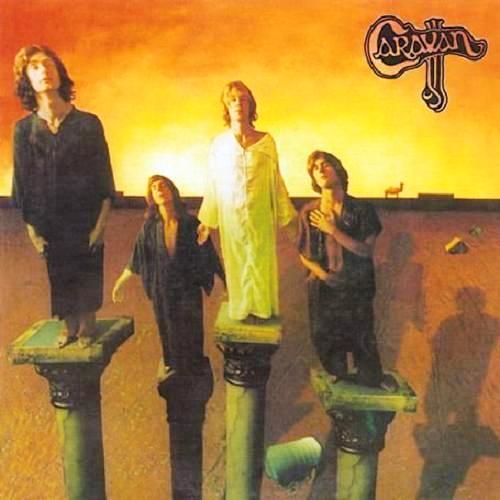
Where but for Caravan Would I? (Caravan, 1968)

Listening today the first album by Caravan can be highly instructive, as we litterally see the Canterbury sound coming to light and gradually acquire its recognizable features. No doubt, the closing song "Where but for Caravan Would I?" is the most accomplished effort hitherward. It's not just the expanded duration time (some 9 minutes... not bad for a 1968 song!), more than this, the song has very interesting instrumental parts driven by the organ and pleasant vocal lines.


The beginning of an extraordinary career... 


Roughly divided into three sections, this song in an early attempt  Jazzy and even dissonant passages forecast some of the most known Caravan's features to come. The tempo and mood variations can be slightly naive, but they always come in the right place. The dawn of prog...

Sunday, 10 January 2016

House of Four Doors Pt. 1 + Pt. 2 (Moody Blues, 1968)

This two songs setting up a mini-suite come from "In Search of The Lost Chord" and are a fascinating specimen of what we seldom call proto-progressive rock. The first part of "House of Four Doors" has a tricky and diversified plot, lining up the main theme and some excellent instrumental sections, where Mellotron, flute and other classical instruments rule. After all, this unusual structure that perfectly matches with the quest and exploration concept of the LP.

This unpredictable work was the third studio album by TMB.
 
The vocal harmonies are another winning point, especially in the second part, acting like a choral coda, that another long song, "Legend of A Mind", divides from the first and longest part. This song has the plain melodies of the Sixties but also the highly sophisticated care for each detail defining the style of so many prog bands from the Seventies. Once again, The Moody Blues were simply forward.

Monday, 16 November 2015

A Saucerful of Secrets (Pink Floyd, 1968)

This instrumental is the title track of Pink Floyd's second album and also features on the live LP from "Ummagumma" and on "Pink Floyd at Pompeii" film. That's to say this actually is one of the most important tracks in the band's early live tracklists. It is interesting to note that this song was split in four parts on "Ummagumma", each one bearing its own title (Something Else, Syncopated Pandemonium, Storm Signal, Celestial Voices). 


I think this cover art actually depicts the title song.

Roger Waters explained in an interview that the track was a musical description of a battle and its gruesome aftermath, so that the first part describes the start of the conflict, the second section is the battle itself, then we have the deadly aftermath and the subsequent mourning. For sure, this is a very deep and lysergic track, full of dark atmospheres and unpredictable contrasts, an experimental piece of music that's one of the most tricky, obscure and intriguing songs by Pink Floyd.

Friday, 26 December 2014

The American Metaphysical Circus (The United States of America, 1968)

When it comes to proto-prog era, some American bands played an essential role in opening new musical paths and in exploring weird, psychedelic and/or electronic sounds. That's exactly the case with The United States of America, a band who released one album only in 1968, giving us one of the most complete reviews of late '60s musical state of the art. You'll find almost everything in this album and especially in this song: psychedelic, acid sounds, electronic keyboards, dissonant chords, eclectic cultural references.... in a word, all the rough materials prog rock is made of.

This is the 2004 CD version of the album, including some outtakes.
 
There was no guitar in this band, so they exploited every new and weird devices to replace it. There's a beautiful melodic line in this opening track, and some pleasant vocal harmonies too, but the musicians surround it with such an unusual deal of effects and sounds that the singers seem to be lost in an alien world, between the outer space and Disneyland. It reminds me of Zappa, of course, but I bet you'll find here some tasty prog previews too...

Sunday, 7 December 2014

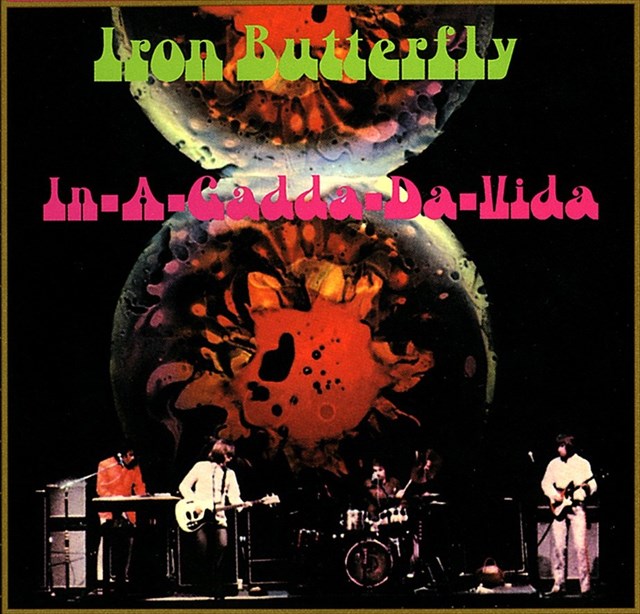
In-A-Gadda-Da-Vida (Iron Butterfly, 1968)

Progressive rock didn't come out of the blue in the late '60s. The role played by seminal bands like Iron Butterfly is essential, IMHO, to correctly set this new genre in the big picture of its era. Coming from San Diego, these musicians, leaded by vocalist and keyboardist Doug Ingle, released a fantastic 17 minute title track in their second and still highly appreciated album. The song occupies the whole B side of the LP and its title is a mispronunciation of "In The Garden of Life", including a Spanish contamination of the last word. A very short version of this suite will be also released as a successful single.

It's a most psychedelic cover art, isn't it?

You'll find everything late '60s here, I mean it. From the captivating opening riff to the long drum solo and from spacey organ atmospheres to intricate bass / guitar / keyboard interplays.The circular pattern of the song, opening and closing with two similar sections, was also going to be a typical prog feature.  Doug's vocals are rather on the heavy side, and this makes a pleasant contrast with the slow tempo passages. A psychedelic monument announcing both prog and hard rock, something all music lovers should know, if you ask me.

Monday, 8 September 2014

Careful with That Axe, Eugene (Pink Floyd, 1968)

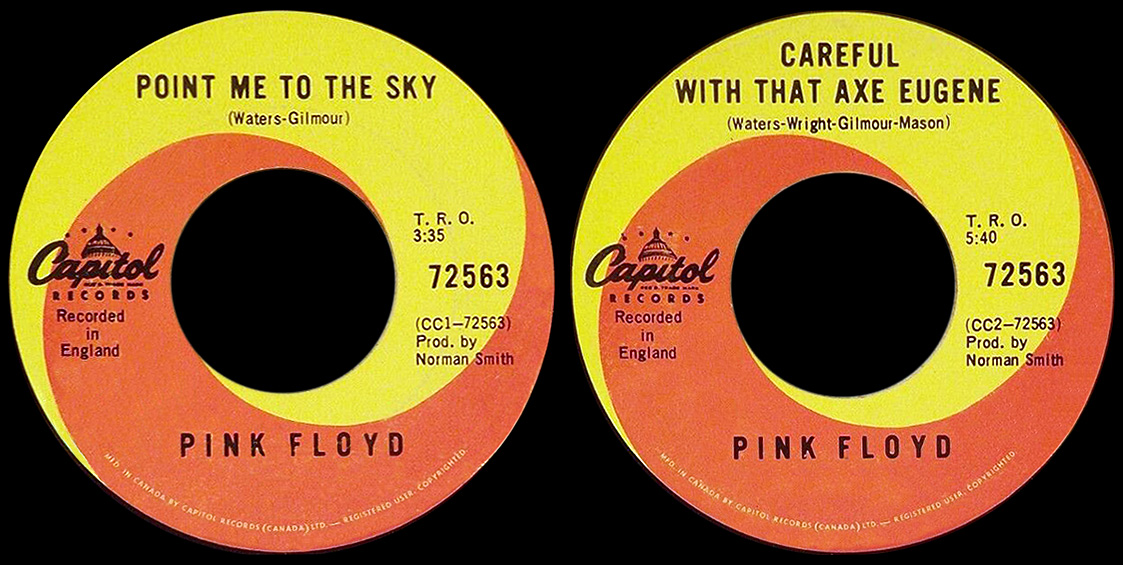
This track surfaces many times in Pink Floyd's discography: released as a B-side in 1968, it is also part of  the live LP of "Ummagumma" (1969) then, in an alternate version re-titled Come In Number 51, Your Time Is Up, it also graces the soundtrack album Zabriskie Point (1970) and, of course, it's one of the strongest moments of the live film Pink Floyd at Pompeii (1972).

This track was firstly released as "Point Me to The Sy" B-side.

It's one of the darkest, most arcane songs by Pink Floyd, including long atmospheric sections and a central "horror" part where the listener comes across the famous spoken part with a final, dreadful scream. The whole track is suspended and stretched like as a violin string, full of spacey echoes and nocturnal effects. I can't really decide if I like this track... let's say I'm hypnotized by it. And this is exactly what they wanted to do, I suppose.

Saturday, 12 July 2014

Ars Longa Vita Brevis (The Nice, 1968)

This suite is one of the first fully progressive rock tracks in music history. The titles of its five movements (Prelude, then 1st to 4th Movement) announce the classical inspiration of the song, but the listener searching for pompous, baroque or symphonic and romantic compositions would be immediatele deceived. This is modern, XXth Century inspired music, full of experimental and even chaotic passages, where Emerson, Jackson, Davison and O' List reinvent rock music and open a new path for the forthcoming prog.

This was the second studio album for The Nice.

"Ars Longa Vita Brevis" actually is rock 'n' roll, but so well disguised and enriched, so fully transfigurated, so largely imbibed of jazz and contemporary classical experiments, that the listener couldn't even put a label on such a record. The display of different sources and instrumental skills in this suite don't hide the sense of strenght and the inner energy lying under each note. Was it only rock 'n' roll?

Thursday, 1 May 2014

Set The Controls for The Heart of The Sun (Pink Floyd, 1968)

More than a song, this is an inner listening experience. "Set The Controls for The Heart of The Sun" comes from Pink Floyd's second album, "A Saucerful of Secrets", and it was written by Roger Waters. The original 5:28 minutes track was usually expanded in live shows, and maybe the most known of those reworked versions is to be found in "Live at Pompeii" film and this one exceeds 10 minutes of length. It's a mysterious, exotic, hypnotic trip into another world and, IMHO, it features some of the most fascinating drummings by Nick Mason. I won't bother you with labels such as space-rock, psychedelia or proto-prog... choose yourself, for what it's worth. 

I'm sure you all remember this frame.
I couldn't forget it even if I wanted, as I live in front of Pompeii amphitheatre.

The lyrics aren't exactly simple, and they allegedly include some lines translated form Chinese poems. I don't think words are employed here in their usual meanings, it's better to take them for their sound and their evocative strength, strictly linked to the music. Anyway, the suggestion coming from this track is as powerful today as it was in the early '70s, when the band usually included it in their live sets. A last word about that Gilmour's interview in 2006, in which he said there were in this song both his and Barrett's guitars. Well, if it's true, this adds an historical value to "Set The Controls", but its magic is something you couldn't improve further.

Saturday, 6 July 2013

In Held Twas in I (Procol Harum, 1968)

Two unavoidable questions are strictly linked to this Procol Harum's 1968 suite, the first being "Is this prog?" and the second "If it is, is it the first progressive suite ever?". It was my duty to report them here, but luckily I'm not obliged to answer. Of course, if I put the song here you may imagine my answer to the first question... and after all, a long composition like this one, with strong rock roots and tons of changes in mood, tempo and genre, with guitar and keyboard solos can't really be too far from what we call progressive rock! Now, for the track itself, taken from the second album of the band, titled "Shine on Brightly" and lasting 17'31".

The American (left) and European (right) covers of "Shine on Brightly".

It's an eclectic one, divided in five parts being kind of separate songs (Glimpses of Nirvana, Twas Teatime at The Circus, In The Autumn of My Madness, Look to Your Soul and Grande Finale) with no recurring themes, many effects and some recited bridges. After an oriental first part, the piano dominates the second and the third brings back the band' signature Hammond organ, while the fourth segment is guitar and harpsichord driven and finally here's the classical and choral finale. So, you'll find enough reasons to listen or re-listen to this,  but let me say that in spite of all the special effects and fireworks, what I really love here are the beautiful melodies spread all along the track. And after such a musical trip, if you think you can answer my second question above, well, let me know.