Showing posts with label 1973. Show all posts

Sunday, 31 May 2020

Tears And Pavan (Strawbs, 1973)

Strawbs were surely underrated during their early career, but Dave Cousins' band reached stunning creative peaks since their very first works and they never lost it. This track comes from "Bursting at The Seams", Strawbs' sixth album and it's the deepest and maybe most interesting one in this 1973 LP. The band's folk roots perfectly meet  progressive and classic elements following their wide, unpredictable arrangement concept. In fact, "Tears And Pavan" is divided into two parts (namely "Tears" and "Pavan") and it starts like a folk ballad, earthly sung by Cousins with the usual acoustic background. 

One of my favourite LPs by Strawbs, not one of my favourite cover arts...

But just when you think that's all the track has to say, here come the instrumental part and a Greek flavour you'd never expected there, followed by a Medieval touch. A good keyboard work (mellotron and harpsichord) graces this mini-suite and of course the melody is gorgeous and so well sung that even if you could find the arrangement a little too baroque, this track always keeps a high emotional power. Each time I listen to it, I feel like a traveler going across time, space and inner realms.

Thursday, 29 June 2017

Mystic Queen (Camel, 1973)

Something in this song reminds me of the Hippy festivals and of proto-prog sounds. I know we're in 1973, the very heart of the progressive rock Golden Era, but there is a scent of Woodstock and Summer of Love mixed with proper prog here. Even the song title goes back to the upper class girls wearing long coats and necklaces and searching for another world. That said, "Mystic Queen" is a great ballad, featuring one the best sung themes in Camel's career along with heartwarming instrumental sections.

"Mystic Queen" comes from Camel's self-titled debut album

Bardens actually wrote a masterpiece and the rest of the band added that unique smooth flavour Camel are famous for. Last but not least, it's incredible how this track - bearing all the traits of the early '70s - aged so well... I like it today even more than fourty years ago and I'm delighted to say that I know many millennials that are fond of it.

Tuesday, 10 January 2017

Path of Your Dream (Aunt Mary, 1973)

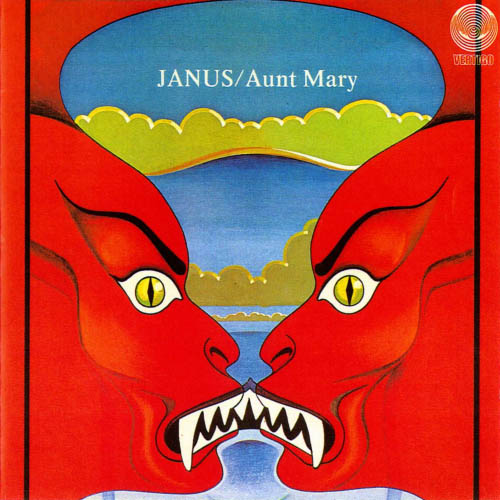
Aunt Mary are one of the oldest (and most interesting) Norwegian prog rock bands and this track comes from their third studio album "Janus", released in 1973, during their fully progressive phase. The lively intro with its keyboards / guitars interplay states the symphonic nature of the track and of the entire album. The melodic sung section also has a folkish taste in the wake of the best Scandinavian traditions, but I'm especially impressed by the finalrumental part, a real treat for any classic prog lover.

It's an impressive cover art, isn't it?

And if you decide to listen to the whole album, the following Beatles-like song is simpy perfect after such a pièce de rèsistance! Aunt Mary should have known a wider recognition for their work, but they actually had too many contenders back in the early Seventies. But they're back now and they deserve our attention, IMHO.

Saturday, 5 November 2016

Catherine of Aragon (Rick Wakeman, 1973)

This is the opening track of "The Six Wives of Henry VIII" and one of the musical pillars of Wakeman's solo career. The resolute intro, the elaborated scales and the surprising melodic parts are some of the highlights of this instrumental, and not the only ones. The artistic depiction of Catherine's joyous and also spiritual temper is perfect: a living portrait come out from each note and each tempo change.


Catherine of Aragon was Henry's firts wife.


The impressive amount of keyboards employed by Rick is never too pompous and the other instruments (guitar, drums and a beautiful choir) add a slight and welcome "band-like" flavour. Lively and everchanging, "Catherine of Aragon" is one of the most beautiful keyboard-driven tracks ever (IMHO, of course) and rightly appears on most of Wakeman's live tracklists. Luckily.

Wednesday, 2 November 2016

Garden of Frenzied Cortinas (Ariel, 1973)

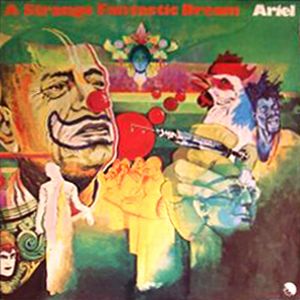
Ariel were active between 1973 and 1977 and icluded Mike Rudd and Bill Putt, both of Spectrum fame (please read somehting about them elsewhere in this blog), and two of the best known musicians of the Australian scene, even if Rudd was actually born in New Zealand.  Among this track's best features you'll find an excellent bass line by Putt, two beautiful guitar solos by Tim Gaze - former a member of Tamam Shud - and a stunning vocal performance by Rudd.

"A Strange Fantastic Dream" was Ariel's debut album.

The track also includes a well found main theme and a series of tempo changes I appreciate very much, along with that peculiar mix of traditional melody and rock arrangements marking the entire Australian prog during the Seventies. "Garden of Frenzied Cortinas" is the longest track from the album "A Strange Fantastic Dream" and also the best one, IMHO, showing the great potential of Ariel, a potential barely exploited during their career.

Sunday, 18 September 2016

Grand Hotel (Procol Harum, 1973)

I confess I'm always been partial to the majestic melody of this Procol Harum's song and to its classically-sounding arrangements. It opens the 1973 album bearing the same name and it's difficult to imagine a best way to start a collection of good songs. IMHO, this is an underrated and influential song: not only it inspired (as they say) Douglas Adams's SF novel The Restaurant at the End of the Universe, but it opened the decadent and magniloquent way the likes of Queen and Supertramp will soon follow.

Welcome to the Grand Hotel, my friends!

Everything is in tune here, from the brilliant grand piano to the chamber orchestra interlude and from the lyrics about dinners at Hotel Ritz and Hotel Grande to the posh cover art, featuring the band in their most elegant tail-coats in front of a sumptuous building. Aristocratic, that's the word.

Friday, 19 August 2016

El Hijo del Sol (El Polen, 1973)

When it comes to acoustic folk-rock with proggy elements, it is difficult to find a better band than El Polen. These Peruvian musicians had a suprisingly large choice of arrangements and a wide range of instruments, mostly coming from their National tradition, but also from other, unexpected cultures. In spite of their strong Andean roots and of their acoustic set, El Polen also are a proper rock band, and exploit in a very clever way some of the main features of prog: tempo changes, instrument interplays and enthralling solos.

"Fuera de la ciudad" was the second album by El Polen.

Sure, all these solutions also exist in traditional music throughout the planet, but their combination in a single everchanging (and rather long) song is a Seventies innovation. So, "El Hijo del Sol" is a kind of suite, lining up different themes and different traditions, especially the South-American and the Far-Eastern ones. Not a common mix, believe me.

Monday, 25 July 2016

Small Beginnings (Flash, 1972)

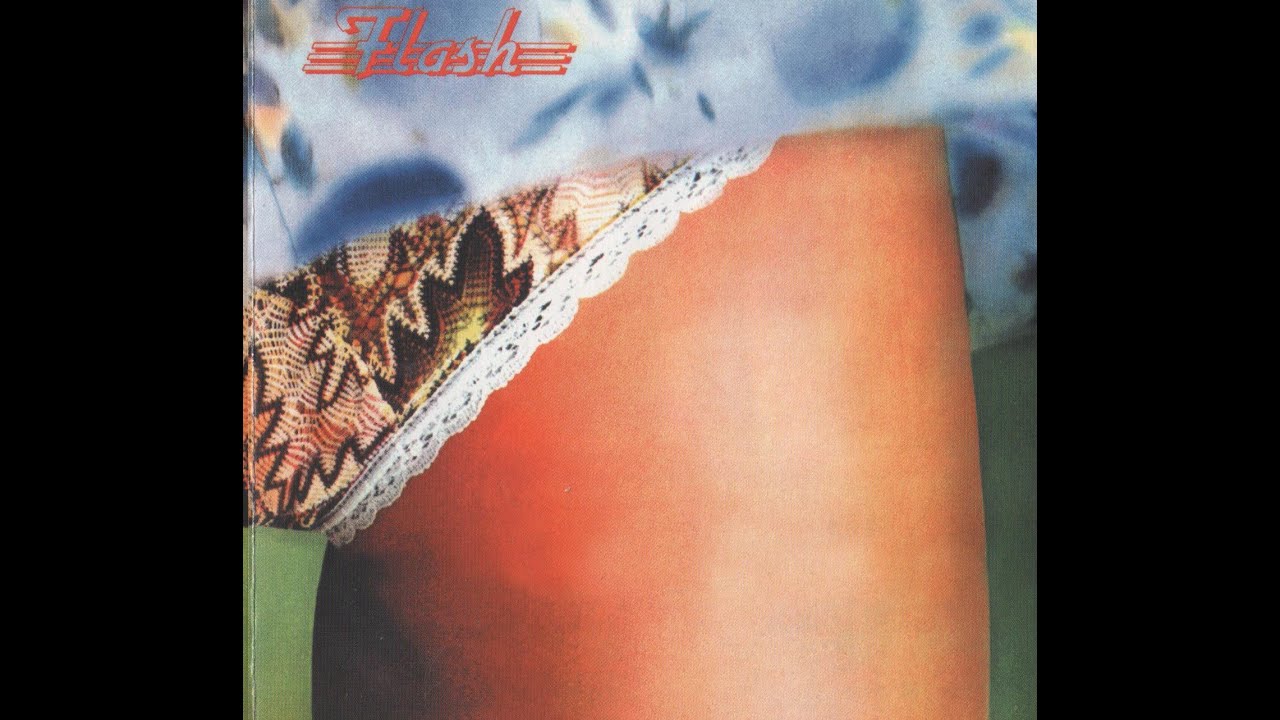
The story of Flash isn't a long one, still it's worth to be remembered. The band was born in 1971 by former Yes guitarist Peter Banks anh vocalist Colin Carter. They were soon joined in by bassist Ray Bennet and drummer Muke Hough. That's not all: for their debut self-named album (also including this track) they also hired Yes keyboardist Tony Kaye, and they released three studio albums between 1972 and 1973, let alone a re-union as a duo in 2013. That should switch on your interest. In fact, "Small Beginnings" also was sort of a hit in USA, thanks to its inclusion in a movie soundtrack.

No, Flash didn't choose a Roger Dean's cover. Some won't complain about this.

Be as it may, this is a very good song, full of hippie sounds and tempo changes, not so far from early Yes mood. The riffs and the sung melody are excellent, and so are the everchanging arrangements and the vocal harmonies. Of course, poor Peter Banks' guitar is the most beautiful thing here, but the entire song has an intense and colourful smell, strongly rooted into the Seventies and still enjoyable today. IMHO, of course.

Tuesday, 17 May 2016

Salmon Song (Madder Lake, 1973)

Here you are a peculiar and almost instrumental song from Australian band Madder Lake, released in 1973 as the opening track of the album "Stillpoint". It is a weird mix of psychedelia, mainstream rock , blues and proper prog, including a series of changes and a very well balanced sound. All the instruments play an important role, so that I daresay this is a solid example of a band acting the way a band should do.

This album was the debut work for Madder Lake.


The only vocals come toward the end of the song, during the most bluesy and even spacey section of the the composition. As a matter of fact, the rest of the album is mostly blues-rock oriented, but this 8 minutes opening really deserves the attention of my prog friends, as it is a tricky and somehow visual track, as it actually depicts salmons climbing up a river, one of the greatest scenes provided by Nature. I'm sure this one will be a pleasant discovery for many readers of this blog as it was for me.

Saturday, 9 April 2016

Can You Understand (Renaissance, 1973)

This 10 minutes opener of "Ashes Are Burning" is a favourite of mine since I first listened to it. Mighty and sensitive, classical and easy flowing, everchanging and colourful, "Can You Understand" perfectly represents the kind of Music Renaissance are famous for. Strong melodic fountations, highly creative arrangements, airy instrumental parts and - last but not least - Annie Haslam's unique voice. 

 A press photo of the band circa 1973. The way they were...

As usual with Renaissance, the piano plays a central role in this song, connecting its different sections and launching Annie's highlights. Another special mention goes here to bassist Jon Camp, whose work is simply superb, while the symmetrical and daring structure of this composition still amazes me. Definitely one of the best epics by Renaissance, an unsurpassed canon.

Sunday, 14 February 2016

Armina (Som Imaginário, 1973)

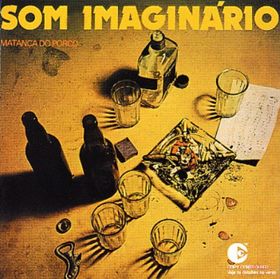
Born as a backing band to Brazilian singer Milton Nascimento, Som Imaginário soon began their own career, including at least one excellent prog rock release, the album bearing the fierce title "Matança do porco" (that's "Pig Slaughter" in English...). This actually stands as a progressive highlight in Bazilian '70s rock scene. The song "Armina" perfectly represents the beautiful fusion of jazz, classic and pop-rock elements the band chose as their musical trademark.

This progressive release was the third album by Som Imaginário.

Full-bodied passages and intimistic piano sections follow one another in a colourful and enthralling plot, where acid guitars, pulsing rythms and essential keyboards act as one. It is a highly original kind of music, with no predominant inspirations, and open to many different solutions and even to conflicting moods. But as Brazilian musicians rarely go too experimental, although unusual and new, this instrumental is still a fully enjoyable piece of music!

Sunday, 7 February 2016

Sin trabajo (Contraluz, 1973)

Contraluz had a successful season in 1973 (especially in Argentina, their home Country) after their debut album "Americanos" was released and surely they deserved it. As this song called "Sin trabajo" ("Jobless" in English) will immediately show, their prog rock was fresh and genuine, influenced by some of the British Masters of the early '70s, but original enough to be worth of our attention after so many years.

Just for the record, the band came back in 1998 with their second album.

The clever mix of Latin American folk, acid guitars, excellent songwriting, dynamic drumming and flute à la Ian Anderson set up a charming atmosphere and a well structured plot. The changes in rythm and mood are so good and surprising that I usually listen to this track three or four times in a row. Last but not least, I love Alejandro Barzi's voice, strong and passionate as a South American vocalist should ever be.

Wednesday, 6 January 2016

Bel Air (Can, 1973)

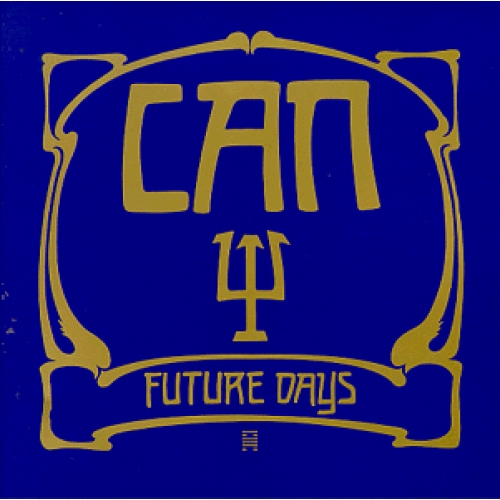
Taken from "Future Days" album, "Bel Air" is a long song (I'll say a suite in want of a better word) that includes many of the most known and appreciated features of this experimental German band. It starts with one of their hypnotic rythms, something inspired by tropical islands, this time, and with voices employed as additional instruments. Soon the rythm gets the foreground and closes the first section. The second one has a darker mood and an arcane bass line acting as a guide through colourful and everchanging landscapes, fading out and into a jazzy and spacey passage, whose final seconds seem to lead the listener into a thick and dark forest. Birds and bugs drone around, until the music comes back, suspended once again between the Hawaii and an opium den.

...And fans consider this one as the less experimental album by Can!

Here you'll find some of the best and weirdest moments of the song, free variations and apparent improvisations ripping and distorting the tropical paradise wallpaper. Rhythmic progressions and dissonant effects come like a hurricane and ravage our beautiful island, so that the final section seems to me more a mourning chant than a return to firmness. Like it or not - their music isn't necessarily a pleasant experience - Can are the quintessential musical trip from the Seventies, well beyond the borders of musical genres.

Tuesday, 3 November 2015

Ennustus (Nimbus, 1973)

With their sole album "Obus" those Finnish musicians created an arcane and fascinating kind of prog rock, where the keyboards and some acoustic instruments (mostly a violin) mix up spacey and psych atmospheres and strong folk roots. This track in particular, called "Ennustus"(meaning "Omen"), is a good example of the deep, dark, liquid and unpredictable music Nimbus used to play.

This album also exists on CD with live bonus tracks.

Strangely speech-like vocals, keyboard and guitar solos, a soft background and a stunning series of tempo changes give a strong, intricated personality to the song, so that you couldn't compare it to any other band's work. I wonder what a bunch of musicians like this one could do nowadays... but of course they came out in such a flushing musical era that they only lasted a couple of years. Too bad, IMHO.

Tuesday, 22 September 2015

P's March (Focus, 1973)

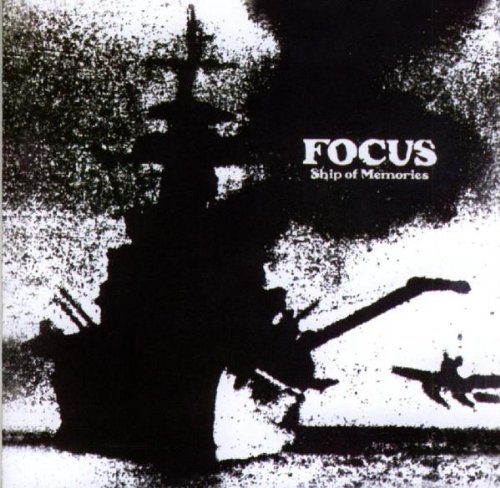
This song by major Dutch band Focus needs some explanatory notes. Firstly, it comes from an album titled "Ship of Memories" released in 1976, but including outtakes from previous albums. That's why this track was recorded in 1973 and left out the album "Hamburger Concerto". Secondly, the mysterious "P" of the title stands for "Pierre", drummer Pierre Van Der Linden's first name. Even if this is an outtake, I like it very much.

This is just a compilation, but there are a few great tracks there!

I appreciate the double face of "P's March", with its folkish and rather Medieval flute theme and its melodic and slightly acid electric guitar counter-theme. It's an unusual and apparently uneven pair, but they work so well together: the first one is delicate, bright and somehow frivolous, while the second one is grave, deep and pensive. They're as different as life itself can be.

Sunday, 21 June 2015

Song of Wire (Wallenstein, 1973)

Coming from the Golden Era of prog, Wallenstein are among the most interesting German bands ever. This rather floydian song illustrates their peculiar way to symphonic rock with both classical and space-rock sides. "Song of Wire" is taken from their "Cosmic Century" album and starts with a piano intro. The following moods range between spacey landscapes, relaxed chords and electric guitar / piano interplays, the latter being their most recognizable trademark.

"Cosmic Century" was Wallenstein's third studio album.

The sung parts are on the melodic ballad side, and flow into bombastic walls of sound, like Pink Floyd meet early King Crimson. There is in fact a pastoral atmosphere all along this track, a pensive mood that perfectly matches with some electric and arcane passages. I also perceive an emotional charge in this music, preventing Wallenstein from being a mere derivative band. A cup of '70s nectar I highly recommend. With or without milk, depending on your taste!

Saturday, 31 January 2015

Us And Them (Pink Floyd, 1973)

One of the most popular songs by Pink Floyd, "Us And Them" is also one of the most atmospheric ones. Taken from the sorldwide sensation album "Dark Side of The Moon", like the rest of the LP this track is graced by the neat, ful bodied sound provided by Alan Parsons' engineering. Dick Parry's sax adds a warm, deeply human touch to this song, that also displays a well found melody. Furthermore, a spacey arrangement emphasizes the relaxing mood of the track, carrying the listener in a suspended and loose dimension.

An edited version of this song features as B-side of "Time" single.

David Gilmour's guitar gives of course the final touch to such a picture, practically a legend by now. Just the time to mention Rick Wright's background keyboards, never too intrusive and always essential to the band's sound and here you are a five star and eight minutes addition to your proggy playlist. Enjoy it once again.

Monday, 12 January 2015

Remember The Future Part One (Nektar, 1973)

Nektar really is an unsettling band, so difficult to label. Even its nationality is disputable, as the band's members are mostly British, but the Group itself is based in Germany since its foundation. Their music is also a manifold one, including classic prog elements and many mainstream rock, pop and psychedelic hints. This track fills the first side of the original "Remember The Future" LP and it's an intriguing specimen of the early '70s music since the opening wa-wa guitar until the arcane, spacey closing section.

This war Nektar's fourth studio album.

You'll smell here the hippy atmosphere, a scent of acid trip, but you'll also enjoy very good melodies and many pleasant mood changes. This suite is divided into four parts (Images of The Past, Wheel of Time, Remember The Future and Confusion) and - as the title suggests - continues with Part Two on the LP's second side. If you'd like to spend 16 minutes or so in a visionary and colourful musical trip, this track is for you.

Sunday, 4 January 2015

Karn Evil 9 (Emerson, Lake & Palmer, 1973)

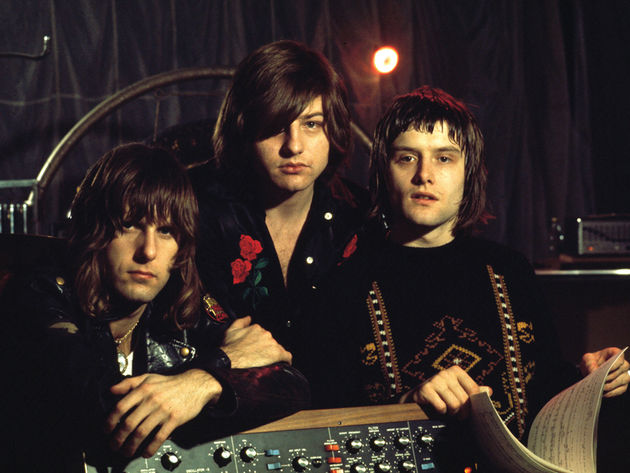
This suite split into three Impressions over the two sides of the Brain Salad Surgery album is one of the most popular and representative tracks of ELP. Rich and diversified, this song is an enthralling specimen of keyboard driven rock, but, of course, the three members of the band are all at their best and play as one, something the band used to do in their brightest days. See how each Emerson's touch is perfectly stressed by the rythmic section and how Lake's vocals seem to act as an addictional instrument.

I'm sure I saw those three guys somewhere...

The first Impression shows the rock side of the band, while the second one is a free, experimental piece and the final installment focuses on the trio's symphonic grandeur. I think the reason why most ELP's fans are fond of "Karn Evil 9" is in its three sided nature, displaying all the main features of the band. However, this surely is a breathtaking song, full of energy and colours, dazzling and overflowing. In a word, ELP.

Sunday, 21 September 2014

Mestre (Petrus Castrus, 1973)

I think it wasn't so easy to be a prog band during the '70s in Portugal, under a dictatorship restricting most of international relations and informations. Nonetheless, a few bands like Petrus Castrus (Pedro Castro was one their founder members) did produce excellent prog, perfectly in line with the contemporary trends. This "Mestre" (that's "Master" in English) also proves how original and eclectic the band's sound was, with its cultivated influences and its rather dark, arcane mood.

The original version of "Mestre". A 2-CD reissue also exists,
featuring an entire previously unreleased album.

These musicians had a strong melodic approach to prog rock, but also liked long, free instrumental sections, ranging over heavy prog, fusion and folk. This is what you'll find here, in the leading song of their debut album, a very good specimen of Petrus Castrus' music, a pleasant, coherent but diversified excursion through the band's land of sound.