Showing posts with label 1970. Show all posts

Tuesday, 21 March 2017

Take A Pebble (Emerson, Lake & Palmer, 1970)

I don't need to introduce such a masterpiece to my readers. I just like to remember how important "Take A Pebble" was in the powerful trio history. Not only this track is one of their early achievements, but it also features all the highlights they'd be famous for. A gentle ballad, an awesome piano, a diversified and unpredictable structure and, of course, a mix of different genres, from folk to jazz and from the symphonic rock arrangement to the improvisation-like section.

Young and prog... ladies and gentlemen, ELP.

The rythmic pattern is a very original one, including soft percussions and hand clapping, while Greg Lake's beautiful voice tops the cake. This is how prog rock should sound like: gentle and sparkling, flowing and - most of all - open minded. About the lyrics, the metaphor sea = life can be a largely exploited one, but is beautifully written and matches the music perfectly. What else? Just listen to this once more...

Thursday, 22 December 2016

Stagnation (Genesis, 1970)

"Trespass" surely is one of the most underrated albums in the history of prog. Rough and not especially well produced as it is, this pastoral beauty includes all the main features of the so called Genesis sound. "Stagnation", in particular, has the delicate and folky taste of Ant Phillips-inspired works and the diversified and eclectic structure of a true progressive masterpiece, set up by all the members of the band. The dark tones of this song match with the lyrics about a rich man (called Thomas S. Eidelberg) who decided to bury himself in an underground refuge and turned up as the only human survivor after an atomic catastrophe.


Inside the gatefold album cover... a musical Wonderland.

The song has a slightly crescendo structure, with  an acoustic and mellow first part and a more symphonic and lively second section. As a matter of fact, the successful mix of instruments is one of the highlights of "Stagnation", including flute, 12-string guitar, acoustic and electric guitar, a good choice of keyboards and some beautiful vocal harmonies. And - last but not least - this track also spreads a wondrous scent of old...

Monday, 22 August 2016

Melancholy Man (The Moody Blues, 1970)

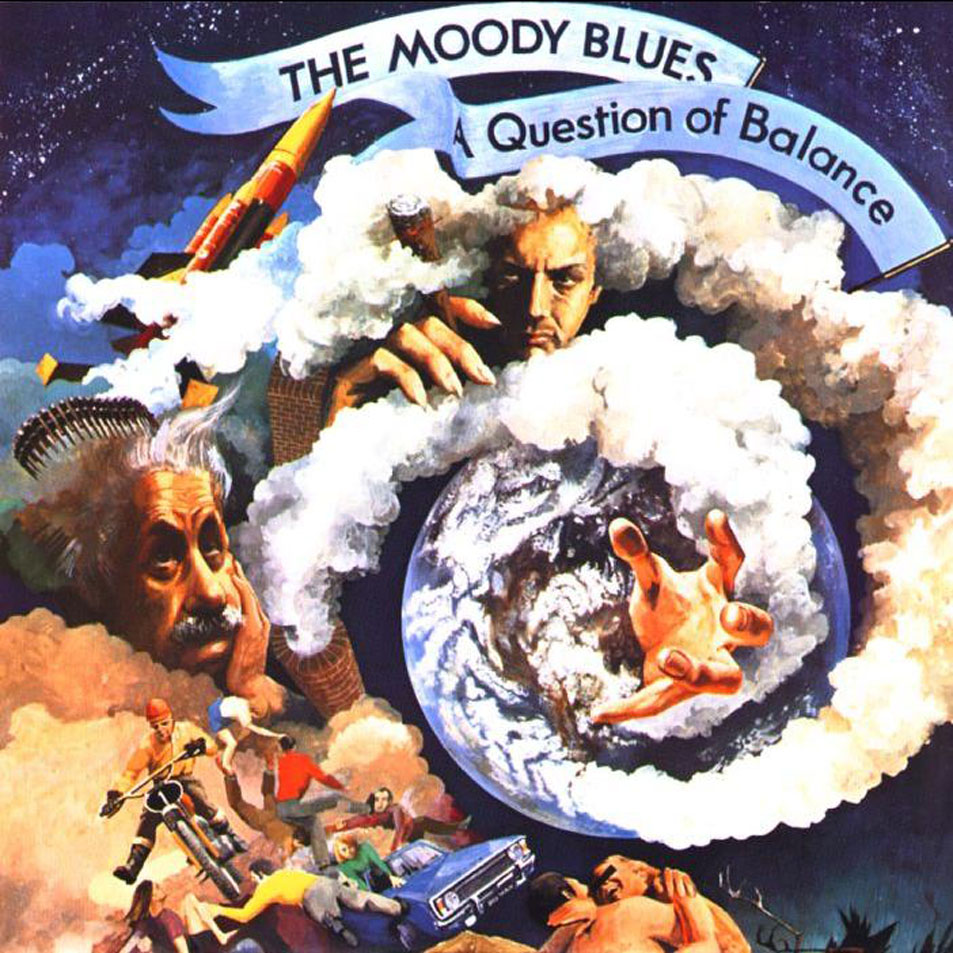
Another Mike Pinder's melancholy (yes, yes, it's in the title) and inner song. This one comes from "A Question of Balance" album, likely one of the rockiest works by The Moody Blues, still I couldn't imagine a dreamier and more atmospheric track. The melody is simply perfect, and the rich arrangements never go too sweet, opening a distant horizon to the listener's ears. Asusual with The MB, there's a good deal of overdubbing and assorted effects, but such an elaborated studio work never spoils the magic the band build up in a few more than five minutes.

The Moody Blues liket to explore cosmic paths, as you can see here.

"Melancholy Man" also has a beautiful set of lyrics, an awesome depiction of man's situation between the solid ground and the infinite sky. There's a sense of loneliness balanced (yes, the allbum's title, this time...) by the wonder inspired by the cosmic architecture. Ten out of ten, I daresay.

Friday, 29 January 2016

Refugees (Van Der Graaf Generator, 1970)

"Refugees", tahken from the album "The Least We Can Do Is Wave to Each Other", is no doubt one of progressive rock brightest pearls, with its deep sweetness and sadness. And of course its lyrics about migrants are so modern and so full of sense today... It's a slow, profound ballad à la VDGG, also including a short and effective instrumental bridge. But Peter Hammill's voice is the most moving and dreaming feature of "Refugees": thanks to it, the listener can actually experience the quest for a better life this unknown people are carrying on.

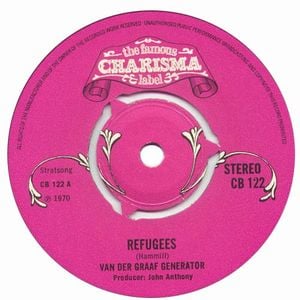
"Refugees" was released as a 7" single b/w "The Boat of Millions of Years".

And if they're distressed by their trip, they surely are full of hope and their march towards a mythical West seems to be an unavoidable omen, driven by something like a natural instinct. When prog rock artists can enhance their musical dreams with strong emotions, there's nothing as powerful as their songs. This is exactly the case with this song. Shivers run up and down my spine when I hear this:
We're refugees, walking away from the life
that we've known and loved;
nothing to do or say, nowhere to stay;
now we are alone.

Monday, 21 December 2015

Isn't It Quiet And Cold? (Gentle Giant, 1970)

You'll find many tracks from Gentle Giant's debut album in my blog and this happens for very good reasons. First of all, this self-titled LP features all the diversified and unexpected souls of the band, then it also includes some of their most memorable melodies. This is the case with "Isn't It Quiet And Cold?", belonging to the acoustic and almost medieval side of the Giant.

In the hands of the Giant...
 
The delicate vocals, the rich choice of acoustic instruments and the hironic lyrics are but three of the many virtues of this short and effective track. I also recommend the string intro, the pizzicato accompaniement and the vaguely Beatles-like main theme. That said, I'm sure you don't need any encouragement to listen to this. You know its trademark, so...

Thursday, 15 October 2015

Back in The Sun (Jupiter Sunset, 1970)

As you may know by reading my previous posts, I like very much digging in the proto-prog era in search of long forgotten songs bearing the smell and the sounds of a naive and sparkling time. This band, called Jupiter Sunset, wasn't an obscure one, as this debut single in particular was a huge success in Belgium and also entered the French charts. They were definitely inspired by the likes of Moody Blues and Procol Harum, still they were fresh and original, and they were able to mix melody and energy in a bunch of dense and pleasant songs.

Soon after this single, the band released an album, also called
"Back in The Sun". Another good specimen of early prog era.

Their singer has the full-bodied voice the public loved in those days and surely they wrote a very good theme for their first single. Jupiter Sunset also released a few more hits in French speaking Countries, then they came back some years later as Jupiter Sunset Disco Band. On the dance floors, this time. C'est la vie, my friends...

Friday, 15 May 2015

Axis (Alice, 1970)

There are just a few tracks featuring the essence of the '70s as strongly as this one. "Axis" is the leading track from Alice's self titled debut album, back in 1970. It's a flushing, diversified, warming kind of prog instrumental, with a profusion of organs, guitars and acoustic instruments, including the sax and the flute, a period must, I daresay. The vaguely arabic main riff is catchy and fits into the hippy generation's fancies, while the bass lines are simply exciting.

A funny patchwork cover, isn't it?

A creative drumming and some well found tempo changes finish one of the best French early prog tracks I've ever listened to. Last but not least, enjoy the fake finale followed by a delicate acoustic coda. Really, one couldn't imagine such a great deal of musical tricks in a single 5 minute track! That's the Prog rock, baby!

Saturday, 2 May 2015

Funny Ways (Gentle Giant, 1970)

The very roots of progressive rock are in a bunch of songs released between 1969 and 1970. This one definitely belongs to such a noble club. "Funny Ways" comes from the Giant's first album and explores both the folk and jazzy moods, two essential elements in prog. It also features an electric guitar solo, so that we can't forget progressive rock is rock, after all.


A very early press photograph of the band.
 
The vocal harmonies, the creative drumming and the beautiful melody are other good reasons to listen and re-listen this track. The abundance of acoustic and electric instruments and their perfect mix are Gentle Giant's trademark: violin, trumpet, cello, sax, a collection of drums, guitars and keyboards... all is there for the listener's pleasure. So, why are you wasting your time reading my silly introduction? Go and enjoy "Funny Ways"!

Saturday, 21 February 2015

Looking for Someone (Genesis, 1970)

Here's the first track from the first "fully Genesis" album. So, in a way, this is how early fans got aware a new band was born. The a cappella intro is a classic, something Peter Gabriel did again three years later in "Dancing with The Moonlit Knight", another album leading track. The rest is pure fantasy and unpredictable music. The tempo changes, the sung melody reprises, the liquid, misty mood are too well known to be introduced here.

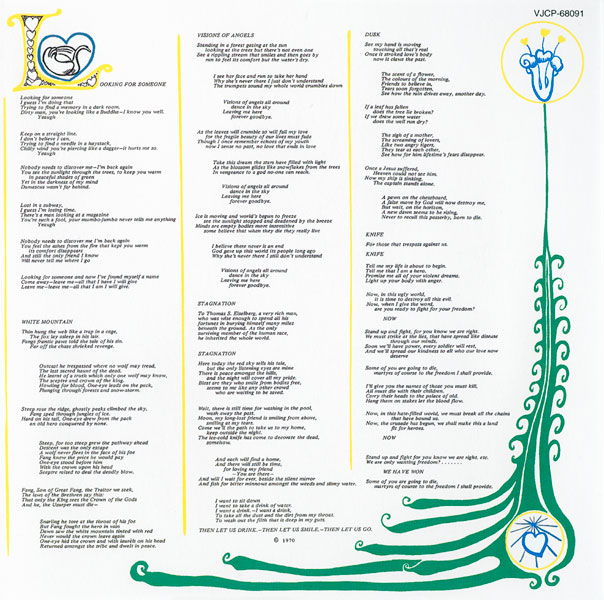
That's how Paul Whitehead's pencil graced the album lyrics. 

Better write about Gabriel's performance, ranging from the lower, hoarse tone to a sharp, alarming pitch. Another strong point is Ant Phillip's guitar, both sweet and sorrowful, and perfectly supported by Tony Banks' organ, providing the hard stuff for the song and rousing the rhythm section. What's more, "Looking for Someone" is full of emotion and it digs in the listener's soul the way only the greatest band can do.

Sunday, 15 February 2015

Nothing at All (Gentle Giant, 1970)

This is exactly what I call a prog song. A gentle ballad, featuring a well found melody, with a good deal of vocal harmonies too. Then, a series of isnstrumental parts, ranging from the most structured ones to apparent improvisations.  In their first album, Gentle Giant were already fit for the great prog game, as this song proves too well. Guitar strong riffs, heavy rock vocals, drum solos, fully melodic themes, classical music quotations, free jazz passages go side by side in a single track.

Gentle Giant's first album was a real prog Landmark.

Unpredictable is the word to describe such an ever changing song... nine minutes of musical adventures! If the Giant's name is so popular today among all prog fans, whatever their favourite sub-genres are, is for this fantasy-driven kind of compositions. Many bands tried to re-create a song like "Nothing at All", some actually succeeded, but no one did it better than the Giant, believe me.

Friday, 5 December 2014

The Emperor in His War Room (Van Der Graaf Generator, 1970)

One of my favourite prog songs ever. And that's saying something. The first sung lines are irresistible to me, with their sad and almost liturgical taste, then Peter Hammill goes through the first section (that's called The Emperor) running up and down his vocal extension and the listener's spine. The vocal harmonies, the keyboard backgrounds, the instrumental bridge between this part and the second one (The Room), well, all is highly emotional and bloody well done.

A wonderful season for VDGG... and for us all!

And when the first theme comes back, I'm actually KO... it's pure progressive juice to my lips, a fatal succession of dark and lights, whispers and cries, stops and progressions. No, I don't need to say more: when good melodies, skilled performances and emotions meet in a single song, that is my song. And something tells me it isn't only mine... but I'm not a jealous guy, after all!

Saturday, 15 November 2014

The Three Fates (Emerson, Lake & Palmer, 1970)

The ELP's debut album is a real gold mine, full of precious musical lodes. "The Three Fates" surely is one of them. The track is divided into three parts, each one describing one of the three Greek goddesses running human destinies: Clotho, Lachesis and Athropos. The first movement is a majestic one, with Emerson's organ at its best and an almost liturgical mood. Then, our keyboard man goes to the piano for the second fate and creates a refined embroidery.


Luckily the most famous "powerful trio" in prog rock history.


Finally, he's joined by a Carl Palmer's splendid drum work during the final section. In this closing segment, moreover, there's a spectacular piano overdubbing enriching the sound. The whole mini-suite is based on a classical frame, but the rythmic pace and some technical solutions are as original as a prog track can be... and that's saying something!

Tuesday, 28 October 2014

The Homecoming (Freedom's Children, 1970)

A strange, arcane, acid, trip into another dimension, this is "The Homecoming", taken from Astra, the most popular album by Freedom's Children. Based on Hammond and guitars,  this is the perfect son of the early heavy prog era. Unfortunately, the band is one of the most underrated ones, maybe because of their apartheid South-African era. But this track easily proves how innovative they were and how much they exploited the contemporary acid rock scene, with that smell of proto-prog I always like.

"Astra" was the second studio album by Freedom's Children. 

One could hardly decide the genre of their music, ranging from an experimental heavy prog to a dark space, featuring many tempo changes and a fluid, rich musical texture. The main riff is enthralling and the distorted vocals sound very effective. I also like the down tempo interlude à la VDGG and the creative use of the acoustic guitar lost in the background. An uncommon piece of music, IMHO, and a great discovery for those liking the hidden prog pearls.

Monday, 13 October 2014

Time And A Word (Yes, 1970)

The title track of the second studio album by Yes will always fascinate me. Not only its melody is one of the best creations by the band (well, this is co-signed by Jon Anderson and his Warriors ex-bandmate David Foster, so this is only 50% pure Yes made!), but I think that some of the most known features of the rising Yes sound start here. The loud bass lines, the airy chorus, the rich wall of sound, the keen vocal arrangements, the hiatus between Anderson's angel voice and the rock band background... it's all there!

In 1970 Yes were ready to launch their new musical vision.
 
Of course, here the lyrics aren't as tricky as in the following albums, and the classic song structure is still visible, but some expansions are already in place, so that we're halfway between the good old pop-rock and the new, exciting prog. That said, this is a song I never get tired to put in my playing list...

Saturday, 30 August 2014

Naü Ektila (Magma, 1970)

Magma did almost everything when it comes to creative and eclectic prog and I'm not saying I like the whole lot. For sure, this is my favourite track from their debut album. It has many faces, this song, based on pastoral, sweet sounds and including free jazz, rock'n'roll, improvisation-like jams, creative percussions and so on.

This challenging double LP set up Magma's long story.

It's a strange and puzzling trip through different moods and landscapes along a delicate flute and 12 string guitars fil rouge not so far from early King Crimson. But, of course, all the other elements in the track are totally unpredictable. Still, when they surface they're never unpleasant and the listener tends to accept them the way a child grabs a new toy before coming back to his favourite one. Curiosity and imagination, these are the key words.

Saturday, 9 August 2014

Lucky Man (Emerson, Lake & Palmer, 1970)

This is the first single released by Emerson, Lake & Palmer and obviously comes from their self titled debut album. It's the archetype of all the band's ballads, featuring the guitar and the warm vocal interpretation of Greg Lake, a rich drum work by Carl Palmer and  keyboard variation by you know who. The most extreme prog band had in fact a special taste for plain and sweet ballads like this one, usually written by Lake.

One of the many different art covers of the 7" single.

And "Lucky Man" has also its own peculiar story and some related legends. The singer composed this track when he was just a kid and this has been confirmed many times by the author himself. Emerson wasn't fond of such a folk song and only accepted to put it into the album when he was allowed to add the final synth solo, but Keith declared that he wanted to record it more carefully, and that the released version was just a first try. Maybe because of these quarrels, the choice of this track as a single was made by the band's manager without asking the musicians' advice(another legend?). Well, I do think he did very well.

Saturday, 8 February 2014

Lizard (King Crimson, 1970)

"Lizard" is a 23 minutes suite, the title track of King Crimson's third album... and I scarcely have to explain why I put it here. Anyway, let's try. First things first: the first movement, called "Prince Rupert Awakes", is the main reason why I immedfiatelt liked this track. Jon Anderson sings this slow and hypnotic ballad like an angel, maybe an acid one, but still an agel. The following "Bolero - The Peacock's Tale" adds the magic of wind instruments to the previous beautiful theme, then comes the long and intellectual deconstuction of the melody.

King Crimson in their "Lizard" line-up (1970).


In fact, I must admit, "The Battle of The Glass Tears" is a very hard to catch part, with its free jazz moments and the fragments of melodies mixed with some jamming riffs. But this is also its charm: after a while, you litterally see the music melting before your very eyes (or ears?) and flowing away like tears. The arcane finale brings back the magic for a while, but it sounds now like black magic, a sweet, addicting poison. Very few suites played a more inspiring role than "Lizard" and for a reason. Better: for many reaons.

Sunday, 2 February 2014

De Homine Urbano (Ache, 1970)

I'm finally adding a Danish band to my little collection. And with pleasure, because Ache are really worth more than a listening and also the Esoteric label remastered reissue of their first two albums. "De Homine Urbano" is the title track of Ache's debut work, a 19 minutes early symphonic suite in 10 movements. An excellent specimen of Hammond prog era, believe me. Not only Peter Mellin's organ, but all the instruments create a rather mysterious and almost mystical mood, where Torsten Olaffson's bass guitar shines with its creative lines and incessant embroidelries.

There must be an ocean of forgotten masterpieces over there...

It's a long and interesting trip into our own darkest side and Ache need no words to describe the torments and dreams hunting the so called civilised world. Each tempo change, each new theme, each organ chord, each guitar riff come like a surprise and give me a special pleasure. It's also interesting to know that this suite was originally conceived as the music for a ballet. Please discover this long forgotten pearl, you'll be back to it very soon.

Monday, 20 January 2014

White Mountain (Genesis, 1970)

This is probably one of the first fully Genesis songs, featuring the magic, foggy, suspended atmosphere that will caracterize the band's best down tempo tracks. Sure, the 12 string guitars are essential in this early era, as well as Anthony Phillips' contribution to "Trespass", the first "real" Genesis album. The lyrics of "White Mountain" are about a young wolf breaking his tribe's taboo forbidding any member of the group apart the king to touch the sacred sceptre and crown. For his trespass the culprit will die in a snowy and bleak landscape.

This was the first Paul Whitehead's covers for Genesis.

 
The music is perfect for this subject, timeless and arcane, muffled and profound. Peter Gabriel's vocals are deeply stressed and often reinforced by the rythm section and several good harmonies. Being the fruit of a band of teenagers, in spite of some unavoidable naiveties, this song is surprisingly mature and still today is a source of inspiration for hundreds of bands worldwide. Yes, Fang, son of Great Fang, shines on.

Sunday, 12 January 2014

House of The King (Focus, 1970)

In just 2:20 minutes this Focus' song managed to become a cult. True, this instrumental track from the album "In And Out of Focus" was lucky enough to be chosen as a signature tune in a pair of British TV and Radio programs, but I think the main reason of its durable success is its catchy and well arranged melody. Yes, it's similar to some Jethro Tull's songs, but "House of The King" has its own features, especially the pleasant medieval taste (more like Gryphon than like Jethro Tull) and the perfect mix of acoustic guitar, flute and handclappings, not to mention the electric guitar solo acting as an interlude. 

Here are the 7" single covers of both versions of this song.

Be as it may, this short instrumental is irresistible today as it was in 1970: simple as it appears, it's a cleverly set up piece of music introducing the prog world to Thijs van Leer's flute. The band's guitarist Jan Akkerman, who actually wrote the song, also released it as a single taken from his first solo album, "Tabernakel", in 1974. Here you'll find a full orchestra but - alas! - no flute. Both the versions of "House of The King" entered the Dutch Charts. Not surprising, I daresay.