Showing posts with label 1983. Show all posts

Monday, 30 December 2019

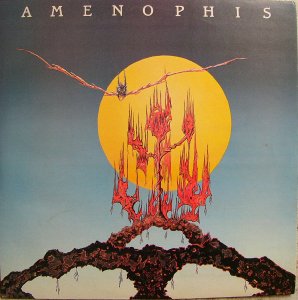
The Flower (Amenophis, 1983)

If you had time and kindness enough to read some of this blog's posts, you're likely to know how much I appreciate the bands that had enough guts to keep the prog flame lit up during the '80s. Amenophis did so. Not only this German band released prog albums, but they even dared to play a soft and mystic kind of symphonic rock that I certainly like but - of course- didn't assured them a successful career. This track comes from their debut album and is perfect to appreciate the delicate and varied style of Amenophis. It's a 7:30 minutes suite divided into two parts (The Appearance and Discovering The Entrance in The Shadow of A Dying Bloom), where you'll pick up a srong (and welcome) Camel influence, especially when the guitar comes in, and a very good keyboard work. 

This album was re-released on CD in 1992 by Musea.

Some of the vocal sections sound too predictable (and maybe too much Gabiel-esque) and the production is just as good as the band could afford back in 1983, but there are such beautiful, dreamy moments there that I could forgive much worse flaws. The lyrics about a mystic vision of Nature are reminiscent of the '70s, still they perfectly match with the musical mood of this trio. If you didn't know this band, I'm glad to offer in my blog a chance to get into their world (and you'll find more in my old posts).

Thursday, 21 July 2016

Abschied (Novalis, 1983)

You'll find in this blog long, tricky and pastoral songs by German band Novalis, but here I'd like to introduce a short ballad called "Abschied" ("Farewell")  and coming from the album "Sterntaucher" (that's "Star diver", more or less). I do think this is a highly moving song, apparently plain and essential, but actually full of emotions and musical strength.

"Sterntaucher" was the ninth studio album by Novalis.

It is a welcome example of how a skilled composer can write a prog song lasting three minutes or so. As always, the emotional side of music is more important than rules and habits. Of course, you need a good vocalist and the right amount of instrumental skills. Fred Mühlböck Novalis had this and even more than this, ça va de soi...

Saturday, 6 February 2016

Hyperborea (Tangerine Dream, 1983)

The last album by Tangerine Dream for Virgin records can be considered as a musical landmark between the fully experimental phase of the '70s and the new, ambient-like atmospheres. The title track, in particular, is one of the most arcane and well structured tracks from this "bridge" era. Inspired by the mythical northern realm of Hyperborea, this is a two part instrumental based on keyboards and soft drum machine, and also including a liquid, heartbreaking electric guitar (most likely a synth guitar effect). 


A remixed version of this album was released in 2008.

What I really like in this double sided song is the mix of sweetness and coldness the band set up, the excellent melodies and the calm, majestic crescendo in the second section. Tangerine Dream magically resumed the symphonic era and aticipated the New Age... and what's more, they added a pinch of emotion to their recipe. And very well they did!

Sunday, 29 November 2015

Umbría / Bajo la sombra y el sueño (Alameda, 1983)

The lushing "Rock Andaluz" had so many good bands and artists on the foreground that even a dedicated prog fan could neglect a good deal of excellent musicians. I'll try to skip such a risk with this very good song by Alameda, taken from the album "Noche Andaluza"(that's "Andalusian Night"). It's a two-song sequence including a dreamy spanish guitar intro (played by Paco de Lucia, one of the finest guitarists ever) and followed by a classic, epic example of symphonic "Andaluz"rock song.

"Noche andaluza" was the fourth studio album by Alameda.

This one is so well arranged and organised in its different parts that I'm always moved when I listen to it. José Roca sings it with his usual pathos and a clever keyboards / guitar plot turns the track into an actual progressive piece of music. That's why you don't need to be into Spanish traditional folk to appreciate this song.

Tuesday, 24 November 2015

Inter vivos (Quantum, 1983)

Back to Brazilian prog, I recommend you this instrumental track coming from Quantum's also instrumental self-titled debut album, released in 1983. It's a Camel-inspired work with the grace and the melodic charge of its model, but also with an original taste for rich and warm atmospheres. I'm grateful to Road Runner label for their re-issue of such a rare LP, virtually impossible to find outside Brazil.

The LP cover art. The band came back in 1994with !Quantum II".

These musicians surely knew how to change tempo and rythm as you'll see in the central section of "Inter vivos", when a lively giga comes in, adding a Genesis-like touch to the big picture. But likely the most interesting feature of this track is the constant and ever-changing interplay between Fernando Costa's keys and Reynaldo Rana Jr's guitars... that's what I call prog!

Saturday, 31 October 2015

Home by The Sea / Second Home by The Sea (Genesis, 1983)

I can't say I'm fond of "Genesis" album, but I must admit that some of the songs it features are excellent. This is the case with the mini-suite "Home by The Sea / Second Home by The Sea", a ghost story the band wrote down and performed winding between scary sounds and funny twists. For sure, the main melody is great and the long instrumental passages are worth a listening also by the Gabriel era fans. 

"Home by The Sea" was released as a single in October 1983, while
an edited version of "Second Home by The Sea" was included 
in the "Congo" Enhanced CD, released in September 1997.

The '80s plastic effects are employed with the best taste and the drum machine is never too invasive, so that Tony Banks' keyboards swirl on the foreground perfectly supported by the bass guitar. Eleven minutes of well mixed pop and prog, on the edge between old Genesis and new sounds that each time fascinates me and carries me away in a weird and inconsequent world. Just like a good Genesis song should always do.

Friday, 10 July 2015

The Enemy Smacks (IQ, 1983)

One of the founding songs of the neo-prog movement, this track comes from the album "Tales from The Lush Attic" and is  full of energy and sensibility. The intro attack is a powerful image of what I call progressive rock, and Peter Nicholls' leading vocal performance is even stronger than usual. The following instrumental section has a dark mood, based on Tim Esau's and Paul Cook's rythm section. Then the music gets lighter and lighter to show a superb keyboard / guitar interplay. Next stop: the strongest contrast you can imagine, as a slow-tempo, atmospheric sung section is immediately followed by the heaviest part of the song.

IQ in 1983: a good bunch of proggers.

In short, the track goes on through different tempos and well found sounds, lining up a series of inventions and some excellent quotations (a bit of Gilmour, a bit of Wakeman...), but the moving finale seems to me the ultimate reason to love "The Enemy Smacks". Here Nicholls simply wears his inside out, then the whole band offers a full-bodied wall of sound and a perfect example of symphonic rock outro. Definitely, that's enough for me.

Saturday, 18 April 2015

La herencia de Pablo (Pablo, 1983)

Pablo are one of finest Argentinian prog bands and their debut album called "Pablo el enterrador" (meaning "Pablo The Gravedigger") still stands as a classic today, so that the band is usually known with this debut LP name. The track I'm introducing here, "La herencia de Pablo" (that's to say "Pablo's Heritage") proves how agreeable and well played Pablo's music was. Very similar to Italian prog, this is a clever mix of acoustic instruments, mild electronic keys and vocal harmonies.

Pablo's fans had to wait until 1998 for the band's second album!


This track, in particular, is one of the most joyful and progressive ones in the album, with a constant piano / synth / guitars interplay, going through many fast progressions until the final, glorious guitar solo. The main theme is lively and pleasant, and the rythm section perfectly supports the leading instruments. It's the closing track of the album, an instrumental outro of the concept, based on  Pablo's character. A hidden, warm, passionate and rather naive pearl of Latin prog, if ever there was one.

Sunday, 30 November 2014

Sümfoonia Seitsmele Esitajale (In Spe, 1983)

During the '80s, just a few bands wrote uncompromising and beautiful symphonic rock like this Estonian banddid with "Sümfoonia Seitsmele Esitajale". Its leader Erkki-Sven Tüür abandoned his own musical creature after the release of its first self titled album to start a new career as a classical composer. This opening suite in three movements (Ostium, Illuminatio and Mare Vitreum) surely is his most important addition to prog rock history. Its title means "Symphony for Seven Performers" and the whole track actually sounds as chamber rock, featuring three different moods.

After E.S.Tüür's abandon, "In Spe" also released a second LP.

The first one is based on electronic keyboards - played by E.S. Tüür himself - and is the most experimental one. Illuminatio flows quieter on the classical side, mixing traditional instruments and some discreet synths. The final section probably is my favourite one. It includes both rock and classical sounds, ranging from delicate interplays to majestic musical waves, with a pinch of folk inside. Many changes, many sounds and many instruments grace this suite, along with well found melodies. That's why I hope my prog friend will appreciate this composition as much as I did.

Monday, 14 July 2014

The Last Requiem (Amenophis, 1983)

A fully symphonic suite of about 24 minutes of duration isn't exactly what you could expect from a 1983 album. But it's exactly what you have here, coming from the self titled debut album of an almost forgotten German band. The three parts of this epic, titled "Looking for Refuge", "The Prince" and "Armageddon", surely look like Camel here anf there, but the delicate atmospheres of the track and its clever architecture deserve a keen listening.

Amenophis released a second studio album in 1988 and they
reunited in 2014 also releasing a third interesting work.

In particular, the long instrumental passages include many beautiful soundscapes. The bass and the electric guitar draw suggestive paintings and sometimes converse with the keyboards in a very refined and effective way. Other musical quotations come from Yes and Genesis but, well, I couldn't judge such an emulation as a deadly sin. So, this is a very interesting composition, a pleasant way to spend your next 24 minutes, if you believe me.

Tuesday, 10 June 2014

Garden Party (Marillion, 1983)

"Garden Party", subtitled "The Great Cucumber Massacre" is one of the most important songs by Marillion in the definition process of their own style in the early '80s. It is also one of their first singles to enter the charts, kind of a passport to fame. It's a strange song, featuring an up tempo chorus and a down tempo verse, sung by Fish in two very different tones: mellifluous and aggressive. The lyrics attack in a very direct way some British upper class habits and the funny official video of the song actually depicts an irreverent raid on the spot of a fashionable party.

While the 12" single featured the album version of the song,
the 7" version was heavily edited (4:35 minutes instead of 7:15)

This song greatly contributed to launch the prog revival of the '80s, showing how much this kind of rock could be sharp and energetic, something the punk generation seemed to ignore till then. And in fact, the album version of "Garden Party" also contained the four letter word f***ing, decorously replaced by miming in the single edit, so that all the radios could accept it. The sign of the times, one would say.

Monday, 17 March 2014

The Last Human Gateway (IQ, 1983)

This 20 minutes epic track, taken from IQ's first official album "Tales from The Lush Attic", was born as a proud embankment against the rising tide of prog detractors of the '80s, pretending that prog was dead and buried forever. A few bands - and IQ were among the most active ones - succeeded in crossing such a difficult ford and if prog's still alive we should thank them too (well, them and us, the progfans). This suite isn't necessarily a five star masterpiece, but it's a precious testimony of those dark and heroic era for progressive rock. "The Last Human Gateway" was like a lantern in a gloomy passage and its tempo changes, its floydian keyboards, its gabriel-esque vocals, all in it sounds like a statement of faith.

Released in 1983, "Tales" was finally remixed in 2013.

That said, the historical value of this song doesn't exclude a musical interest: some of its sections are excellent, like the arcane intro, or the "Ocean" part, introduced by sweet guitars and built on a solid and beautiful melody, or the passionate istrumental section launching the  final reprise of the main theme. Sure, IQ were young and artless then, maybe they forged better songs later in their career, but in this suite there's a boldness and a fondness I still miss in many modern proggers' intricate and intellectual compositions. So, long live IQ and their Human Gateway!

Saturday, 25 January 2014

Miragem (Bacamarte, 1983)

This beautiful instrumental track belongs to “Depois do fim”, the only album of the Brazilian band Bacamarte, and a higly rated record by the International progfans core. This “Miragem” features virtually all the main points  of traditional symphonic rock: blazing keyboards, dreaming guitars, a creative rhythm section and – a welcome bonus – even an Arabic taste.
 
Bacamarte were born in 1974, but their sole record
was released ten years later.
 
The musicians’ performance is excellent and the band’s intricated plots and multiple interplays are simply stunning. There’s a scent of PFM and a taste of Yes, but also a vague and pleasant Southern colour, adding life and sun to the music. Last but not least, this track is a living testimony of the surprising and persistent worldwide diffusion of prog rock.

Wednesday, 8 January 2014

Owner of A Lonely Heart (Yes, 1983)

This is maybe the most successful song by a prog band and it's astonishing how it remains popular today and as actual as it was in 1983. Sure, "Owner of A Lonely Heart" isn't a typical fully progressive Yes song, I'd say it's one of the first examples of prog-pop track, a model many will follow but only a few (Genesis, mostly) will reach in terms of sales and quality. In fact, I think this is a great song, progressive in a way, because it's so full of ideas, so flushing in its sound solutions that each time I listen to it I find something new. After all, the original Trevor Rabin's composition was widely enriched by Jon Anderson's and Chris Squire's contributions. In its final version, it opened the 90125 album, the first Yes album of the "Rabin era".
 
The single version of the song was shorter than the album version.
It peaked at # 1 in US Billboard single charts.

The Yes brand is recognizable in the syncopated rythm, in Chris Squire's excellent performance, in Jon Anderson's inimitable voice and in the clever arcitecture of the the track. Probably the band knew they were working on a virtual hit, but they avoided any unnecessary repetition of their catchy tune and put in good variations, instrumental interludes and a final fading bridge. But they won all the same and if the early fans turned up their noses, the song is still there, across many years and generations. Listen: another radio DJ is broadcasting "Owner"!

Thursday, 28 November 2013

Chelsea Monday (Marillion, 1983)

I can't describe my inner reactions each time I hear the oppressive bass line introducing "Chelsea Monday". I see an urban grey sky, a concrete landscape and a million people searching for something new in their lives. Really, this is a highly emotional track and when Steve Rothery comes in with his electric guitar solo the foggy atmosphere leaves its place to a human pulsing, suffering heart. Fish's vocals tell about a young lady trying to be a star:

Catalogue princess, apprentice seductress
Hiding in her cellophane world in glitter town
Awaiting the prince in his white Capri.

Did those dreadful guys push the poor lady of the song into the river ?


But the story ends with a moving and hurting note:

Hello John, did you see The Standard about four hours ago?
Fished a young chick out of The Old Father
Blond hair, blue eyes.


And the song quietly fades away while the the Old Father Thames rolls on...

Friday, 20 September 2013

Suite "Ran" 組曲「乱」(Bi Kyo Ran 美狂乱, 1983)

Taken from the album "Parallax", the third release of this Japanese band and their second studio work, "Suite Ran" is one of the best pages in the often underrated book of the far eastern archipelago progressive rock. Strongly influenced by King Crimson, Bi Kyo Ran has its own trade mark, made of a well found mix of melody and experimental passages, as this 21 minute instrumental epic proves very well.


"Parallax" is one of the best known Japanese prog albums ever.

It is divided in 5 movements, each one with a distinctive mood. The first one is based on an excellent keyboards plot, plain and effective, stretched and almost geometric, then - on the second and third movements - the rythm section (the group was a trio in this period)  increases its presence on a mysterious atmosphere with unpredictable and pleasant developments, including a jazzy jamming. The experimentation reaches its summit in the fourth movement, where a powerful crescendo based on six notes overwhelms the listener and when the noise seems to rule the track, the volume suddenly falls down and after some clock effects gives way to a sweet and poetic finale. How many surprises, what a good music!

Thursday, 4 July 2013

Your Possible Pasts (Pink Floyd, 1983)

This my favourite song from the much underrated album "The Final Cut". Sure, this was more a Roger Water's solo album (about his father's story once again) than a proper Pink Floyd's work, but even so there are some very, very good songs in it. Unfortunately, just a few of them actually sound like a rock band production. This is the case of "Your Possible Pasts", where the typical group signature is everywhere. Here, David Gilmour and Nick Mason don't leave the place to the orchestra or to the piano and the song could be part of anyone of their previous albums.

One of the pics from "The Final Cut" art.

I also like Water's vocal performance, so sad and so tight, perfectly in tune with Mason's sharp drums. And the volume and tempo changes, the guitar elegant embroidery and, of course, Gilmour's solo single out this track. Even without Rick Wright's keys, I found here the old good times, one of the last glimpses of the '70s.

Tuesday, 9 April 2013

Open Your Eyes (Asia, 1983)

Are Asia a prog band? Old question. For sure, the group's members are what I call prog: not only they come from three of the greatest progressive rock acts of the '70s (Yes, E L & P, King Crimson), but they played an essential role in building and defining this genre and its features. They wanted to find an easier approach with Asia and they succeeded. 

Roger Dean's cover for "Alpha": this, at least, is very prog!

Even so, some of their songs bear the prog rock mark, and it's exactly the case with "Open Your Eyes" and its "arena rock" wall of sound, where tempo changes, instrumental passages, guitar/keyboards dialogues and imaginative arrangements seize the listerer's attention. IMHO, a pearl from Asia's second album "Alpha". OK, there's also a catchy tune... so what? Just try the airy finale and let me know.

Friday, 1 March 2013

UFO (Bacamarte, 1983)

This is the first track from Depois do fim, the only album released by the original line-up of the Brazilian band Bacamarte. One of the hidden treasures of prog rock. Listen to this instrumental intro and you'll find a bit of everything: classical music, South-American folk, Italian prog, Spanish guitars, ambient passages, Genesislike and Floydlike moments... well just name it! That said, the track is not a mere compilation of favourite prog styles, there is a strong and original temper, sweet but not sweetish, pleasant but not trivial.

A dark cover for a bright music.
 

Please don't forget the rest of the album, where you'll also listen to Jane Duboc's beautiful voice. One more thing: even if this music is so sweet, the topic is not: Depois do fim ("After the End") is about the end of the world and the day after. The typical scent of '70s is not strange: released in 1983, this album was actually recorded by the band in the late '70s, then abandoned and rediscovered five years later. Luckily, I daresay.

Tuesday, 13 November 2012

Script for A Jester's Tear (Marillion, 1983)

This is the first track post-70s I talk about in my blog, and it's another important one in my listener's experience. I like Marillion very much, I must confess, both Fish and Hogarth eras and I know they released better songs than this one in terms of coherence, track building and lyrics. Nonetheless, this old song, the title track of  the group's first album, still moves me and digs in my deeper self. The winning point here is the sincerity I perceive in Fish's performance: he is the jester, his heart is bleeding, his tears are flowing. This in not common, especially in prog rock songs.

Mark Wilikinson's cover for the album. 

I also like the three part structure of the song, kind of a mini-suite with a strong coherence both in music and lyrics. It also sounds very scottish (well, Fish always does), full of darkness and smoky, but with an underlying strenght, a smell of ancient nobility and a smell of fierce sorrow. As in the best progressive rock tradition, please enjoy this song with the beautiful and suited Mark Wilkinson's cover art before your eyes. You won't regret it.