Showing posts with label The Moody Blues. Show all posts

Tuesday, 30 August 2022

In My World (The Moody Blues, 1981)

 Justin Hayword wrote this song for Moody's too underrated album "Long Distance Voyager", a proud progressive flag (with some eighties additions) in the genre's darkest years. This ballad is a pefect blend of a folk rooted theme and brilliant arrangements, a rather long ballad with bluesy and country echoes and an extended, beautiful and fully progressive instrumental coda. Old school music, yes, but also state of the art sounds, never boring solutions and that Moody's magic touch! 

...Always been in love with this cover drawing!

Even if the main theme is always there, you never get tired as the band re-work it through an ever changing sound palette. It's a dreamy experience, a fluid, transparent, refreshig stream getting more and more addictive and reaching its emotional peak during the final instrumental section. Another fine example of what a love song can turn into when Moody Blues are concerned.

Monday, 22 August 2016

Melancholy Man (The Moody Blues, 1970)

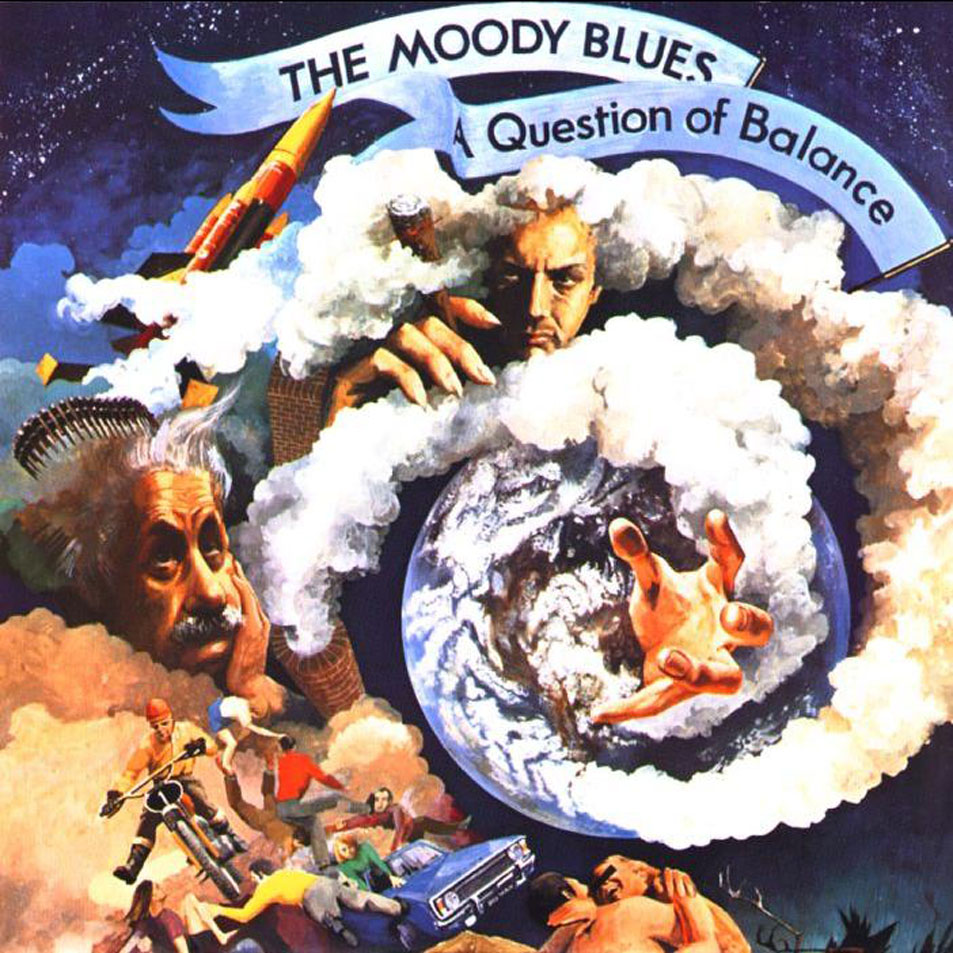
Another Mike Pinder's melancholy (yes, yes, it's in the title) and inner song. This one comes from "A Question of Balance" album, likely one of the rockiest works by The Moody Blues, still I couldn't imagine a dreamier and more atmospheric track. The melody is simply perfect, and the rich arrangements never go too sweet, opening a distant horizon to the listener's ears. Asusual with The MB, there's a good deal of overdubbing and assorted effects, but such an elaborated studio work never spoils the magic the band build up in a few more than five minutes.

The Moody Blues liket to explore cosmic paths, as you can see here.

"Melancholy Man" also has a beautiful set of lyrics, an awesome depiction of man's situation between the solid ground and the infinite sky. There's a sense of loneliness balanced (yes, the allbum's title, this time...) by the wonder inspired by the cosmic architecture. Ten out of ten, I daresay.

Sunday, 1 May 2016

My Song (The Moody Blues, 1971)

Taken from the album "Every Good Boy Deserves Favour" (an usual reminder for EGBDF musical scale) this song starts like an average MB's ballad, then it takes a different turn, featuring a charming orchestra-like instrumental part, both magic and epic. When the vocals come back, they perfectly match with the fairy mood of the song that slowly fades away.

I think this cover art is perfect for "My Song".

Mini-moog, Mellotron, acoustic guitar and flute together aren't an usual solution, but then Moody Blues always skip trivial arrangements and explore new ways. A beautiful attempt to reach visions through music, an epic and peaceful little world into one song... this is "My Song"! And it's also a way into this band's unique and so British atmosphere. That's why you'll find more about them in my blog.

Sunday, 10 January 2016

House of Four Doors Pt. 1 + Pt. 2 (Moody Blues, 1968)

This two songs setting up a mini-suite come from "In Search of The Lost Chord" and are a fascinating specimen of what we seldom call proto-progressive rock. The first part of "House of Four Doors" has a tricky and diversified plot, lining up the main theme and some excellent instrumental sections, where Mellotron, flute and other classical instruments rule. After all, this unusual structure that perfectly matches with the quest and exploration concept of the LP.

This unpredictable work was the third studio album by TMB.
 
The vocal harmonies are another winning point, especially in the second part, acting like a choral coda, that another long song, "Legend of A Mind", divides from the first and longest part. This song has the plain melodies of the Sixties but also the highly sophisticated care for each detail defining the style of so many prog bands from the Seventies. Once again, The Moody Blues were simply forward.

Thursday, 4 June 2015

The Voyage (The Moody Blues, 1969)

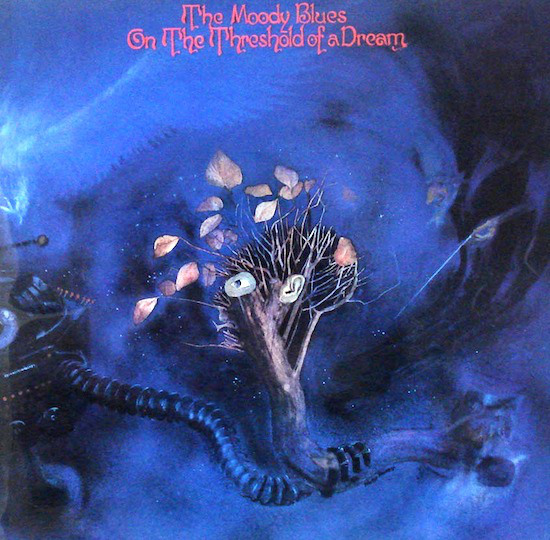
Here you are a magnificent early prog track coming from "On The Treshold of A Dream", one of the most interesting albums by The Moody Blues. This one actually is a brave track, and that for many reasons. Not only it is a fully instrumental track, something rather unusual in 1969, but it is also based on a wide range of keyboards, including a heartbreaking, and lines up an unpredictable series of musical sketches, more like a soundtrack than like a song.
 

This work was the fourth studio album by The Moody Blues.

Last but not least, "The Voyage" is somewhat part of a little suite, being the central section of a trilogy including the two parts of "Have You Heard". This gem actually is a voyage, a trip through strange galaxies or, more likely, through hidden soul corners. Finally, "The Voyage" is one of the best reasons I found to love The Moody Blues. Is that enough for you? It surely is for me.

Saturday, 7 March 2015

Candle of Life (The Moody Blues, 1969)

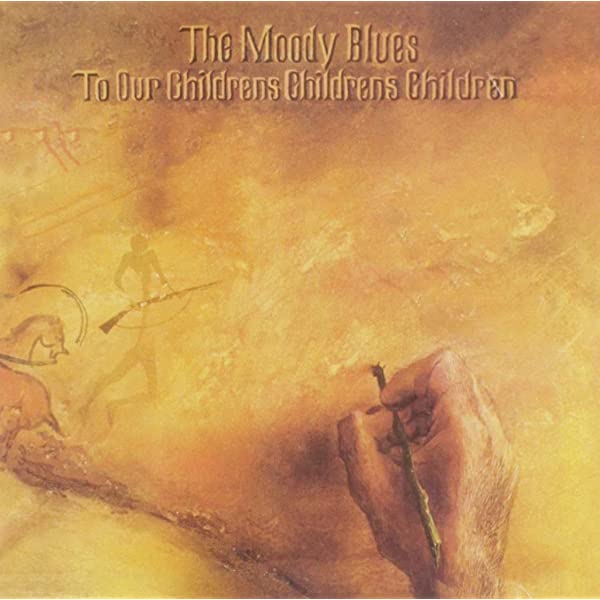
One of my favourite songs by The Moody Blues. It comes from the album called "To Our Children's Children's Children", once again one of my favs. This is exactly the kind of gentle, pastoral, deeply emotional prog that only the first gereration of prog rock bands knew how to create. Not only this song swings and flows like pure water, but it also has a mysterious, fascinating, almost dark Mellotron-driven background.

 
This beautiful album was the TMB's fifth studio work.

And what about the piano? Its touches add kind of a dramatic, biting side to the track, especially to the spacey instrumental bridges that grace "Candle of Life". Maybe the lyrics sound a bit too "love, peace and friendship" in our days, but they're perfectly in tune with the melody, so... who cares? Definitely a classic song for the keenest proggers out there.

Wednesday, 27 August 2014

Nights in White Satin (The Moody Blues, 1967)

Do The Moody Blues really belong to the prog rock movement? For sure, they anticipated many of the fundamental features of the genre, as their "Night in White Satin" hit easily proves: a well arranged fusion of classical music and pop rock, instrumental interludes (in the album version, at least), mood changes and, of course, the inclusion in a concept album, the band's second one, titled "Days of Future Passed". The concept was about the different times of a day, so that "Nights in White Satin" represents - of course - the night and closes the album.

This song was released as a single in 1967, 1972 and 1979,
always charting, and had of course many different cover arts.

The orchestra plays a central role in the long version of the song and it does so without any sharp contrast with the band: each moment has its own space and role, even the spoken comment during the final part of the song, a section that also had an originally unlisted title of its own, "Late Lament". The famous and beautiful sung melody fills the first part of the track and goes through different arrangements, so that each verse of this airy ballad seems to add something new and different. Prog or not, this band (and this track) strongy contributed to the building of a new musical era.