Showing posts with label Ange. Show all posts

Tuesday, 17 November 2015

La Bataille du sucre [inclus La Colère des Dieux] (Ange, 1974)

Among the pearls included in the album "Au-delà du delire", this is one of the brightest ones. There's a strong early Crimsonian influence here and even the song title ("The sugar battle" - including "Gods' Anger") refers to the KC's first album tracklist. But, of course, this is Ange and the band's strong personality is everywhere. Let's see: first of all, there are the theatrical, emphatic and everchanging vocals, then the Medieval, traditional French elements in both music and lyrics, and finally the strong contrasts in volume, rythm and mood.

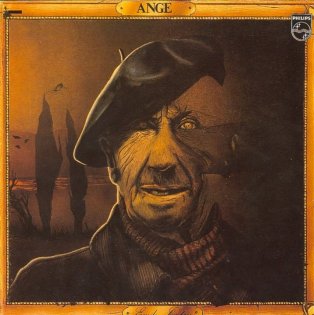
The back cover art is even better than the front one.

The entire song seems to baffle all genre, period and pattern boundaries, going in and out a great deal of clichés, lining up irony, stateliness and intimacy. The lyrics themselves are a weird blend of comic and tragic tones, relating an unlikely lack of sugar and salt in the year 2015. Last but not least, you'll find here a few first-rate melodies and tons of original arrangements. In a word: this is Ang at their best.

Monday, 20 October 2014

Jour après jour (Ange, 1975)

This song comes from the album "Émile Jacotey", one of the finest fruits of the French Prog tree (and you'll find other tracks from this LP in this little blog). "Jour après jour" ("Day by Day", in English) is a short, lyrical ballad exploiting the concept of the album about traditional country life. A medieval legend - the huntress and the white deer - matches with an acoustic, sweet melody, sung by Christian Décamps on a calm, almost whispering tone.
Ange in 2008. They're still on the road today.

The whole atmosphere is suspended between the real world and another, fairy dimension, so that the soft arrangement partly conceals a deeper, obscure fear. As usual, Ange intertwine magic and music, tradition and innovation. In short, they did exactly what a prog band should do.

Friday, 18 July 2014

Les larmes du Dalaï Lama (Ange, 1992)

Among the abundant production of Ange during the '90s, 2000s and 2010s decades, this is one of my favourite songs. And its strength could easily raise it to the inner circle of the band's best moments. Christian Descamps' performance is full of energy and pathos, and both the sung melody and the instrumental sections have something magic. Jean-Michel Bresovar's electric guitar displays all the colours of epic, perfectly backed by the rythm section and especially by the two percussion men Jean-Pierre Guichard and Eruc Toury, sounding like drums of war.

This was the 15th studio album of Ange.


That's why the delicate passages of "Les larmes du Dalaï Lama" (that's "Dalaï Lama's teardrops", in English) seem more ethereal and almost unreal. After some years  of strange, not always successful musical adventures, and the reunion of the original lineup for the previous (and good) album, this song opens the album announcing to the world that Ange definitely were back home. Finally and luckily. For me, at least.

Saturday, 14 June 2014

Ode à Émile (Ange, 1975)

This short song, taken from the album "Émile Jacotey", starts with the words of the main character of the Whole concept, the elder Émile Jacotey, narrating his life in a village, his hard farrier job and his present retirement. This old man represents a natural, ancestral way of life, the one people had been living for centuries in all European Countries and especially in rural France. And this man is also a mine of stories, legends and traditions, filling the Ange's album.

This track was also released as a promo single, b/w "Sur la trace des fées".

That's why he deserves this Ode, so heartily sung by Christian Décamps over an acoustic background, enriched by his brother Francis' keyboards and also graced by an electric guitar solo by Jean-Michel Brézovar. It's a pleasant, moving track and also a deep meditation on human destinies, focusing on the natural rise and decay of life and on the legacy each individual can pass on the following generations. A pearl, IMHO.

Monday, 10 March 2014

Hymne à la vie (Ange, 1976)

Taken from the album "Par les fils de Mandrin", this little suite (meaning in English "Hymn to Life") is one of my favourite Ange's songs ever. It's a little suite - less than 10 minutes of duration - divided in three parts. The first and longer one, "Cantique", is a sweet acoustic ballad featuring an excellent melody and an aerial arrangement midway between folk and prog.

In 1976, "Par les fils de Mandrin" was also re-recorded in English,
titled "By The Sons of Mandrin", but this version wasn't released till 2003.

The second part, "Procession", has a measured rythm and a beautiful flute-like keyboard effect. Here, the sung theme is even catchier than the previous one and Christian Decamps shows off all his well kmown theatrical skills. I also appreciate the electric guitar riffs, giving a stronger '70s mood to the section. The last part, "Hymne", features more guitars and drums, bombastic vocals and a keyboard progression of chords as a foggy finale. The pastoral side of Ange is on the foreground in this song and the band's sweeter mood strikes me.

Tuesday, 24 December 2013

Le Cimetière des Arlequins (Ange, 1973)

Taken from Ange's second album "Le Cimetière des Arlequins", this rather long title track features almost 9 minutes of excellent music and biting lyrics. The first sung theme is something like a puppet's music and perfectly represents the topic of the track: the anonymous wheel game of human lives transposed in a world of marionettes. Full of surprises, this song is.

The russian but german-born painter Jacques Wyrs illustrated this cover.

After the puppet's verse, we cross a dramatic chorus, then the first theme comes back and there's the dense, arcane, mostly instrumental second section, featuring a yelled version of the chorus, where Christian Décamps invites the "harlequins" to take their place in the graveyard. A harder riff, also quoting Wagner's Ride of The Valkyries and leading to the final clockwork bruitage shows the miserable crowd's parade towards the final resting place. Strong, that's the word for it.

Monday, 4 November 2013

Sur la trace des fées (Ange, 1975)

This Ange's song is a very sweet and apparently plain one, but also one of my favourites ever. It was nspired by popular legends about fairies, as narrated by Émile Jacotey, the old peasant providing the concept for the fourth album of the band. He tells the wanderings in the Woods he and his childhood friends used to organize in order to see the fairies and in fact the song title means "In the wake of the fairies".

Ange's line-up in 1977.

So, the strong folk taste of the music and the childhood's nostalgic mood give to this track a special, magic atmosphere, a softness of its own I like very much. That's not all: the fusion of rock and acoustic instruments is also a winning point, just take the delicate and neat rythm section's work. Last but not least, the melody itself is excellent and Christian Décamps sings it with his usual passion, especially the chorus, one of his emotional peaks. IMHO.

Monday, 14 October 2013

Cap'taine coeur de miel (Ange, 1978)

This 14 minute epic from the album "Guet-apens" is probably one of the best tracks by the French band Ange. I certainly like it very much. The first half of the suite lays on Christian Decamp's passionate and theatrical vocals, a stunning performance winding between drama and irony and describing an adventurous sea dog reminiscent of both Jules Verne and Arthur Rimbaud.

"Guet-apens" is often considered as the last fully prog Ange's album.


The second half is more arcane and slow. Here Decamps turns towards an inner and painful note, powerfully supported by a piercing electric guitar. There's a growing sense of frustration, as the volume rises up and the final guitar solo takes the form of a majestic cry of pain. Yes, this honey-hearted captain is a great experience for all prog children around there.

Saturday, 17 August 2013

Le bal des Laze (Ange, 1982)

Taken from "A propos de...", an album of french cover versions, this song is by far the best of the whole lot. The original Michel Polnareff's song is fully transformed in a longer and more complex composition, including a beautiful, atmospheric 4 minute intro, two excellent instrumental sections and a guitar driven finale, all of them featuring good keys and guitars.

Not a great album, maybe, but with at least one excellent song.

The vocals are, of course, à la Ange, with all the theatrical and charming strenght of Christian Descamps. The lyrics are also appropriate to Ange, describing an outlaw's impossible love for an English noble girl and his thoughts the evening before his execution, while a grand gala takes place in his loved one's castle (Laze is her family name, so the song title sonds like "Lazes' Dance"). If ever a cover version has been a good prog track, this is the one and I finally decided to add it to my collection, even before other very good Ange's songs... just listen to the final guitar solo and you'll agree with me. Well, I hope so.

Sunday, 30 June 2013

Au-delà du délire (Ange, 1974)

The 9 minute title-track of Ange's album of 1974 is one of their finest moments, IMHO. The first part of the song is wrapped in a Middle Ages atmosphere and dominated by Christian Décamps' theatrical voice, the second section is a long and beautiful Jean-Michel Brézovar's guitar solo over a powerful background, maybe reminiscent of early King Crimson's work, driven by the keys, with the rythm section helping to build up an effective wall of sound.


Philippe Huart's iconic art for "Au-delà du délire".

The song is the final installment of a concept relating the incredible story of a poor peasant living in the 14th century. This man organizes a rebellion against his feudal lord, then is captured and killed, but his astral body survives and he comes back to Earth after mankind's destruction and restarts History. "Au-delà du délire" ("Beyond Delirium") is a well composed and arranged track that still charms me with its old fashioned sounds, naive lyrics and brilliant musical stunts. A trip in a far, enchanted contry.

Sunday, 28 April 2013

Caricatures (Ange, 1972)

This excellent track is taken from Ange's first album, featuring the same title. It's a long track (some 13 minutes) starting with a spoken intro, where Francis Décamps shows for the first time to the world his original and theatrical style. The rest of the track includes a long, fascinating example of "medieval" prog rock, in which keyboards, percussions and vocals play the main role. Also interesting here the guitar / keys plots and the piano introducing the next section. 

This is where Ange's story begins...

After this beautiful instrumental pasage, the voice comes back in the final part and once again it amazes me, embroiding strange landscapes with a helping hand from the keys and some gentle percussion touches. Now, the lyrics. Even if you perfectly speak French, please don't try to find some logic here: one should simply enjoy the nonsense and the sounds. Resonance is all that matters, among Attila and the Holy Virgin, cunning zebras marrying curves and Al Capone selling his armor. Like a dadaist poem, maybe, or like the puppet play on the album cover... but with such good music in addition.

Sunday, 6 January 2013

Les noces (Ange, 1975)

We all know there's no more international rock genre than prog. Let's see some of the best fruits around the world. Being Italian, better start with a French one! This track perfectly illustrates Ange's theatrical and unpredictable style: folk-oriented lyrics, a vocal performance somewhere between singing and acting, long instrumental passages, a bit of Middle Ages and a good balance of acoustic and electric intruments.

"Emile Jacotey" album's cover.

This song is taken from a fascinating concept album, Émile Jacotey, inspired by an old farmer's traditional tales, so you'll find there fairies, princes, soil festivities, humble men and women, animals and freaks. Ange are a world apart, a strange place to explore, but even so they're the prog itself.