Showing posts with label 1974. Show all posts

Friday, 31 May 2024

Earth Hymn (Manfred Mann's Earth Band, 1974)

Manfred Mann and his Earth Band are among the most underrated acts in rock (and prog rock) history. Nevertheless, they released awesome albums and evergreen tracks, like this "Earth Hymn", part of "The Good Earth" album (1974). This is a Chris Slade and Manfred Mann's song, a majestic ballad including some stunning guitar solos and beautiful lyrics about the musical and spiritual sound of our planet. 


Did you know the first copies of this album entitled the purchasers
over one square foot or real earth in Wales?

The ecological inspiration of the album grows into a metaphysical approach in "Earth Hymn", even if nothing here sounds like tricky of sophisticated. On the contrary, you'll find a fluid, natural hymn suspended between psychedelia and prog, peace and strength. Even if the sung theme is simple and catchy, the arrangement is an ever changing one, full of beautiful surprises. In a word, a highly original and enjoyable piece of (progressive) music.

Wednesday, 30 September 2020

Utopia (Todd Rundgren's Utopia, 1974)

Todd Rundgren is a highly underrated composer, IMHO. His eclectic approach to music surely didn't help him, but allowed his songs to keep their charm intact during many decades. This track - a virtual three movements suite - is the most known piece de resistance of Utopia, the band Rundgren founded in 1973 to empower a pop oriented solo career he had begun in 1970. However essential for the band's history, "Utopia" (also known as "Utopia Theme") was never recorded in studio and its live version - at the Fox Theater in Atlant, November 8th 1973 - filled the first side of Utopia's debut album. 

...And I even like this puzzling cover art!

As I said before, we can (very) roughly divide this epic into three parts, the first one offering a highly dynamic jazzy prog, the second one exploring the operatic and pompous side of pop-rock with a beautiful, catching sung theme and finally the third one stromgly rooted into the symphonic rock ground. Manifold and unpredictable as it it, "Utopia" still is a coherent piece of music, as if the same scene was described from three different points of view. I know many critics dislike this track and label it as pretentious and showy, but I hope you'll forgive me if I say I'm always moved by it. And all in all, this is why I like prog.

Wednesday, 27 June 2018

To Be Over (Yes, 1974)

Another masterpiece signed by Yes, coming from the album "Relayer". With Patrick Moraz jazzy style and a beautiful melody by Steve Howe born during a guitarist's boat ride on The Serpentine lake in Hyde Park. Anderson added his signature spiritual lyrics focusing on the liquid element (We go sailing down the calming streams / Drifting endlessly by the bridge / To be over) and flying high, as usual. 

Yes lineup for "Relayer". It didn't last long, but worked well.

To enhance the spiritual side of "To Be Over", Howe also plays the sitar here, topping the rich arrangement with an Eastern touch. I also like the classical sounding solo by Moraz, so perfectly matching with the rythm section... and it's a White / Squire section, that's to say something! What a beautiful song, my dear progfriends! 

Friday, 28 July 2017

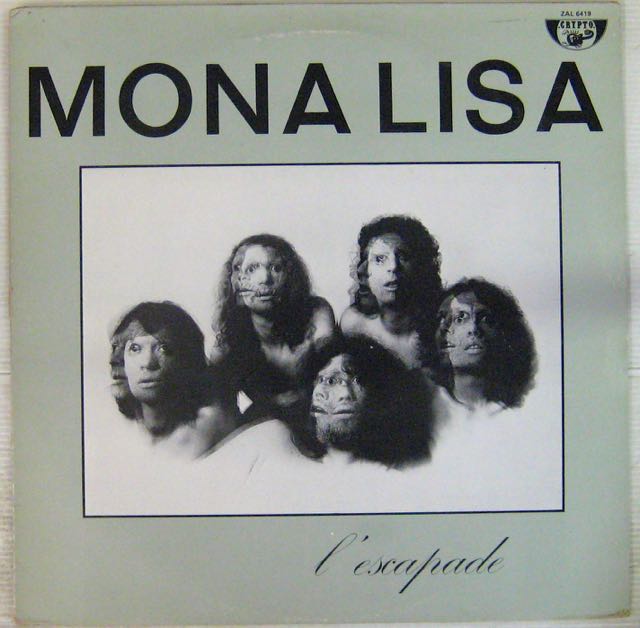
Le fantôme de Galashiels (Mona Lisa, 1974)

Mona Lisa surely are one of the best French bands from the Progressive rock golden era and IMHO they deserve prog fans' attention (and gratitude). This track comes from "L'escapade", the band's first album, released in 1974 and features all the best known and most loved elements of their music. The theatrical vocals (in the wake of Ange, but with more acid accents) are there, and also the tempo changes and the well performed union of acoustic and electric instruments, including some psych passages here and there. 

This is the original artwork of Mona Lisa's debut album.

If Dominique Le Guennec's lead vocals immediately attract the listener's attention, a keener listening will show a skilled and well organized group. A special mention goes to Jean-Luc Martin's bass guitar, whose plain and effective lines strongly characterize Mona Lisa's sound. And there's more than sounds in this track, as "Le fantôme de Galashiels" has a strong emotional side, lining up sombre moods and dreamy flashes in a rich and unpredictable pattern that still amazes me. 

Saturday, 4 March 2017

Stories (Eela Craig, 1974)

Eela Craig were one of the first Austrian prog bands ever, as they released their debut album in 1971. These boys from Linz gathered many influences from the English early progressive bands, mainly Pink Floyd and Genesis, and eventually enriched those (very good) roots with an original mellow twist, a strong symphonic pattern, a pinch of jazz and also some Christian lyrics.

The original 7" single b/w "Cheese". Both tracks are available
on the CD version of Eela Craig's debut album.


I especially like their pastoral side, something you'll find in "Stories", a non-album song, released as a single in 1974 and now available as one of the bonus tracks of their debut self-named album's CD re-release. This Mellotron-driven track has a spacey background and a vaguely folk melody, a combination I happen to like. You'll also appreciate the instrumental final section, midway between Trespass-era Genesis and early King Crimson. Relax and listen to them...

Thursday, 29 December 2016

Starless (King Crimson, 1974)

Heartbreaking and double-faced. These are the only adjectives I can suggest right now to describe this song. Robert Fripp's guitar pierces the listener's heart with its bittersweet intro, soon reinforced by John Wetton's neat and warm vocals and, of course, by Mel Collins's guest sax. The beautiful melody flows like a majestic river, an emotional landslide.
 
...and if you badly like "Red", there is this 24-disc box set called
"The Road to Red" that could ineterest you (guitar not included).
 
Then the song changes and goes through an underground instrumental second part, dark and haunting, a challenging crescendo graced by Carl Palmer's creative percussions. A lancinating guitar and a jazzy section finish this long section and bring back the main theme twice: first in an acid (even pre-punk) version, then in fully symphonic garments. A feast to the ears and to the hearts, "Starless" is an outstanding way to close "Red", one of my favourite KC's albums ever and still stands up like a milestone in prog history.

Wednesday, 20 July 2016

A Louse Is Not A Home (Peter Hammill, 1974)

One of the greatest vocal performances ever, IMHO, at least when it comes to prog music. And there's more than this: "A Louse Is Not A Home" (from "The Silent Corner And The Empty Stage" album) is a greatly written song, including instrumental passages as good as the sung melodies and so many and unpredictable changes. Medieval hints, heavy riffs, piano touches, sax echoes, impressive progressions, dissonant improvisations, delicate themes... and most of all the uncompromising, moving Hammill's way.
 

Everything goes changelling with Hammill... even the cover arts!

Pain and anger, but also a weird and evil kind of joy fill each moment of this song, so that feelings are more important that any skills or conceptual inventions (they also exist, of course!). This is what I'd call emotional prog rock, a refined specialty of Mr. Hammill. The dark angel is simply perfect here, and of course the listener has to listen and re-listen to this in order to uncover all the secret delights of "A Louse Is Not A Home". So I did with pleasure and hope you'll do once more.

Monday, 18 July 2016

Proletarian / Inspired Machine (Wigwam, 1974)

Wigwam are the most represented Finnish band in my blog and I think they deserve it. This two strictly connected tracks open one of their best albums, "Being", and they feature all the open-minded and unpredictable mood of such a seminal work. Written by Jukka Gustavson, they're keyboard based and lively ballads mostly exploiting the same theme but with different tempos.

I'm also fond of Wigwam's peculiar taste when it comes to covers.
 
I appreciate the brave choice of unusual chords and melodies, floating on a musical seesaw, swaying between slightly dissonant harmonies and more traditional prog folk paths. There's a stunning balance in this mini-suite, that's never too experimental and never too mainstream, leading the listener through mixed moods and colourful landscapes. I guess that's why I come back to it from time to time and each time I'm as pleased as I was in the first place.

Tuesday, 19 April 2016

Nimrodel / The Procession / The White Rider (Camel, 1974)

No doubt "Mirage" by Camel is one of the best prog albums ever and you'll find many songs from it in my blog. This suite of three songs is one of the highlights of such a masterpiece and also another prog song inspired by Tolkien's world. There is magic in this track, but also beautiful changes, dreamy guitars, a good deal of keyboards and well found melodies.

Camel line-up in 1974. A stunning foursome...

Military marches, folk ballads and instrumental passages follow each other, lining up mellow and lively sections, with clever arrangements and pleasant reprises. This is simply a great prog rock composition, where four brilliant musicians shine and take the time of their lives. The same can be said of their listeners... and especially for me!

Friday, 8 April 2016

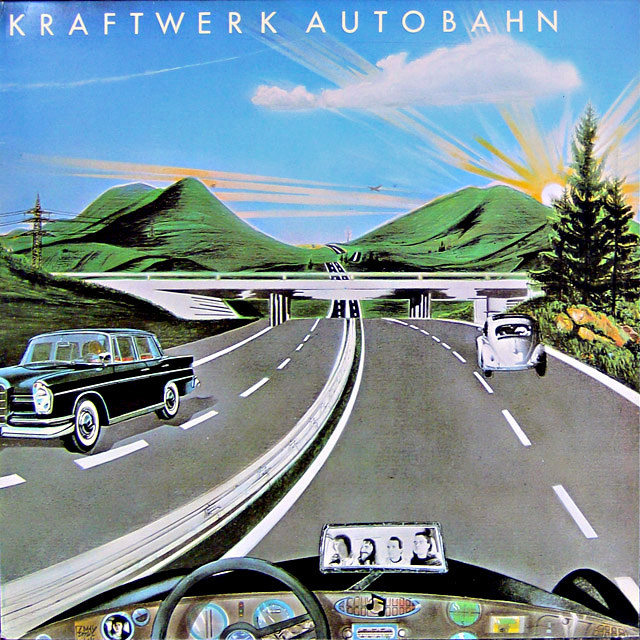
Autobahn (Kraftwerk, 1974)

This long track of more than 22 minutes is no doubt one of the best achievements in Kraftwerk's career. The electronic rythms and many keyboard effects re-create the sounds of a car travelling along a motorway (that's the meaning of the German word "Autobahn") and the monotone vocals add a hypnotic touch to the song. But you can also come across acoustic instruments like flute and guitar, almost indistinct in that electronic hammering, and depicting the loser human side of high tech world.

There are several different cover arts for "Autobahn". I like this one.

This dark, overpowering side of the industrial civilisation is also evident in the compulsive lyrics Wir fahren fahren fahren auf der Autobahn ("We drive, drive, drive on the motorway"), something like a pointless, foolish worry we all share in modern life. In spite of this rather depressing side, Autobahn charms me each time I listen to it, and I think I'll go on travelling on that musical motorway of theirs the rest of my life.

Friday, 25 March 2016

Playing The Game (Gentle Giant, 1974)

"The Power And The Glory" comes from Gentle Giant's intermediate era, between the unpredictable early albums and the more mainstream rock late ones. Maybe that's why songs like this "Playing The Game" still have an everchanging structure, including tempo changes, enjoyable sounds, jazz-rock switches and melodic passages, but also are fully enjoyable by all publics. The sung theme is pleasant and original, while the long instrumental passages include progressive interplays and improvisation-like moments.

"The Power And The Glory" was the sixth studio album by GG.

The main theme comes back here and there, and so does the starting riff, giving a well structured plot to the track. As usual with the Giant, the rythm is irregular and the drums include many innovative solutions. The lyrics show the political side of the band, via the character of the King and a coherent metaphor comparing social life to a card play, a concept you'll also find elsewhere in the album. In short, these are Gentle Giant in all their power and glory!

Monday, 14 March 2016

Rockin' Edward (Iron Duke, 1974)

Here you are a Danish prog act from the Golden Era of our genre, playing a keyboard-driven progressive rock, full of classical echoes and tempo changes. This suite, titled "Rockin' Edward", comes from their debut album "First Salvo" and includes all their trademark features. Like ELP, they decide to re-arrange, expand and loosely adapt a classical standard, Grieg's "Peer Gynt" suite, based on a drama by Ibsen. Compared with ELP, Iron Duke are softer and more on the melodic side of rock, but this is a dynamic and diversified track all the same, let alone a well performed one.

Iron Duke also released a second album titled "Gammel Dansk".

I like very much the vintage but never too dated sounds of this epic, and also the military mood surfacing here and there during the track. Some guitars  also grace "Rockin' Edward", adding the right amount of roughness to the big picture, that never goes too affected nor too smooth. In short, this song perfectly represents its period and still delights my ears. What about yours?

Tuesday, 12 January 2016

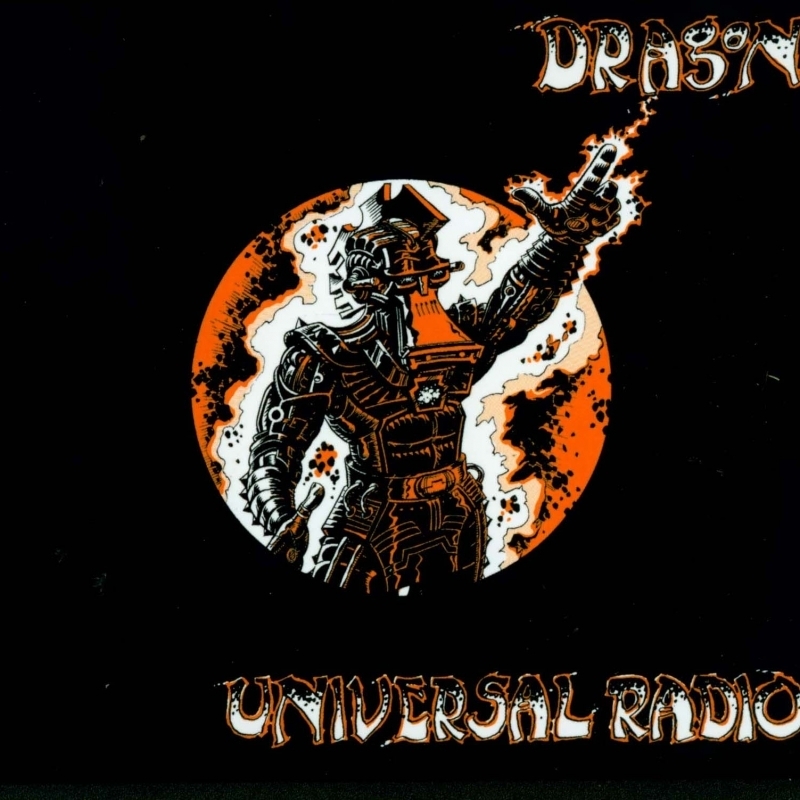
Universal Radio (Dragon, 1974)

Here's a very interesting band coming from New Zealand and whose first albums featured a soft kind of prog rock, including Floydian ballads, jazzy bridges and many space rock moments. This is the title track of their debut album, released in 1974. You'll find a good mix of the above elements, and also a vague scent of Camel and BJH here and there.

Something between Donald Duck and a Super Robot anime...

The rythm section provides a diversified and fluid background, while the acoustic guitar pleasantly intertwines the organ in the quietest passages. Really, this is not brand new, but so beautiful and familiar, so well set up and arranged that I always listen to it with an inner delight. The only conflicting thing here is the band name, unless peaceful and dreaming dragons exist... but who cares?

Tuesday, 5 January 2016

Autumn (Strawbs, 1974)

Autumn is likely to be the most progressive rock season of the year, judging by the way our musical heroes keep on writing songs about it and even naming themeselves after it. But I can't remember such a riveting depiction of autumn as this one, taken from the album "Heroe And Heroine", released by Strawbs in 1974. It's a short suite (some 8 minutes), including three movements (Heroine's Theme, Deep Summer's Sleep and The Winter Long).

"Hero And Heroine" was the sixth studio album by Strawbs.

The first part is simply a beautiful instrumental, with lushing and pastoral keyboards, then here you are an acoustic guitar-driven ballad, with also an addicting electric guitar and a very well found sung theme. It's the core of "Autumn" and the most influenced by folk music. A gentle piano opens the last movement, another perfectly autumnal song, with effective vocal harmonies and based on a rythmic crescendo. Really, I think I could listen to this a thousand times and never be bored by such a nostalgic and warm atmosphere.

Tuesday, 17 November 2015

La Bataille du sucre [inclus La Colère des Dieux] (Ange, 1974)

Among the pearls included in the album "Au-delà du delire", this is one of the brightest ones. There's a strong early Crimsonian influence here and even the song title ("The sugar battle" - including "Gods' Anger") refers to the KC's first album tracklist. But, of course, this is Ange and the band's strong personality is everywhere. Let's see: first of all, there are the theatrical, emphatic and everchanging vocals, then the Medieval, traditional French elements in both music and lyrics, and finally the strong contrasts in volume, rythm and mood.

The back cover art is even better than the front one.

The entire song seems to baffle all genre, period and pattern boundaries, going in and out a great deal of clichés, lining up irony, stateliness and intimacy. The lyrics themselves are a weird blend of comic and tragic tones, relating an unlikely lack of sugar and salt in the year 2015. Last but not least, you'll find here a few first-rate melodies and tons of original arrangements. In a word: this is Ang at their best.

Friday, 21 August 2015

Fallen Angel (King Crimson, 1974)

Another KC pearl, this "Fallen Angel" comes from "Red", the last album by the band during the '70s. It's a diversified and rather melodic track including many weird passages that still please me today. Of course, John Wetton's vocals are perfect like some statues from Ancient Greece, but all the rest is an awesome collection of musical ideas, thick riffs, heartbreaking changes, electronic treats... should I say more?

 
The stunning trio: Bruford, Fripp & Wetton.

Oh yes, just this: no apocalyptic scenes or medieval princes here: the lyrics are about a boy convincing his younger Brother to join in the Hells Angelswith him and watching him dying in a subsequent fight. It sounds like a juvenile crime story, but it is more like poetry. Good poetry, I daresay.

Friday, 31 July 2015

Anyway (Genesis, 1974)

Who says an excellent prog song must be long? Well, if necessary, "Anyway" shows you can be prog in the deepest sense in three minutes or so. "The Lamb Lies down on Broadway" is a special album in many ways, being so unpredictable and diversified, so this song seems one of the most traditional ones in such a pioneering work. But if you keenly listen to this, you'll think better. True, the main theme of "Anyway" comes from the very early era of the band, but the piano-driven arrangement can't hide a deal of awesome ideas: the sound has a sharp edge, I daresay there's an evil backtaste in it and Gabriel's vocals  go down the same way.


...Many years later...

All along this track the listener is somehow overwhelmed by the strong contrast he perrceives between the delicate arpeggio on the piano amd a definite sense of violence. And after all the lyrics are about Death. The instrumental bridge is also surprising, with its bombastic piano plus sampled guitar and, of course, the rythm section's neat work. In two words: pure emotion.

Wednesday, 1 April 2015

Supertwister (Camel, 1974)

Camel's "Supertwister" and its album "Mirage" are all time classics, so that I won't waste my time trying to describe them. I'll just say that this short instrumental - including a slow, winding theme and a lively, vaguely folk dance - could be easily chosen as a prog rock promo. Actually, all is there: nostalgic atmospheres, keyboard progressions, tempo changes, beautiful interplays... and even Andrew Latimer's flute!

Andrew Latimer playing his flute in a '70s show.

What I like above all the rest - here and in many other Camel songs - is the lushing, fluid sound of the band, their way to suggest red sunsets and blue waters, and all that in only 3 minutes... that's why, I presume, I usually listen to this song two or three times in a row. A prog compulsion, I daresay.

Tuesday, 3 February 2015

Abismo Próximo (Canarios, 1974)

This "Segunda Transmigración" ("Second Transmigration") from the album "Ciclos" is another pearl by Canarios (or Los Canarios, as they were credited elsewhere). The four compositions in this double LP re-write in a very eclectic way Vivaldi's Four Seasons (you'll find more in my blog). Opera, rock, improvisation, poetry... you'll find almost everything here. The suite is divided into seven movements, each one adding a different, special mood to the track. Vivaldi's themes are split and re-arranged along with original compositions and clever variations.

On vinyl, four suites filled each side of "Ciclos" double album.

The opera-inspired harmonies and the flushing keyboard works come interspersed by acoustic bridges and even by some Spanish folk hints. There are so many faces to this song I'm afraid I'll never be able to describe it, so you'll have to listen to that if you really want to make up your mind about such a suite. I hope you won't regret the time you'll spend there.

Wednesday, 1 October 2014

The Lamb Lies down on Broadway (Genesis, 1974)

The title track of the most controversial Genesis album is a real treat, IMHO. I like every second of it: the waving piano intro, the american rock'n'roll theme, the unpredictable tempo change, the NYC inspired lyrics, everything. Peter Gabriel's rough vocals perfectly fit in this frame, adding a pre-punk touch to the big picture, something we also find here and there in the rest of the album. But here the melody is especially strong, a series of crescendos and largos creating a pathos and focusing on the lyrics passage about the lamb.

 This song was also released as a 7" single for the US market.
 
As the white animal is completely out of place in Broadway, there's also something weird in this apparently "normal" song, so that the listener is forewarned: this is not only rock'n'roll. It seems to me that the catchy opening tune slowly slips into a challenging adventure, opening the gates to one of the most surreal and unpredictable prog albums I've ever listened to.