Friday, 29 April 2016

Lento juego de luces (Espiritu, 1982)

Coming from "Espiritu III", maybe not Espiritu's best effort, this is an uncommon and fascinating track. It is a rather long one (more than 7 minutes) and includes a remarkable sung melody, supported by spacey instrumentals (and a long finale) maily driven by the piano, the bass guitar and assorted keyboards. The sound of the '80s is there, but the well built architecture of "Lento juego de luces" ("Slow light effects" in English) strongly belongs to the previous decade.
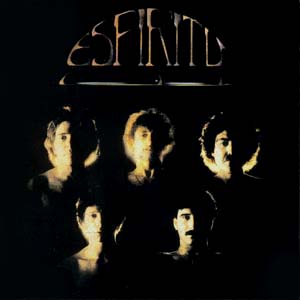
"Espiritu III" was, of course, the third studio album by the band.
 
These Argentinian musicians know how to write and arrange good songs and always try to skip trivial solutions, even if their music never goes experimental. That's what you'll fine here: an enjoyable track suspended between prog, pop and electronic easy listening, a song that can dig its way inside the listener's soul. That's all I can expect of a prog song.

Wednesday, 27 April 2016

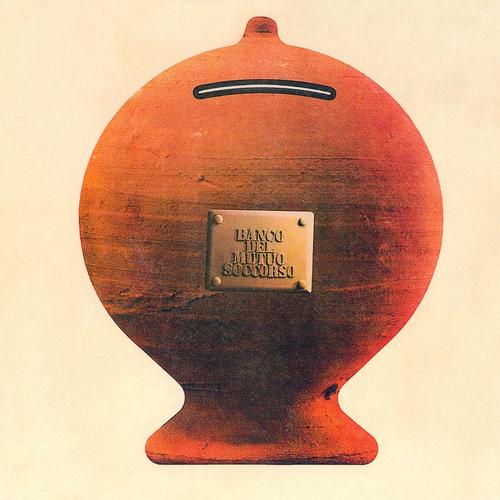
R.I.P. (Banco del Mutuo Soccorso, 1972)

No doubt this is one of the finest Italian progressive rock tracks ever and also one of the most known and inspiring ones. Useless to say, Francesco Di Giacomo's vocals are the first feature of this song striking the listener with their force and passionate tone.The title (to be read as a plural: "Requescant In Pacem") and the lyrics conjure up a gloomy and bloody war aftermath atmosphere and the powerful keyboards add an epic colour to such a sad picture.


The debut album of BMS still stands as a prog monument.

Among the countless songs dealing with war and death, IMHO this is one of the deepest and most moving ones. Lyrics, rock music and melodic inspiration are so perfectly melt here to describe the grievous side of human nature that each time I listen to "R.I.P." I feel uneasy and somehow sorry. And when the piano comes in, I'm nearly ashamed to belong to the human race.

Monday, 25 April 2016

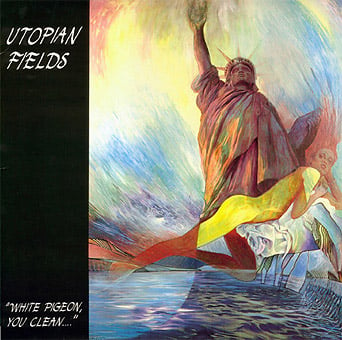
Pictures of Ages (Utopian Fields, 1990)

This track comes from Norway and was released by a rather obscure band called Utopian Fields, active between the late '80s and the early '90s. They were strongly influenced by Pink Floyd, nonetheless they mixed the Floydian spacey moods with other prog canons, setting up an enjoyable and vintage sound this "Picture of Ages" represents very well. It opens the album "White Pigeon, You Clean..." and lasts some ten minutes.

This was Utipian Field's second album. They disbanded around 1992.

The changes in tempo and instruments are excellent and the six musicians never try to rule the composition, so that it's a well balanced and richly arranged one. The dreamy atmosphere is broken here and there by stingy and acid passages, while the ballad-like sung themes are airy and sweet. I really like Utopian Fields' way of being traditional and creative, melodic and dynamic. Constrast is the key to good prog, after all!

Saturday, 23 April 2016

Holy Lamb [Song for Harmonic Convergence] (Yes, 1987)

I couldn't say "Big Generator" is among my favourite albums by Yes, but I was simply fascinated by its closing track, "Holy Lamb". It's one of those songs that remind me how unique Jon Anderson's voice is and how inspiring Yes can be. This track was written by Anderson for Harmonic Convergence, a big New Age convention that took place in Sedona, Arizona, USA. 


"Big Generator" was the twelfth studio album by Yes.

Maybe that's why "Holy Lamb" has such an ethereal and spiritual texture, set up in a moving crescendo and enhanced by lyrics full of hope and inner lights. The melody is beautiful, airy and enthralling, while the band support Anderson's performance in a discreet and effective way. Utopian as it may be, this song is a further and mighty proof of Yes' prominence in rock history.

Friday, 22 April 2016

Chronologie Part 1 (Jean-Michel Jarre, 1993)

IMHO, this is one of the best and most diversified tracks by Jean-Michel Jarre. The 10 minutes opener of "Chronologie", the concept album based on Stepen Hawking's book "A Brief History of Time", is a flushing specimen of electronic & symphonic music. 

 "Chronologie" was the tenth studio album by Jarre.

The tempo changes and the intricated keyboard interplays are among the best features of this instrumental, and Jarre also offers one of his best melodic works ever. Each theme is well exploited and well entwined with the rest of the composition. Last but not least, the fusion between rock instruments and electronic devices is perfect and gives a deeper soul to this track. Epic. In all senses.

This little place reached 900 songs!

Next post will add the 900th song to "Prog Rock Little Place". As usual, this is time to thank you all for your attention and your enduring kindness. Progressive rock is a musical goldmine and we'll go on digging into the mother lode.


Thursday, 21 April 2016

Les Porches de Notre-Dame (Maneige, 1975)

What a beautiful suite this is! Maneige were no doubt one of the best band from Québec, and also one of the most open-minded ones, with their eclectic musical blend and their rich instrumentation. "Les Porches de Notre-Dame" ("Notre Dame Archways") are a 19 minutes long suite divided into six movements, full of acoustic instruments and mainly instrumental. The sacred-sounding "Ouverture" immediately inspires a spiritual tension and a quiet, visionary mood. The entire track displays this supernatural and nonetheless humble atmosphere, where traditional instruments bring back the Middle Ages and a wind-driven chamber music ensemble.

This suite opens "Les Porches", the second studio work by Maneige.

Grace and delicacy rule this composition, but you'll also find stingy, unquiet moments in it, especially when the piano comes in. The last and longest section also includes the only sung part of "Les Porches de Notre-Dame" and the listener is overwhelmed by Raoul Duguay's singular voice and by his trombone, not the most usual instrument in modern music. Finally, this is an unforgettable musical experience, if you believe me.