Showing posts with label 1993. Show all posts

Wednesday, 31 July 2019

Sad Rain (Anekdoten, 1993)

Even if Swedish proggers Anekdoten will create more sophisticated tracks during their career, I'm fond of this early track (available as a bonus track in a re-release of Vernod and also remixed in the band's compilation Chapters, a real milestone in their musical evolution. You'll find here both Crimsonian sounds (Anekdoten were practically born as a KC cover band) and Scandinavian melancholy. 

An arcane cover art, isn't it?

These will remain two pillars of Anekdoten's distinctive sound, along with other elements that these musician will add during the years. Here you can enjoy soft passages, stronng walls of sound, beautiful melodies and sharp riffs in an unpredictable and well found pattern. That's prog, babies!

Tuesday, 15 November 2016

Siberia of Snow (Cinderella Search, 1993)

There's a melancholic and foggy vein streaming through Japanese prog since the late Seventies and still active today. Cinderella Search are among the most interesting examples of this mood. Their name - a reference to a Fish-era Marillion song - doesn't mean these musicians are a musical clone, as their music is definitely original, even if there is a general neo-prog and Scandinavian Progg atmosphere in it.

 Cinderella Search love Northern and misty moods...

This is the opening track of their debut self-named album, released in 1993 and perfectly illustrates the band's essential features: post-rock moods mixed with neo-prog arrangements, a beautiful violin (by Junko Minobe), a good deal of acoustic guitars backed with electric instruments and - last but not least - a taste for good melodies. I surely appreciate Cinderella Search for their open minded attitude, their delicate and never sweetish touch and their deep respect for the great history of prog rock.

Tuesday, 28 June 2016

The Sorceror (Cyan, 1993)

Derivative music can be an exquisite kind of art if those inspiring themselves never forget to add their own touch to the songs they're composing and playing. Robert Reed actually is a master in this peculiar field. All his projects are linked to the glorious past of prog, but if you listen to them with care you'll recognize the author's own personality. This track opens the album "For King And Country"" and was credited to Cyan, one of the earliest brainchilden of Reed. Its main source of inspiration is Genesis, but you'll also find other references.

"For King And Country" was the debut album by Cyan.


This is exactly what makes Robert Reed a good composer: he never tries to imitate a single track or a single band: he loves the Seventies and he works hard to redo the magic sounds and the mood of the Golden decade of prog. He's a symphonic prog addicted (is he the only one?) and his passionate journey into the world of the old Masters is as lively and moving as rock can be. "The Sorceror" is a pulsing gateway into this colourful time machine.

Friday, 22 April 2016

Chronologie Part 1 (Jean-Michel Jarre, 1993)

IMHO, this is one of the best and most diversified tracks by Jean-Michel Jarre. The 10 minutes opener of "Chronologie", the concept album based on Stepen Hawking's book "A Brief History of Time", is a flushing specimen of electronic & symphonic music. 

 "Chronologie" was the tenth studio album by Jarre.

The tempo changes and the intricated keyboard interplays are among the best features of this instrumental, and Jarre also offers one of his best melodic works ever. Each theme is well exploited and well entwined with the rest of the composition. Last but not least, the fusion between rock instruments and electronic devices is perfect and gives a deeper soul to this track. Epic. In all senses.

Sunday, 3 May 2015

Traveller (LiR, 1993)

You'd have many problems if ever you tried to label this Irish band. LiR actually are progressive in their own way, as they collect different musical ingredients and they stir them into a tasty pot. This intro to their debut album is a fascinating down tempo instrumental, starting with an original blurred mix, then getting dreamy and piano driven. There's a strong, intimate mood here, with an excellent choice of keyboard effects, even if the final result is an essential sound, a very intense one at that.

Before this album, the band had released an EP in 1992.
 
The sudden and unexpected pop-rock coda isn't an absent-minded youtuber's mistake: the band actually added this section there, like a final, surprising trick. That's exactly why they fit into a prog rock blog, IMHO: they never settle for the easiest solution. That's what we progfans do as well... so, welcome home, LiR!

Tuesday, 10 March 2015

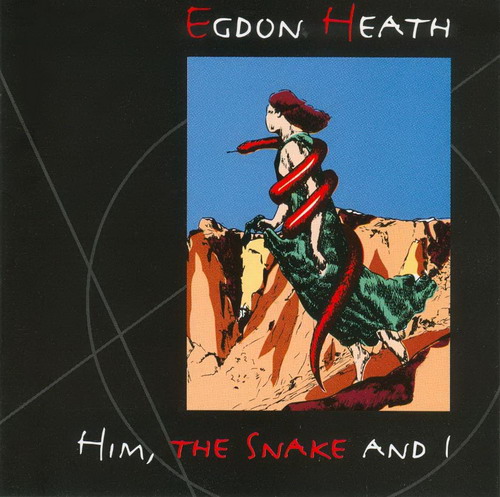
Thousand Stories (Egdon Heath, 1993)

Egdon Heath are one of those bands from the '80s and the 90s we tend to forget nowadays and to file under the "average neo-prog" label of our minds. But there's more than this in Egdon Heath's musical productions. Take this "Thousand Stories", for example. It comes from the album "Him, The Snake And I", released by the late SI Music label. These Dutch musicians succeed in setting up a complex, highly diversified composition, including three different moods in a row.

This was Egdon Heath's third studio album.

Starting like an atmospheric track, the song goes through an almost mainstream rock phase and ends up with an intense, powerful prog ballad, enriched by Maurits Kalsbeek's brilliant vocals. The band also find Despite such a composite appearance, the track achieves its emitional goal and I still listen to it and still enjoy its dramatic edge.

Thursday, 11 December 2014

Good at The Art of Surviving (Notturno Concertante, 1993)

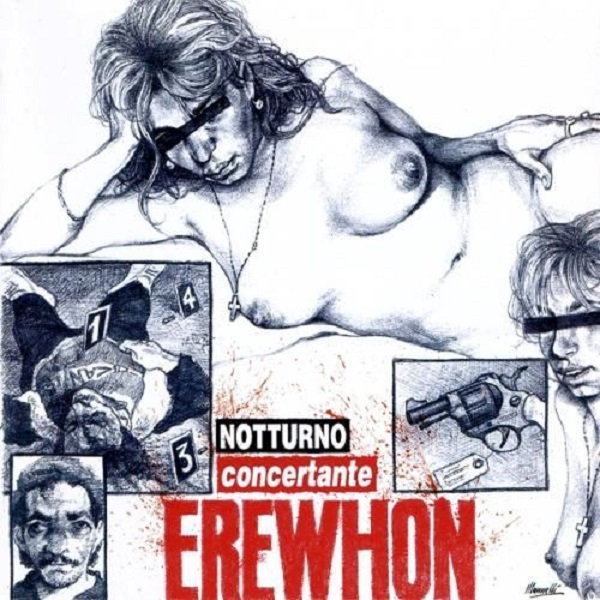
Lucio Lazzaruolo and Raffaele Villanova, the core duo behind the Italian act "Notturno Concertante", surely are among the most coherent and interesting musicians of their generation. "Good at The Art of Survival" comes from their debut album "Erewhon" and it features many of the band's trademark features. Firstly, you'll appreciate here the keen piano and guitar work, kind of a special touch , giving a nocturnal mood to many songs of theirs. Then, listen to the tempo changes, always coming in the right time, but never too sharp. Last but not least, see how Lucio's lyrics describe, with no indulgence at all, the criminal and narrow minded outlook of mafia's adepts.

"Erewhon" features Riccardo Mannelli's effective artwork.

I really like the way Notturno deal with some strong concepts in their albums, keeping such a delicate musical approach. This song flows gently through its different moods, respectively ruled by classic guitar, guest Betty Iandolo's voice and keyboards, so that the track's last note is just like a dream's last image. Don't loose this trip, my prog friends!

Tuesday, 23 September 2014

Le porte del silenzio (Malibran, 1993)

When it comes to Italian progressive rock, we usually go back to the '70s, a Golden Era for the Worldwide musical movement and probably a Platinum Era for Italian prog. But I can remember many great albums during the following dacades. This "Le porte del silenzio" ("The Gates of Silence" in English) is a good specimen of what I'm saying. Malibran began their discography in 1990 and always tried to merge the Italian prog features and the neo-prog experience.

This was the second album by Malibran, released in 1993.

This long suite (some 27 minutes, in fact) includes some very good moments, especially when Jerry Litrico's guitar or Benny Torrisi's piano (and assorted keys) are involved. The main theme is very good and I also like the flute sections, provided by Giancarlo Cutulli. Sure, there are some naive passages, but then, this is one of the most known features of the Italian way to prog. The rythm changes are welcome and some of them are pleasant and unexpected. In short, this is a beautiful way to spend your next half hour spare time!

Tuesday, 19 August 2014

Breaking The Spell (Pendragon, 1993)

If you ask Pendragon fans to choose the most representative Pendragon's song, many of them will likely say "Breaking The Spell", from 1993 "Windows of Life" album. In fact, this song has in it all the main musical features of Nick Barrett's band: a beautiful melody, before all the rest, well written and well arranged.

Nick Barrett in a 2009 concert. Photo from "Background Magazine".

Then, in no particular order: airy and majestic guitar solos, philosophical lyrics about human life and its meaning, spacey keyboards provided by Mr. Clive Nolan and, last but not least, a good deal of emotions. The changes are pleasant and sweep away any boredom risks, something Barrett's last solo would have prevented in any case. Pendragon at their best, I certify that.

Tuesday, 20 May 2014

Fading Senses (IQ, 1993)

I can't hide my immoderate fondness for IQ's album "Ever", and "Fading Senses" is one of the major reasons of my weakness. I really like the way this track starts, gentle and introspective, with Peter Nicholls' very peculiar voice drawing inner spirals deep in his soul. He knows how to translate in vocal inflections the melancholy contents of the lyrics. The guitar adds some more nostalgy and transparence.

"Ever" was IQ's sixth studio album.

The sadness rules the song, but "Fading Sanses", despite its moderate duration time (some 6 minutes), is divided into two sections (i After All and ii Fading Senses) and the second one brings in an important change both in mood and tempo, so that it gets heavier and faster. The Whole song is full of deep reflections and strong feelings and the sound is neat and even sharp, like flashes of light in the darkness. Definitely a fascinating track. IMHO, of course.

Thursday, 24 April 2014

Chronologie Part 2 (Jean-Michel Jarre, 1993)

Famous for his musical and entertainment records and unusual challenges, widely celebrated for his pharaonic shows featuring tons of strange instruments, Jean-Michel Jarre is the most recent incarnation of the French grandeur, the heir of the Belle-époque science heroes like Jules Verne or the Lumière brothers (he's from Lyon too, after all). But he also happens to be a great musician and a highly creative composer. The "Chronologie" album, in particular, is a brilliant piece of symphonic music as this "Part 2" proves perfectly well.


Jarre & his best friends...

The majestic sounds and the bombastic keyboard riffs are arranged in a series of breathtaking crescendos and breaks, making up an almost visual kind of music, an enthralling, powerful wall of sound. The live version of this track, included in the "Hong Kong" album (1995), is even better, with a whole (prog) band playing like hell. That's why I daresay that Jarre's flaws also are his strength. By the way, let's draw a veil over his recent love affair with DJ music... it may be great, but it's not my cup of tea.

Sunday, 24 November 2013

In The Eye (Ilúvatar, 1993)

This Baltimore based musicians only released three good albums from 1993 to 1999, but they're still on the road. Their neo-prog is certainly influenced by the '80s UK bands, but also features an original sound, as "In The Eye" proves very well. The three parts of this mini-epic highlight the excellent guitar work by Dennis Mullin, as you can see in the first and heavier part "Look Us in The Eye". 

"Ilúvatar" was the band's debut album.

Also his interplays with Jim Rezek's keyboards are stunning, like in the "Blind" part. Then, I like Glenn McLaughlin's vocals, especially in the last section, called "Through The Eye", where I also smell a pleasant scent of Kansas. Throughout the suite, the rythm section ensures a definite rock soul to the track, even if drums are sometimes too loud, but this is just a matter of taste. In conclusion, this is a very good example of '90s prog with an open heavy inclination, without sacrificing the right amount of feeling.

Friday, 2 August 2013

There Are Many Sides to The Night (Steve Hackett, 1993)

"Guitar Noir" is one of favourite Steve Hackett's album, because of its coherence and also for this song, a sad and intriguing one, starting with the typical Hackett's dreaming electric guitar on a keyboard background and continuing with a softly spoken passage. Here the acoustic guitar comes in and the track warms up, introducing the beautiful sung chorus, performed twice.

A beautiful picture of Steve in concert.

The finale comes back to the misty and somewhat poastoral atmosphere Steve likes so much (and so do I). The lyrics depict a night in London and the singer coming across a tempting woman and the singer refusing her for his own love's sake. I really see and feel the scene and the night's sliding doors, the smells and the darkness, the cold air and the lamps, the woman's presence and the Thames flowing. Seven minutes of magic, a living slice of a night, of its many sides.

Sunday, 6 January 2013

The Darkest Hour (IQ, 1993)

I adore "Ever", this track's album, I must confess prior to any further notes. I know many IQ's old fans bettere like the '80s albums, but IMHO "Ever" and "Subterranea" keep the same quality standard than "Tales from The Lush Attic" or "The Wake". "The Darkest Hour" is the opening song, an epic and powerful one, including the typical syncopated rhythm that's an IQ's trademark. Peter Nicholls' voice is a little screechy, that's true, but so heartfelt you'll forgive him anything.

IQ in their "Ever" lineup.

As usual John Jowitt's bass guitar works very hard and all is in tune with the mysterious athmosphere the song's title announces, but the tempo changes and the themes weaving prevent any humdrum and draw in many solar glimpses. The lyrics The track's final perfectly introduces the next one, another one of my favs, bat this is another story...

Saturday, 17 November 2012

The Last Man on Earth (Pendragon, 1993)

Definitely one of my favourite songs by Nick Barrett's group. This gentle little suite is about death and separation, but also about the links that never end between those who die and those still alive. Like many other Pendragon's songs, you can find this a little mincing, but just listen twice and you'll see there's nothing less than sincere. It's a touching musical portrait of two worlds, and a very british one, too. The delicate athmosphere is somentimes broken by uptempo passages, but the general impression is one of lightness and peace.
 
 
Pendragon in concert. 
 
In about 15 minutes, the two main themes intertwine and create here and now spaces where for guitar and keyboard to go solo. When the track is over, I always stay there a little longer and think over. A good reason to listen to it once again.