Wednesday, 30 December 2015

In principio (Logos, 2014)

So rich is the Italian prog scene of the Seventies that one could neglect more recent additions to our genre coming from the "Bel Paese". That would be sad, as many good bands carry on the progressive verb in Italy and among them I recommend today Logos and especially this song, coming from the album titled "L'enigma della vita". It's a rather long track going through many changes and including both traditional and new sounds. 

It's a beautiful cover art, isn't it?

The acoustic intro and the dreaming electric guitar solo surely are classic features, but the ethereal, spacey mood of some keyboard backgrounds, the jazzy piano and the folk flavour of several guitar touches enrich the big picture. Some more strong points: beautiful  and fully exploited melodies, pleasant vocals and rythmic changes. I do think you'll find even more listening to this song and you'll probably try the entire CD. Something tells me yo won't be deceived.

Tuesday, 29 December 2015

Acrostichon (Isopoda, 1978)

This is a very good example of European symphonic rock from the late Seventies. These Belgian musicians surely liked Genesis, Camel & Co., but they had their own style and created a pair of excellent albums where the classical plots went along a free, almost Canterburian vision. This is the title track from their debut LP and it surely is an enjoyable song, featuring a long instrumental intro and a sung section full of delicacy and intensity.

 
Isopoda were a foursome plus some very good guest musicians.
 
Some of the singer's passages aren't too far from Ian Anderson's tone and there's a constant interplay involving all the instruments, with a folky touch. Most of all, the electric guitar has an original sound, somewhere between Hackett and Gilmour. If you like classic prog with a special twist, Isopoda is for you.

Monday, 28 December 2015

Death Room (Gazpacho, 2014)

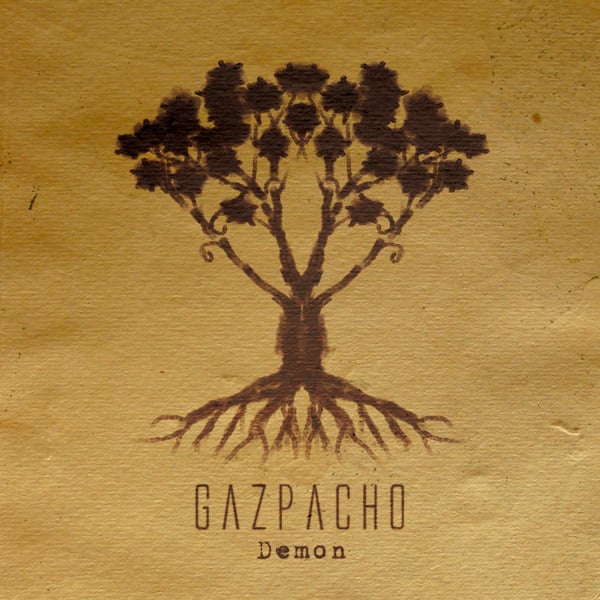
As I might have written somewhere in this blog, Gazpacho are a constantly improving band and "Demon" surely is one of my favourite 2014 albums. It was difficult to choose the first song from it to put here, but "Death Room" is a three part suite and I'm partial to suites, as you may remember. As the rest of the CD, this is a diversified song, including rock, folk, melodic and pop elements. 


"Demon" was the eighth studio album by Gazpacho.

It's a rather dark song (well, there's a "Demon" concept, after all...) lining up soft and hard moods and a very rich rythmic texture with bass guitar and percussions at their best. Melodies are very good and the band knows how to exploit their themes, going in and out them and building up a coherent and riveting plot. More than this, "Death Room" creates an entire magic world and its good and bad characters through a stunning series of musical details and conflicting sounds. Last but not least, Jan Henrik Ohme's vocals are simply perfect. Well done, boys!

Saturday, 26 December 2015

After The Day (Barclay James Harvest, 1971)

One of the best songs by BJH from one of their most celebrated albums. "Barclay James Harvest ...And Other Short Stories" has a strong progressive flavour and - as always with this band - an excellent melodic texture. This "After The Day", written by John Lees, is a pastoral ballad with a dreamy instrumental coda, the kind of track BJH is famous for... and a perfect closing song for the album. 

"...And Other Short Stories" was the third studio album by BJH.

Its intro sounds like an early King Crimson track, while the sung section keeps a Seventies atmosphere, somewhere between The Beatles and The Kinks. But, of course, this is just fully BJH-styled music, graced by a slightly acid guitar and powerful apocalyptic lyrics. Even if the band were going to become far more popular during the following years, this was their most creative and unpredictable era, IMHO.

Thursday, 24 December 2015

The Little Drummer Boy (The December People, 2001)

What on Earth "The Little Drummer Boy" is doing here? First things first: "The December People" are a project by Robert Berry, the American guitarist once involved with Keith Emerson and Carl Palmer in the short lived band called "3". He decided to set up a band of his own playing Christmas songs and carols in the style of the most celebrated classic rock bands. So, in their records you'll come across a "Silent Night" version sounding like "The Great Gig in The Sky", a "What Child Is This?" performance reminiscent of "The Lamb Lies down on Broadway" and even a "Stairway to Heaven"-ish reddition of "'Twas The Night Before Christmas"!

This record has both Christmas and prog rock charms.

The band's still touring and recording this way and their best CD is, in my humble opinion, the debut album "Sounds Like Christmas", including all the above songs and gathering important guests like John Wetton and Steve Walsh. This version of "The Little Drummer Boy" in the wake of ELP is simply stunning. It's a real prog-ification of the innocent carol we all know, featuring all the explosive style of the powerful trio. Weird? Impossible? Mundane? Just listen to it and let me know...

Wednesday, 23 December 2015

Песен / Song (ФСБ / FSB, 1979)

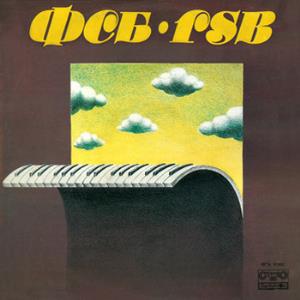
ФСБ (or FSB in Latin alphabet) stands for Формация Студио Балкантон (Formation Studio Balkanton) and is the name of a very interesting Bulgarian band born during the Seventies and recently reunited. Their prog is a manifold one, ranging from calm and Camel-esque atmospheres (it's the case with this "Song") to jazzy and experimental tracks.

The 1979 line-up: R. Boyadzhiev, K. Tzekov and A. Baharov.

As you'll immediately discover, those musicians knew how to play their instruments and as a matter of fact they were all classically trained. The track I'm introducing here, coming from the album "FSB II", has a good deal of magic and sense of wonder in it, along with plenty of electronic keyboards... well, the band have two keyboardists ouf of three members! So, please, close your eyes and press your "play" button...

Tuesday, 22 December 2015

Négy évszak (Panta Rhei, 1980)

This four part suite was released by Hungarian band Panta Rhei in 1980 as the longest track of their self-titled album and mixes the two prominent inspirations of those musicians: electronic rock and, of course, prog. Its title (meaning "Four Seasons") reveals that this was another composition based on the frequently exploited theme of the different parts of the year. Even so, this song is an interesting and original achievement. The '80s pop sounds are there, especially in the first section (inspired by Winter) and here and there throughout the suite, but a symphonic and fully progressive plot is also important.

This was Panta Rhei's first official LP, even if a previous album
was recorded in 1977 and only released many years later.
 
Catchy themes and unusual sound solutions follow one another. The band had previously recorded more uncompromising music following the steps of ELP, but I also like the way they tried to be more commercial and never trivial in this track (and in the rest of the album, that's to say). Dated? Maybe, but pleasantly written and strangely hybridated. Curious and intriguing, I'd say,