Showing posts with label 1991. Show all posts

Friday, 28 February 2020

Flooded by Sun Light (Ain Soph, 1991)

Ain Soph are among the most inetersting Japanese bands ever (please find more by them in this blog). Even if "Marine Messagerie" CD was recorded in 1991, then re-released in 2005, these tracks were born in the late '70s, the first creative wave of Yozok (guitars), Mashiro Torigaki (bass),Taiqui (drums) and Kikuo Fujikawa (keyboards). "Flooded by The Sun" belongs to the melodic and Camel-esque vein of Ain Soph, and starts with a delicate mood, then gets more upbeat and intricate.

The 2005 reissue was co-labelled by Poseidon and Musea.

The whole song  (an instrumental, as usual with Ain Soph) is enjoyable and higly dynamic, so that all instruments are cleverly interwined to build up a brilliant, charming sound. Yozok's guitar solo is one of the highlights of "Flooded by Sun Light", and so is Taiqui's creative drumming. That's what I really like in this song: the way it combines lightness and sophistication. The Rising Sun touch, maybe.

Friday, 18 March 2016

In Doga Gamee (Andreas Vollenweider, 1991)

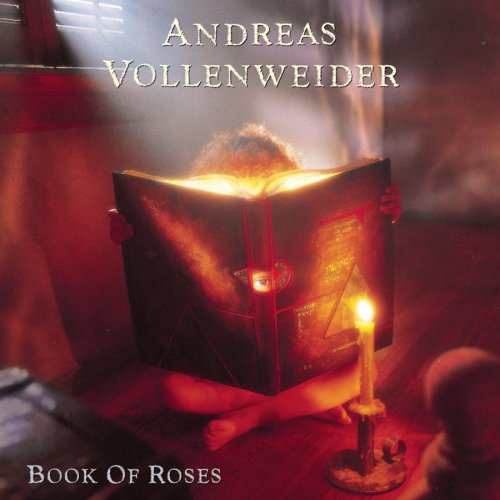
Vollenweider's "Book of Roses" album was the most elaborate work of this Swiss artist, usually considered as one of the best new age musicians ever. That's why I put in my little blog this song, titled "In Doga Gamee" and featuring many progressive elements. First of all, there are sweet and airy melodies, then a very rich choice of sounds and clever arrangements, including vocal harmonies and a great deal of instruments. 

"Book of Roses" was the eighth studio album by Vollenweider.

Dozens of musicians were involved in the making of this album, building up kind of a flexible orchestra with a rich wind section and some ethnic instruments beautifully employed by Vollenweider. In this track I also appreciate the rythm solutions and, of course, Andreas' arp, the most known trademark of this eclectic artist. That's why this is definitely more than new age...

Tuesday, 15 December 2015

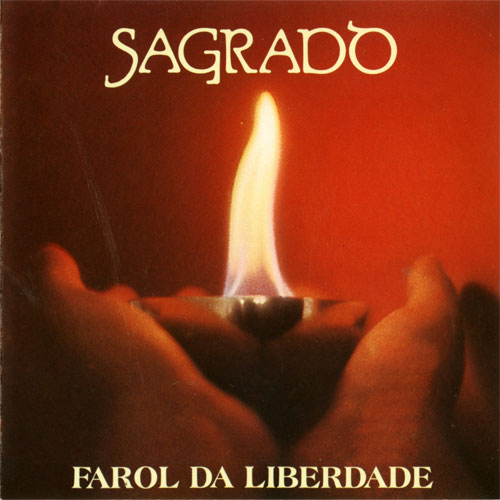
The Central Sun of The Universe (Sagrado Coração da Terra, 1991)

This is the only song with English lyrics from the album "Farol da liberdade", one of the finest achievements by Sagrado Coração da Terra, violinist and composer Marcus Viana's band. It's a rather long piece of music, lasting more than 11 minutes, featuring a good deal of themes and several mood changes. As usual with Viana, melodies play the leading role and they're set into the plot with good taste and pleasant variety.

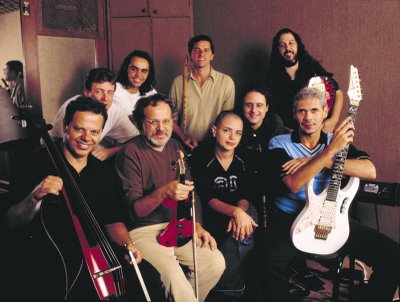
Marcus Viana (with his violin) and his "Sagrado" friends.

Another winning point of this song is the stunning series of vocal harmonies, adding a pastoral touch to the big picture, along with the flute solo. Of course, the violin also comes in and it lightens somehow the atmosphere, that's a warm and comfortable one, while the piano provides a delicate (but never too much) accompaniment. A Latin, (better: Brazialian) approach to prog rock that I always appreciate and hope you'll listen with pleasure too.

Wednesday, 27 May 2015

Apocalipsis (Caja de Pandora, 1991)

This is one of the most joyful and dynamic album opening tracks I've ever listened to. A rythm-based instrumental from Mexico, by a one-CD only band called "Caja de Pandora" that really sounds like opening up a Pandora's musical box! Basically, the track goes through five different phases, despite its scarcely 4 minutes of length: a classical intro, a lively dance, a hypnotic rythm,a guitar solo and finally the first theme reprise.

It took a long time to release this album. The sessions began in 1981,
the CD was issued only in 1991, then in 1997 with bonus tracks.


Nothing completely new, maybe, but surely a well assorted display of latin prog rock, not so far from Spanish and Italian models, even if this one is likely to be a more essential and less intricate piece of music. But you hear the potential in it, the inner energy coming out and running down your spine like a colourful tsunami. This is the sunny side of prog. So Welcome to Mexico, my friends!

Monday, 11 May 2015

Shadowplay (Fish, 1991)

This is the opening track of Fish's second solo album, "Internal Exile". It seems to me it features the old days energy of Mr. Derek Dick, a tough performance by the band and also an excellent melody. The keyboards by Simmonds remind me here of Marillion's Mark Kelly, but there's a sharper guitar to top the arrangement. The tempo changes and the atmospheric sections also enrich a song that still stands among my favoutite solo tracks by Fish.

Beautiful cover, isn't it? Scottish pride & Mr. Wilkinson...

The arcane and hypnotic musical loops in the middle section gradually lead to one of the best vocal crescendos Fish performed in his entire career. That's exacly the heartbreaking, moving, inside-out kind of magic he used to set up in his best moments, something he picks up again from time to time and I always expect from his songs. Pure prog energy, pure musical emotions...

Wednesday, 22 April 2015

Beyond The Mountains (Daniel Denis, 1991)

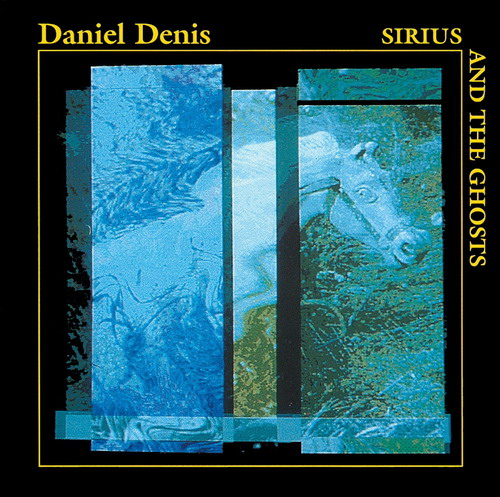
I usually don't like what someone would call experimental music or maybe RIO. But I do think Daniel Denis - yes, the member of Univers Zéro - knows how to explore new frontiers without that good deal of boredome such a task too often icludes. Take this "Beyond The Mountains", the opening track of his solo album "Sirius And The Ghosts". It's a rather long instrumental based on an obsessive short theme, a compulsive, slightly dissonant lilt going through a dozen variations. Sounds exactly like the stuff I usually try to skip. Well, not at all.

This album was the first solo work by Daniel Denis.

Not only Denis catches my attention, but he also succeeds in what seemed imposssible to me: his piece of music surely is unusual and unsettling, but also pleasant and full or real emotions. Oh my... not a pure intellectual experience, but a revealing, passionate, even touching track! Try it, my friends, and see how RIO - or whatever you call this kind of music - can be when a great and sensitive musician takes care of it...

Monday, 6 April 2015

Converging Universes (Now, 1991)

These Belgian musicians released three albums between late '80s and early '90s, and this track, coming from their second work, "Spheres", probably is their best piece of music. It's a 33 minute suite, divided into seven movements, basically a Yes-inspired track, but with an original choice of effects and many beautiful themes, cleverly lined up. The singer Vincent Fis has a warm, light voice and he also plays guitar very well. As usual with Yes-oriented bands, you'll find a good deal of vocal harmonies and bass lines, as well as keyboard fast progressions and church-like organs... and I'm pleased to say everything's well done.

This is by far my favourite album by Now.
 
I also recommend this song for the mood changes, the spacey interludes and the suggestive interplays. The sound is never too compact and each instrument has its own highlight. Now also add some piano-electric guitar duets I really like and not necessarily included in the Yes canon. So, don't expect weird experiments here, but enjoy prog as it used to be (and maybe should be).

Friday, 27 March 2015

Mad Cucumber - Part 1 / Бешеный огурец - часть 1 (Sepsis / Сепсис, 1991)

An uncompromising keyboard-free suite by a rather obscure Russian trio, this is the track I'm presenting today. Coming from an act founded by guitarist Alexis Romanov, and from their only album called "Литургия Безумия" (meaning "A Liturgy of Madness"), this could be kind of a good surprise for many of you. Filling the first side of the original LP (the B side featuring a part 2, it goes without saying), this epic is divided into five parts for a total running time of more than 22 minutes.

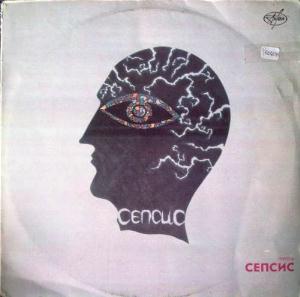
This is the original cover of the rare Sepsis' LP.

Not an easy listening music, if you believe me, but a unique line up of instrumental themes, all very well developed and played. The general mood is that of an acid and apparently rough prog. Actually, all listeners will find how keenly and cleverly set up this song is, and how many different, colourful landscapes such a music suggests. I was really pleased to listen to this Mad Cucumber thing some years ago (I think it was released on CD in 2000). Hope you'll be too.

Wednesday, 25 March 2015

Innuendo (Queen, 1991)

Steve Howe's cameo in the central section of this song isn't the only reason why it perfectly fits in a prog rock blog (IMHO, of course). I admire the way Queen set up this title track, including heavy rock riffs, wide open melodies and the rightly famous flamenco section. As usual with them, the band stuffed their song with a great deal of manifold ideas, but this is a very coherent composition, in spite of all the different colours it displays.

This was the last album Queen released before Mercury's death.


Brian May's guitar is on the foreground, but the entire band's sound is thick and well balanced, while Freddie Mercury's voice fly high. I read somewhere Taylor's lyrics were inspired by Led Zeppelin's Kashmir... be as it may, I especially like it as a hymn to freedom and life, one of the best I've ever listened to. We'll just keep on trying till the end of time. A good motto, my prog friends.

Saturday, 6 September 2014

Pantanal (Sagrado Coraçao da Terra, 1991)

Many Brazilian prog bands love to mix as many different musical approaches as they know about in their style. And this is particularly true for Sagrado Coraçao da Terra, also called Sagrado, set up by ex Saecula Saeculorum member Marcus Viana. Take this "Pantanal", taken from the "Farol da liberdade" album.

This was the third studio album by Sagrado.

This song was very popular in Brazil as it was part of the soundtrack of the soap opera called "Kananga do Japão" and includes folk roots, romantic melodies, sweet instrumental and rather symphonic interludes, a rock passage and then, of course, very Brazilian lyrics describing the Pantanal region with loving accents. A mostly slow, liquid, never boring track featuring a warm atmosphere and all the deep feelings of its author.

Thursday, 14 August 2014

No Son of Mine (Genesis, 1991)

This has Always been a special song to me. Firstly because I saw it on its 12" vinyl single form in my usual record shop and it was such big a pleasure to read the name "Genesis" once again on a new record. I would have that same joy some days later with "We Can't Dance" album, of course. Then, when I immediately bought it and took it home, I was frankly surprised by the emotional strength of the song. Phil Collins sings this one with all his heart and soul and the lyrics are about an abused child (or maybe the child of an abused mother) running away, coming back home and being shut out by his father this time.


I always liked this cover art, maybe even more than the album one.

A sad story depicted in a very good video and going with a highly innovative music. The metronome intro, the harsh drumming, the famous "elephantus"sound (actually a twisted sample of Mike Ruterford's guitar) are but a taster of the song, full of good ideas, featuring a strong melodic base and a very original arrangement. Prog or not, songs like this one always catch up my attention and my feelings.

Sunday, 9 March 2014

And We'll Go Hunting Deer (Pendragon, 1991)

I'll never be able to describe the kick I get inside me each time I listen to the intro of "And We'll Go Hunting Deer". Just a few piano touches and a sad melody, but oh so well done! And the rest of the song - taken from the album "The World" - is just the same to me, a series of inner sensations and delicate feelings. Many proggers out there will twist their noses and find such a track too mellow for them. But I love it. There's an easy prog rock inside this song, a beautiful guitar - well, we all know Mr. Barrett - but the way Nick shows off his feelings is simply striking.

So many good songs in this album...

The suspended moods he creates along with his fellows and the impressionistic way the band have to paint a world apart reach a peak in this song and I loose my mind inside such a fairy and colourful world. It'a quite a positive song, I daresay optimistic. Clive Nolan and his keyboards are like rays of light from behind the hills and if there aren't many tempo changes here, the rythm drives me mad. So, excuse me, I must put this song in my blog.

Thursday, 20 February 2014

Soleil d'aube (Visible Wind, 1991)

Let me take a rest with this sweet, romantic song coming from Québec, Canada. Here - and in the whole "A Moment beyond Time" album - those musicians were influenced by middle era Genesis and they succeeded in conjuring up a suspended, relaxing atmosphere. The French lyrics add some more sweetness and authenticity to the big picture, so that you don't even try to sort this track under any label and just enjoy it, following its languid tempo.

This was the second album by "Visible Wind".

The long electric guitar duet starting at minute 2:30 is maybe the musical peak of "Soleil d'aube" (meaning "Dawn Sun"), but I also like Philippe Woolgar's warm vocals. If you feel like listening to some melodic prog and you didn't dislike the "...And Then There Were Three.." album by a well known English threesome, well, you may try this. I did and still do.

Monday, 17 February 2014

Waiting to Happen (Marillion, 1991)

When I first listened to this song I was surprised. A very simple and almost traditional ballad, acoustically arranged, including lyrics about love, just the happiness of love. Is this prog? Is this plain pop music? Same old question I can't aswer to but saying 'I really don't care'. Just the basic facts: this is a beautiful song, featuring an aerial musical background based on 12 string guitars and keyboards, well supported by the rythm section.

"Holidays in Eden" was the second Hogarth era Marillion's album.

Mark Kelly, in particular, is pewrfect, stressing the singer's words and emphasizing the lightness of the chorus. This ballad carries the listener above the everyday fog, clearing an inner, pure sky and I'm grateful to Marillion for giving me five minutes of joy. If a beautiful song granting positive emotions and based on a solid melody isn't prog, well, this isn't.

Friday, 14 June 2013

Radioactive Toy (Porcupine Tree, 1991)

Let me say first that an early version of this song was released by Steven Wilson and his Porcupine Tree in a limited edition demo cassette titled "Tarquin's Seaweed Farm" in 1989. But the 1991 version, taken from the band's first official album "On The Sunday of Life..." is kind of a new track, suffice to say that this new "Radioactive Toy" lasts more than 10 minutes, twice the 1989 song duration. It is an essential song in the long and difficult path leading to the prog rock revival of the '90s and I could define it so modern, so classic.

Cover art for "On The Sunday of Life..." (1991)

There's a bit of everything inside it: the floydian rarefaction, the crimsonian stateliness, a good deal of electronics and even a scent of proto-prog years. Yet, if this song is considered the first thorough specimen of Porcupine Tree's sound, this is because you don't even notice the inspiration sources of the song, but you admire in it the coherence and the musical innovation. I equally like the first sung part of the track with its soft rythm and muffled vocals and the long, beautiful and unpredictable instrumental second section. When I listen to this track, I can't help thinking this was created one year before the first Radiohead record and twenty-two years after King Crimson's debut. Incredibly, both could have written it.